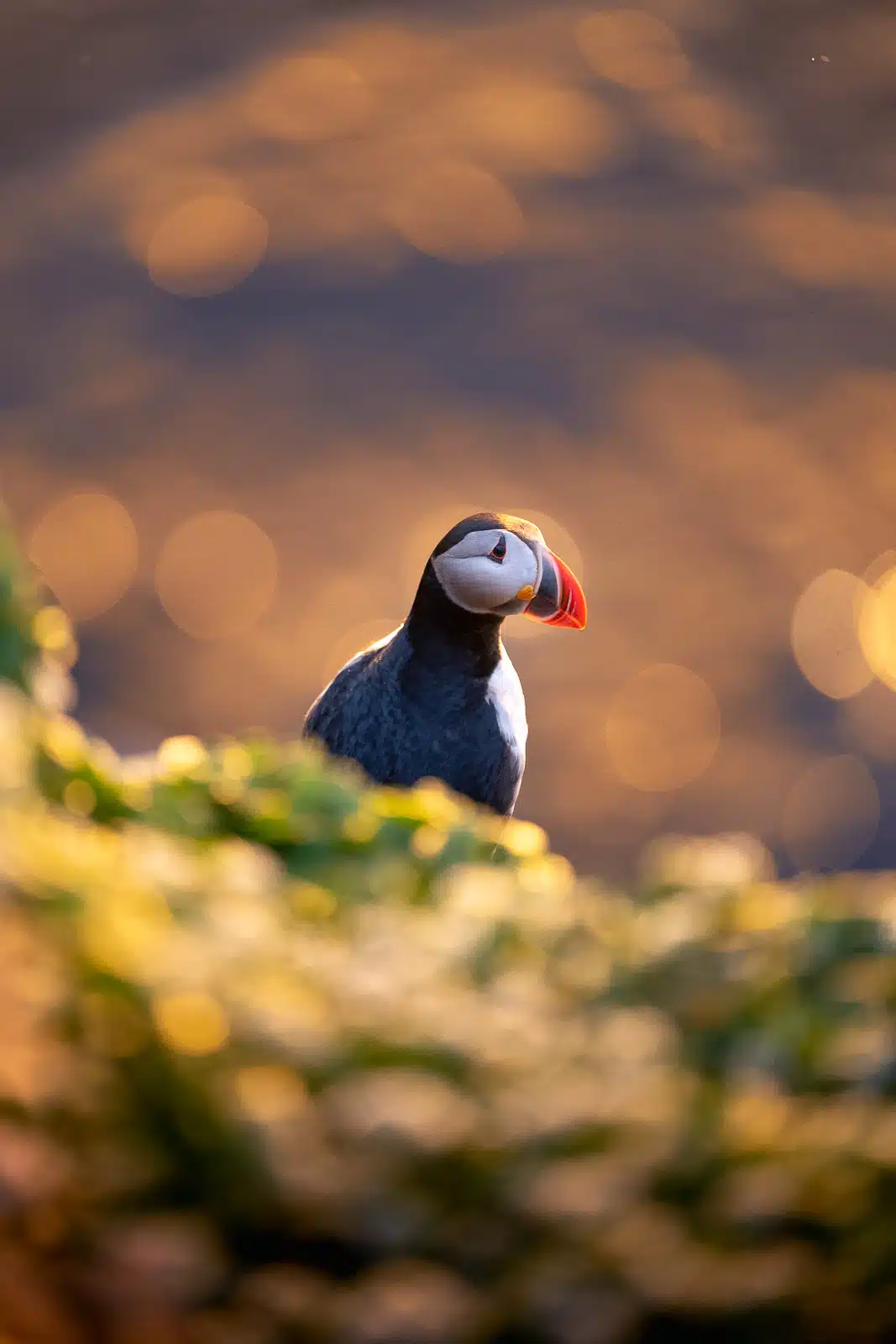
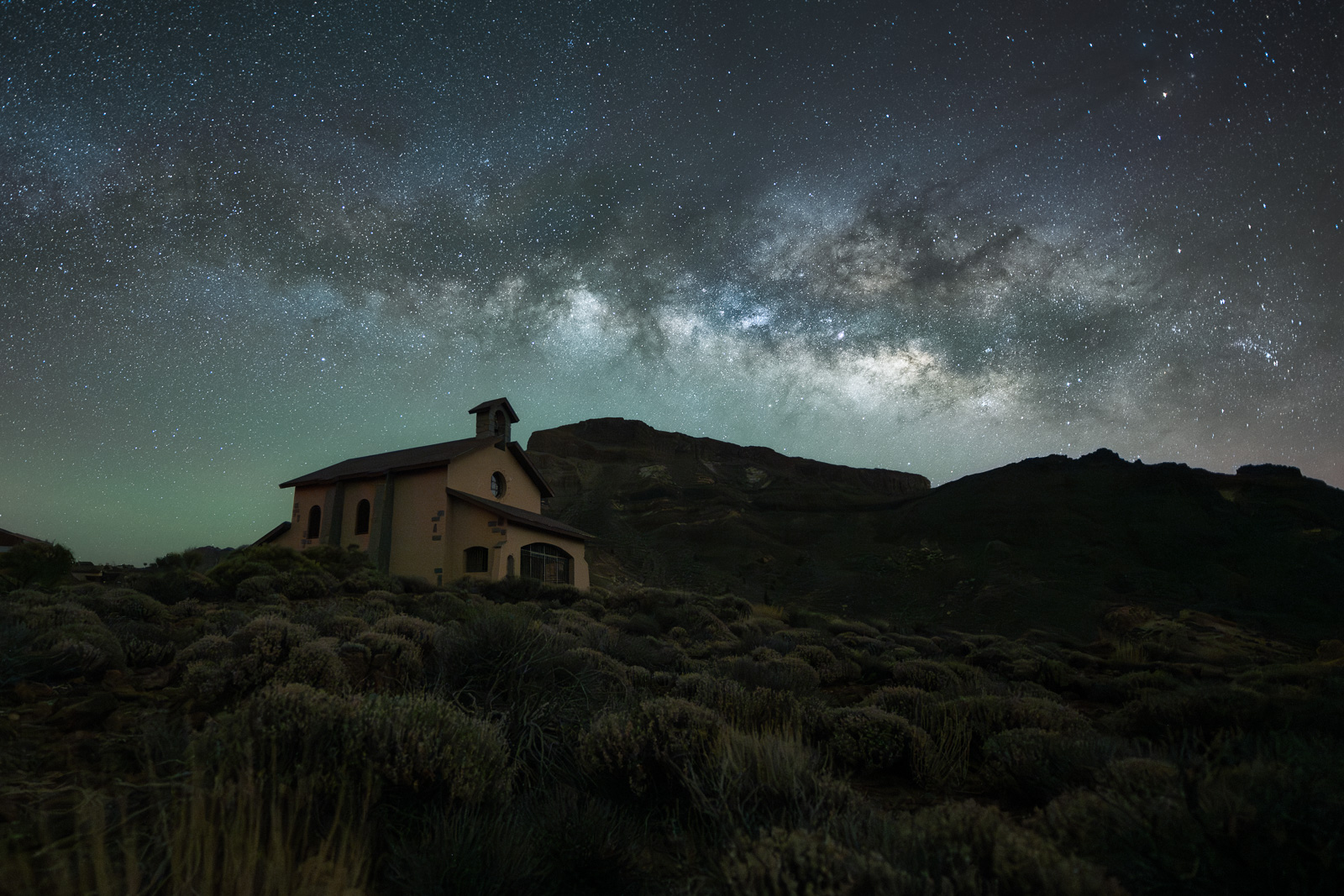
I’ve lost count of the times I’ve been asked “if you had to pick one favorite country for photography, which one would it be ?” The answer is always the same : Iceland, New Zealand and Madeira (yes, because I can’t pick just one).
If we’re being truly objective, every country is beautiful for those willing to look. But Iceland has a particular flavor, a unique light, and an incredible energy. Nature is everywhere, like this island is like nature is on steroids. The weather creates photographic conditions you won’t find anywhere else : a sun that almost doesn’t set from May to August, auroras and endless snowy landscapes in winter, mist, sun and rain sometimes within the same hour. It’s an infinite playground for nature photographers.
In this article I’m sharing my favourite landscape photography spots in Iceland, built up over six trips and hundreds of hours spent outdoors waiting for the right light. You’ll find all of these and 500 more on my interactive Iceland map.
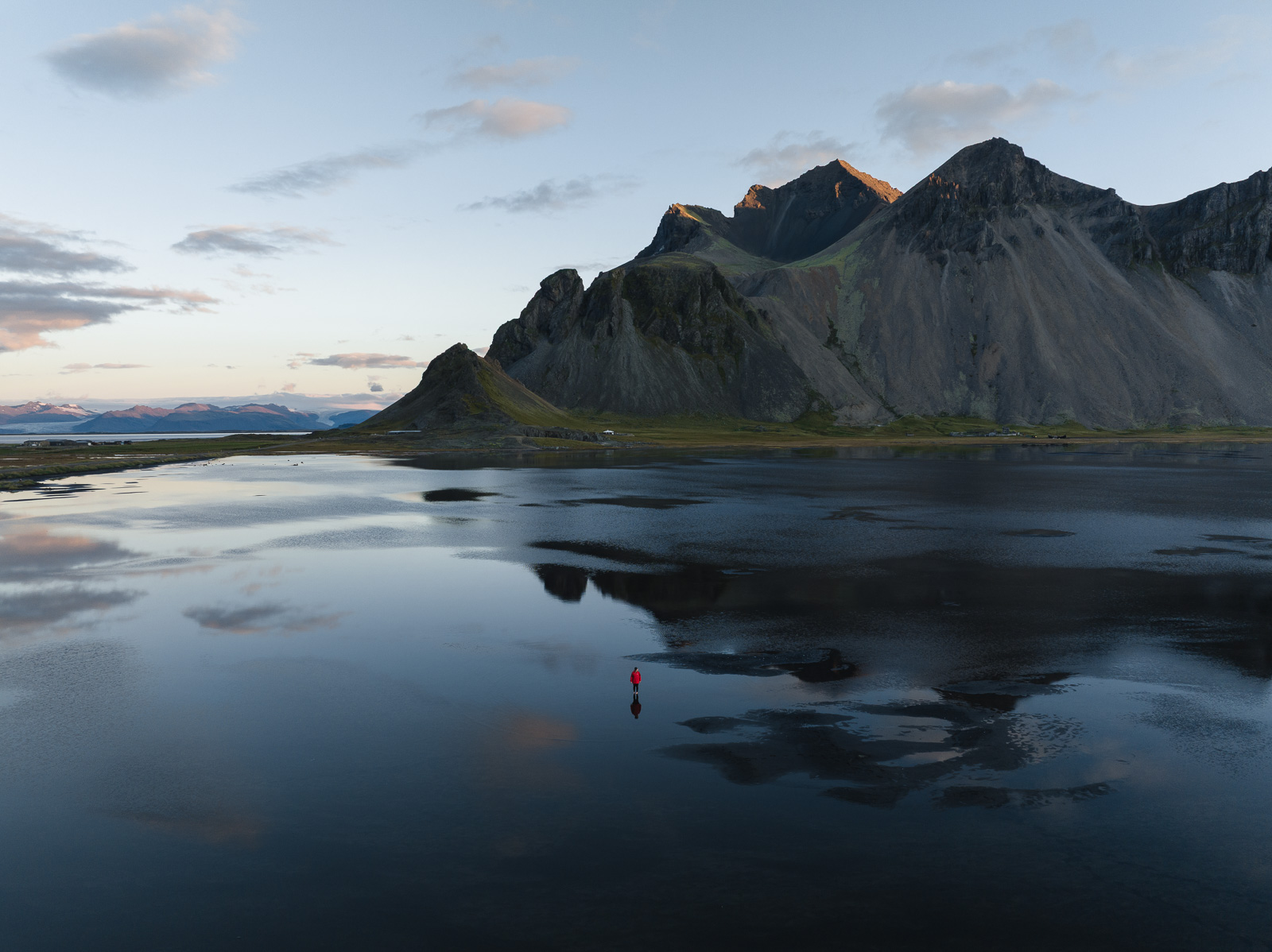
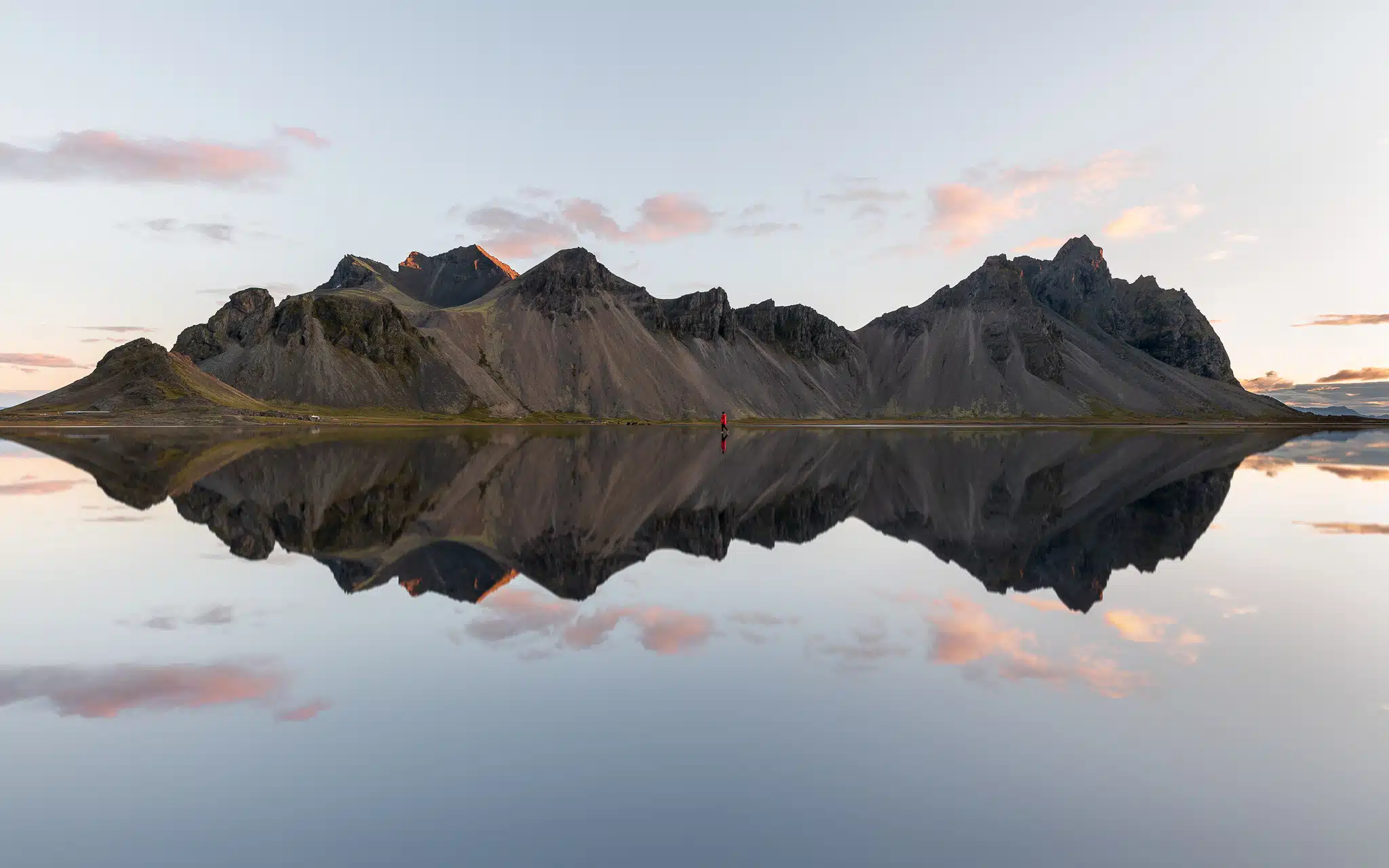
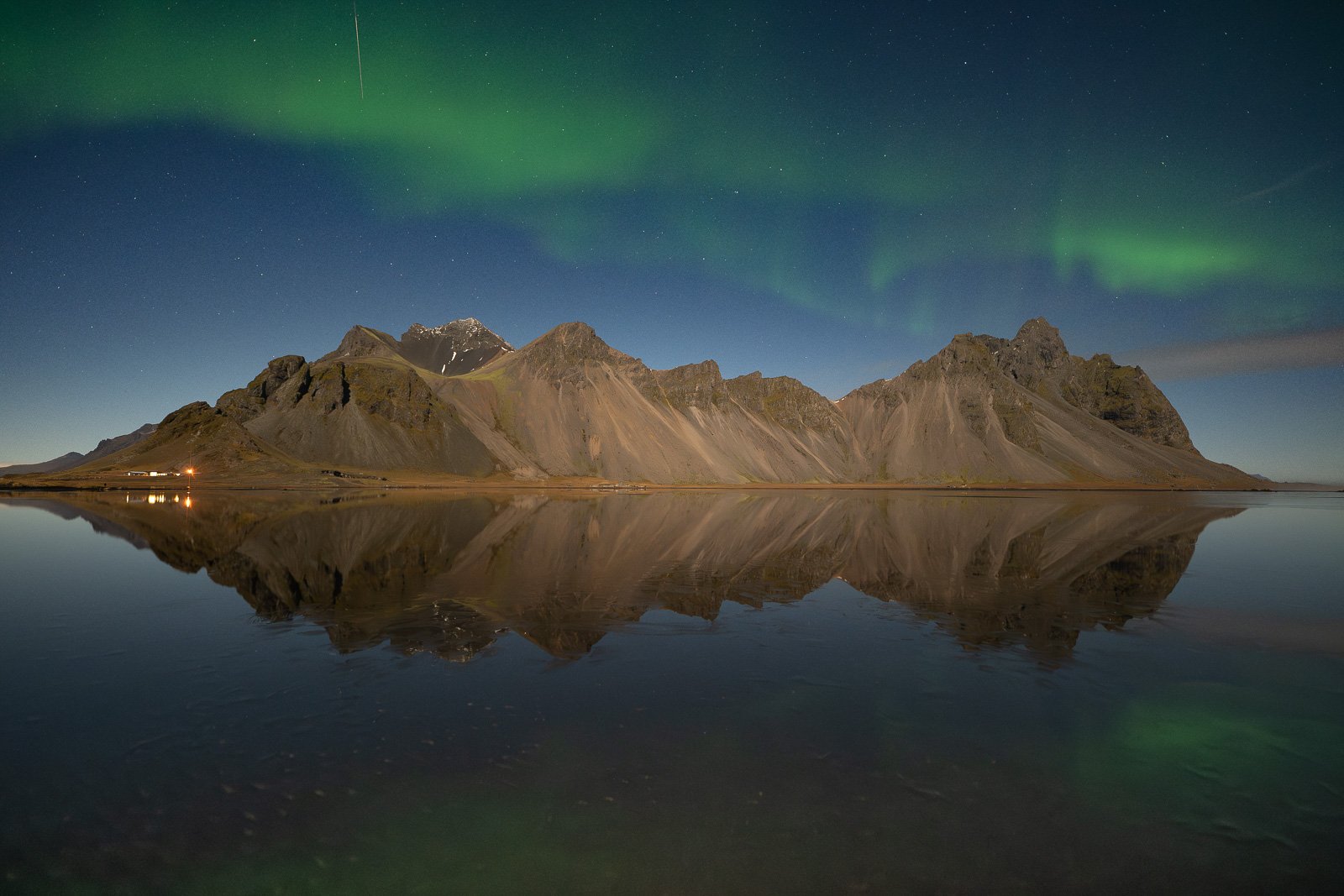
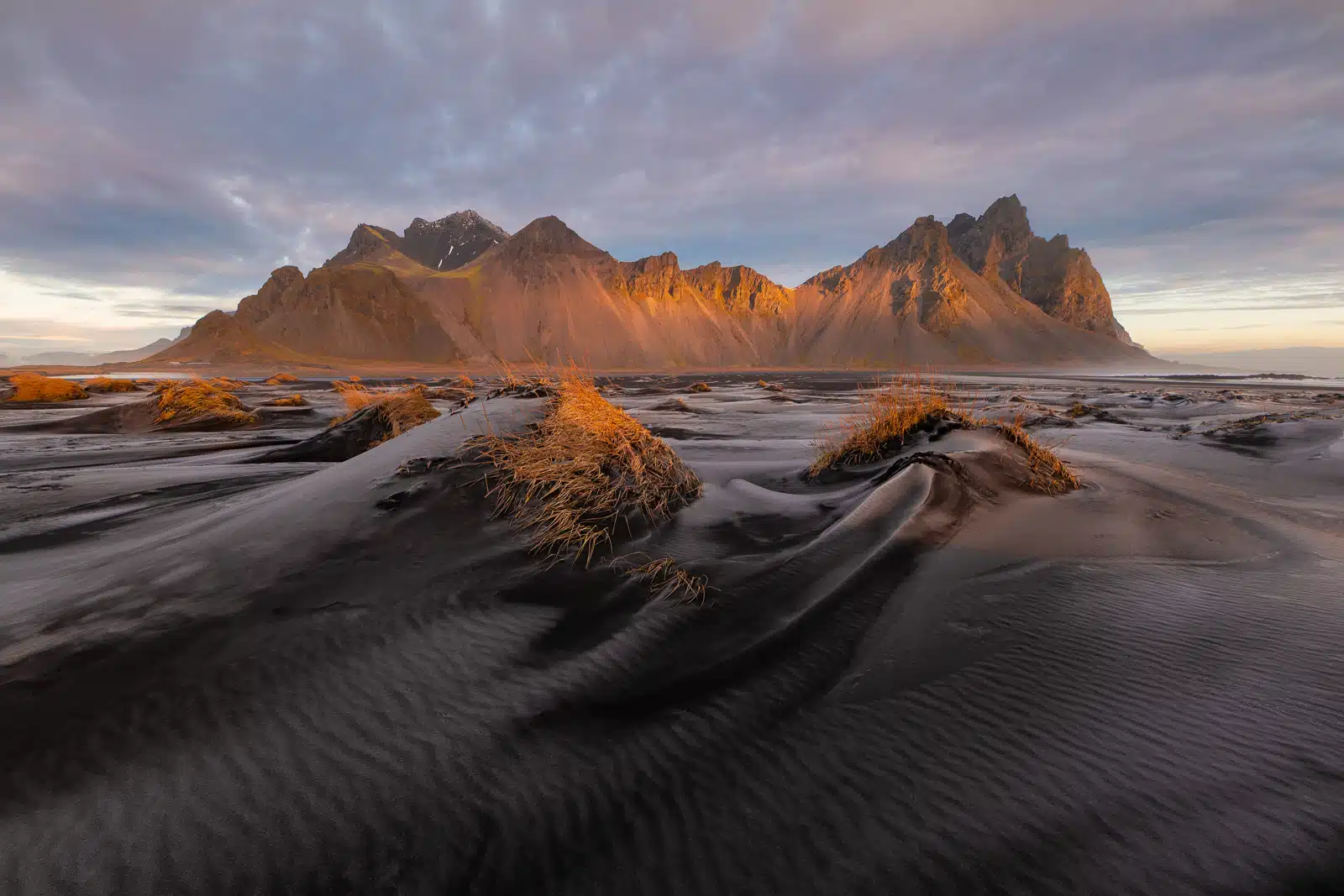
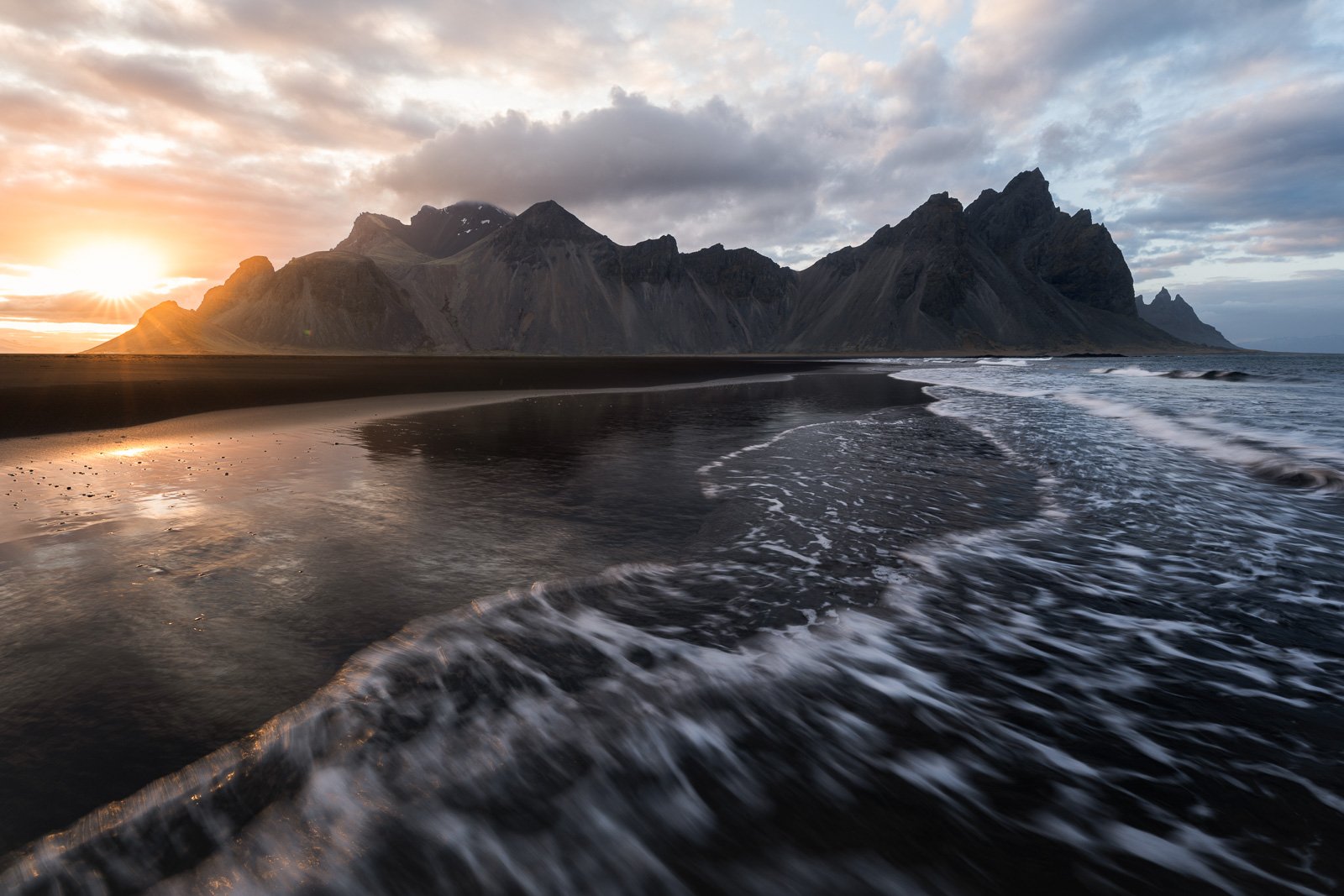
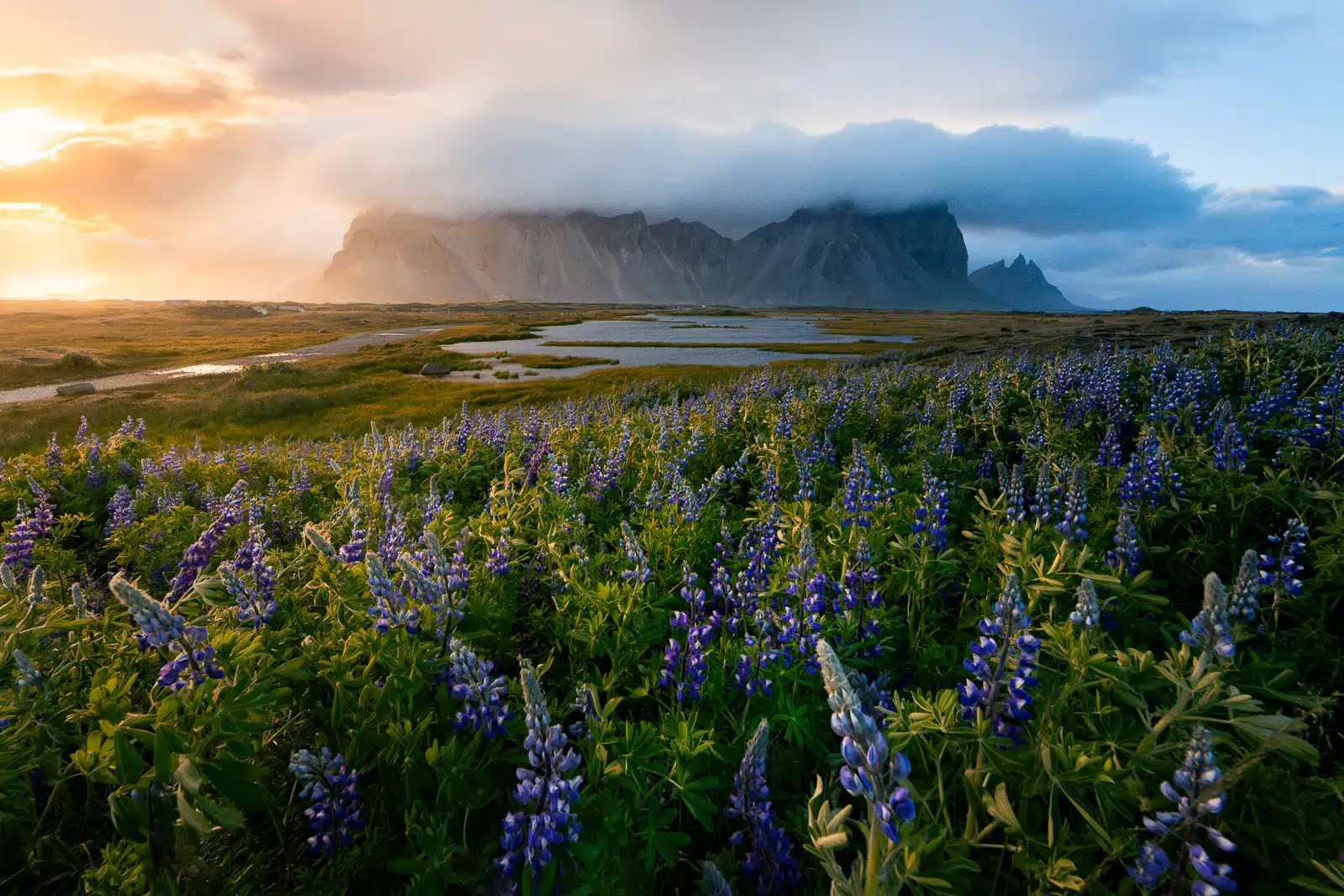
Stokksnes/Vestrahorn : Iceland’s signature shot
If you’ve ever seen ONE photo of Iceland that made you want to go, there’s a good chance it was taken at Stokksnes. I call it the Batman mountain because Vestrahorn looks a bit like the logo if you squint your eyes 😅 When the tide is low, the jagged black walls reflect in the shallow water of the lake. It’s one of the most photographed subjects in Iceland and it absolutely deserves the attention. And yes, it’s also one of my favorite places !
- Best time to photograph : golden hour, year-round
- Gear to bring : wide-angle and medium focal length + drone
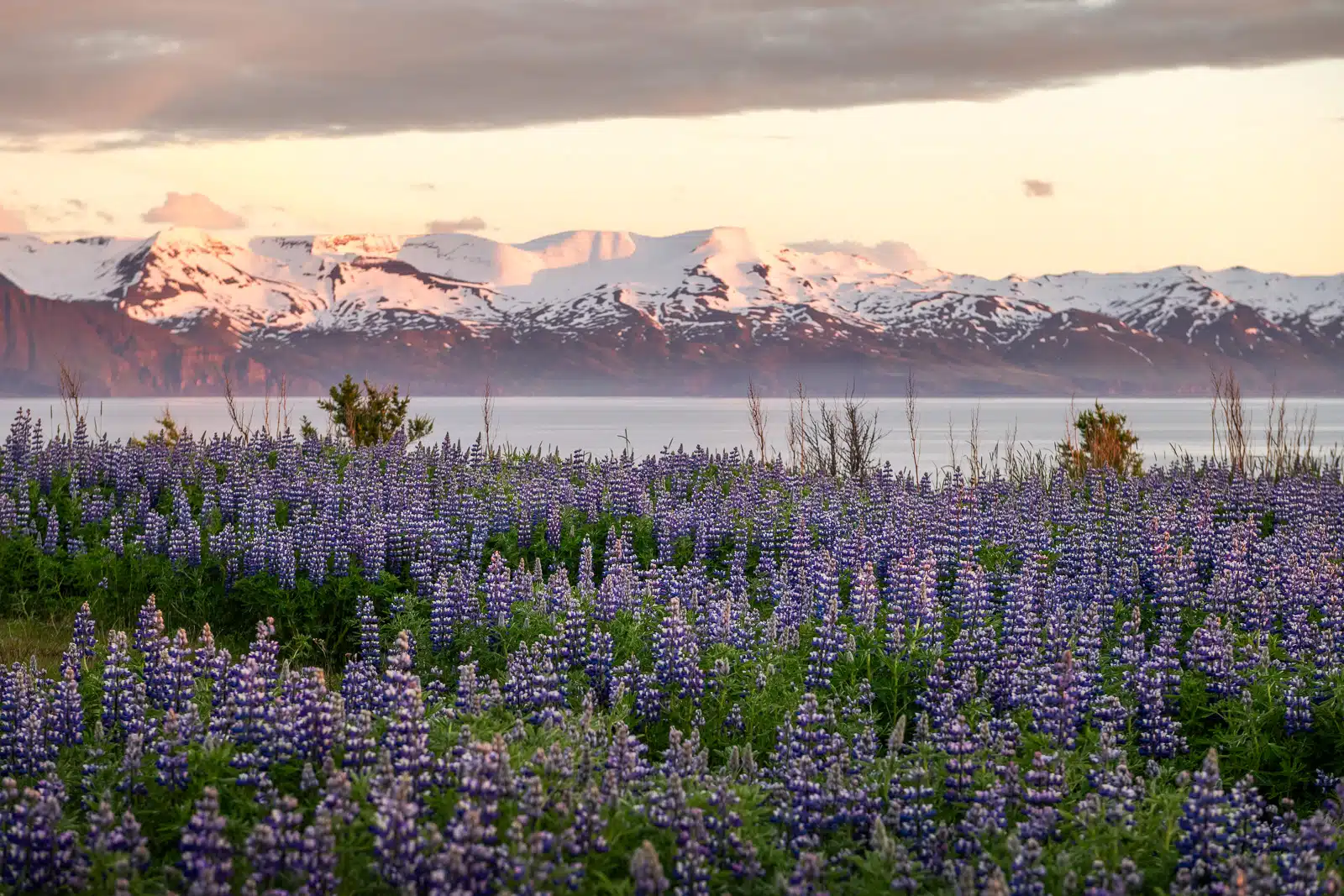
👉 The location completely changes depending on the light, the season and the weather. Without wind, the reflections are perfect, in stormy or overcast conditions the compositions are very dramatic. In winter under snow it’s something else entirely and you can even see some incredible northern lights, while in summer, there can be an incredible glow and lupins framing the peaks.
Kirkjufell : Iceland’s most photographed mountain
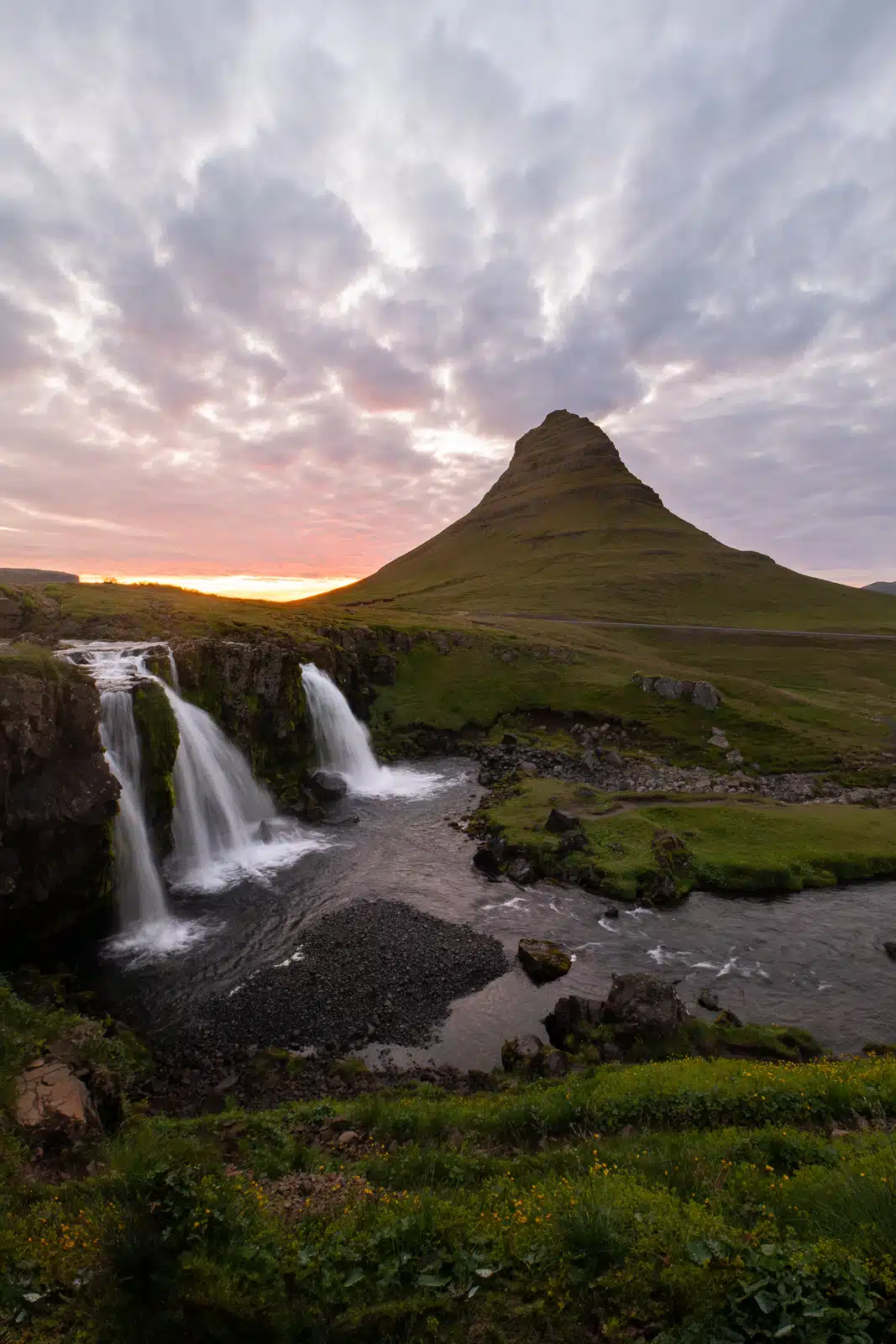
Kirkjufell on the Snæfellsnes Peninsula is probably the most photographed mountain in Iceland. It briefly appears in Game of Thrones (in one of Bran’s visions). Its almost perfectly conical shape, combined with the small waterfall Kirkjufellsfoss in the foreground, creates a ready-made composition that thousands of photographers replicate every year, me included. Which doesn’t mean it’s no longer interesting, it just means you need to look around for the less obvious angles. You can also walk around the lake or look for flowers to create an interesting foreground.
- Best time to photograph : golden hour, year-round + northern lights in winter
- Gear to bring : wide-angle, 200%

Jökulsárlón and Diamond Beach : ice, colors and light
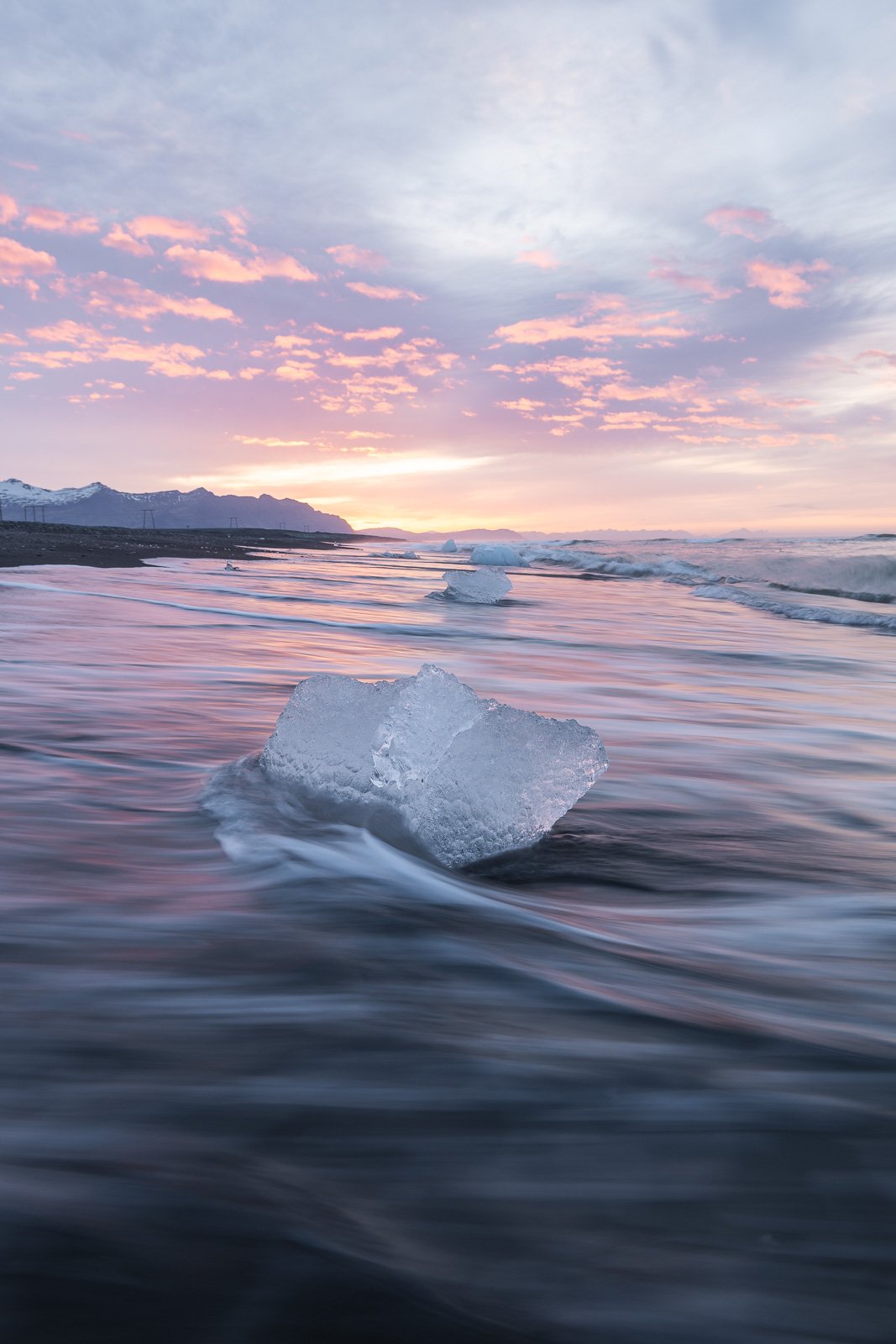
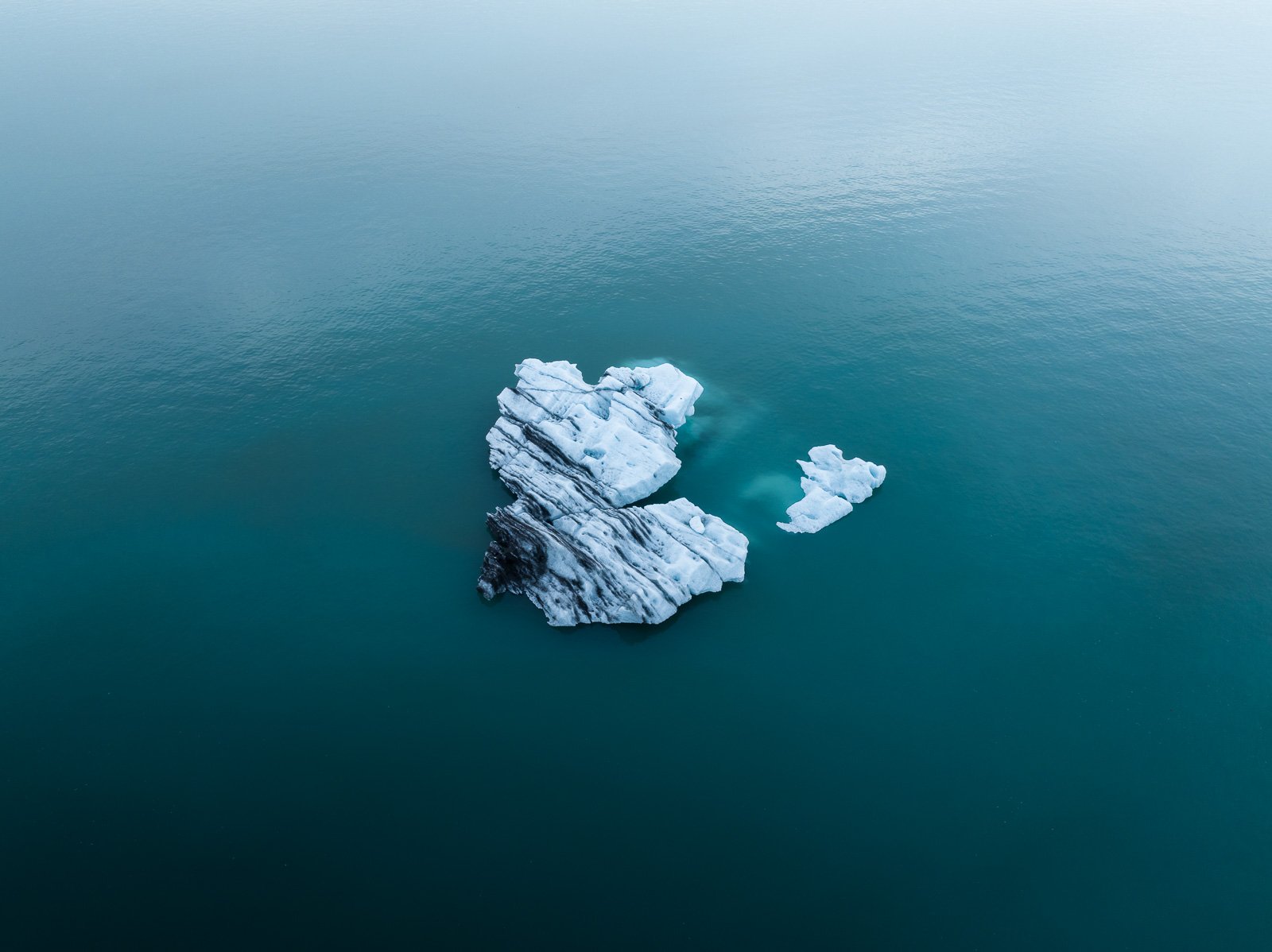
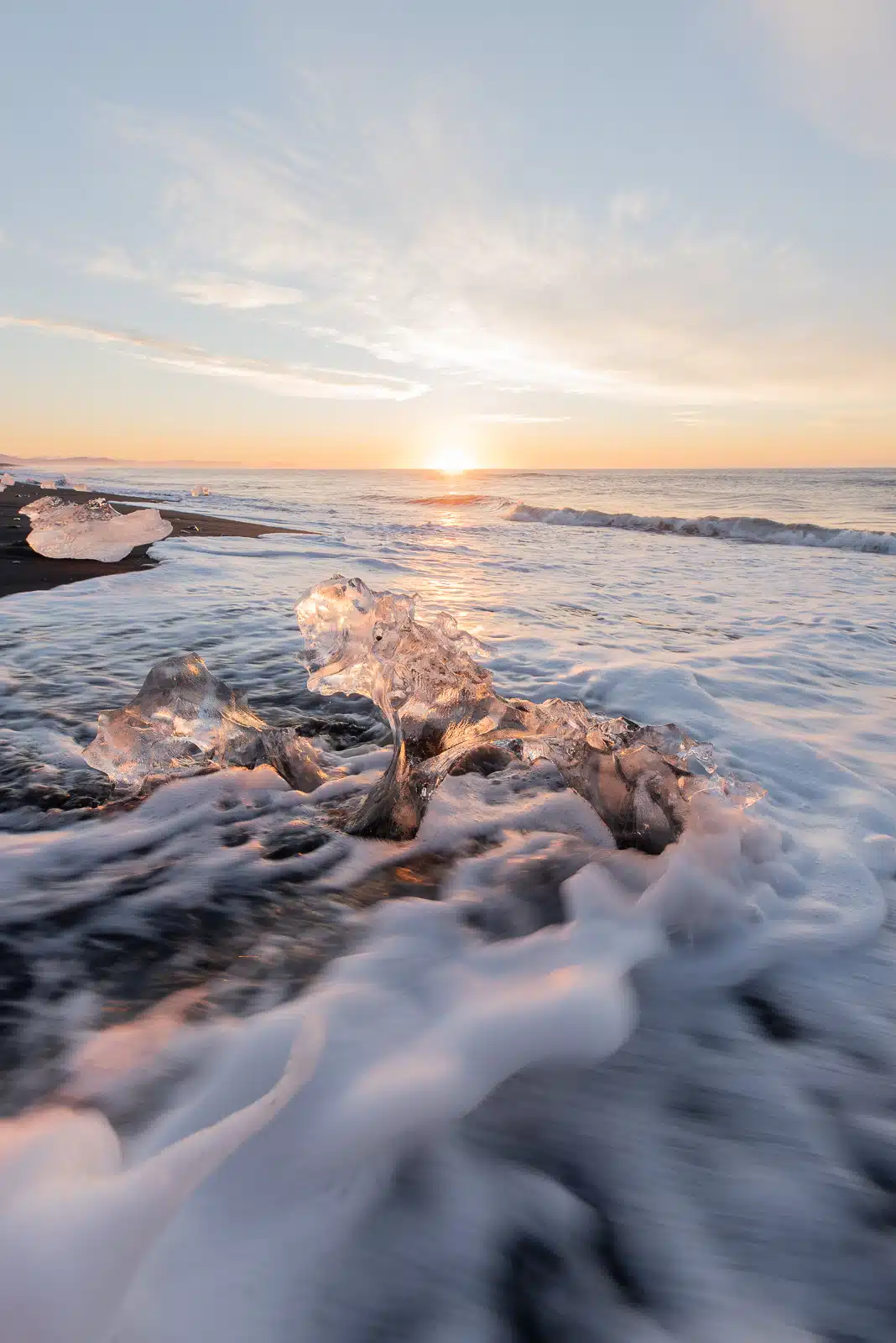
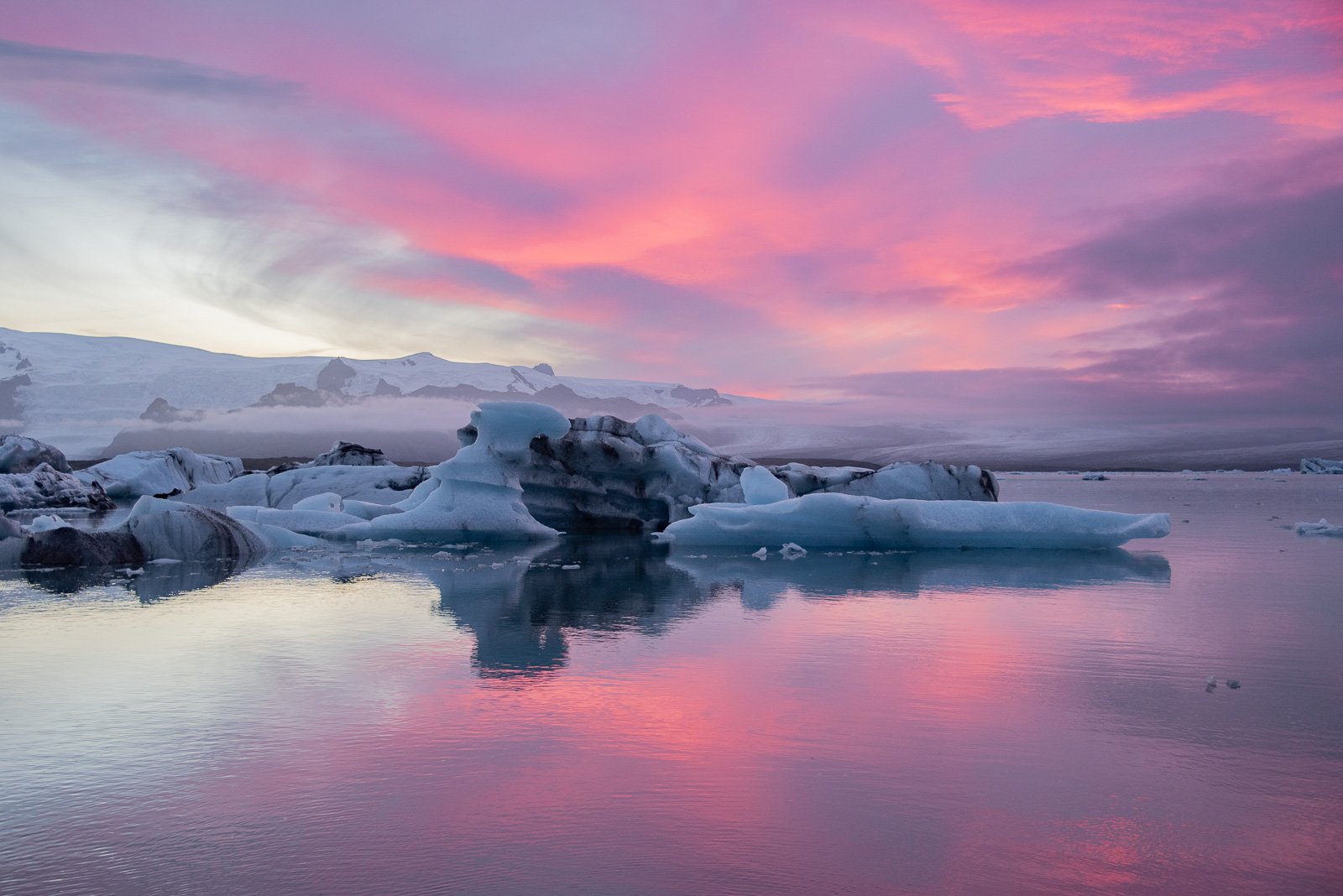
These are two iconic spots in one. Basically on one side of the road you have the Jökulsárlón glacier lagoon, where icebergs from the Breiðamerkurjökull glacier drift towards the Atlantic via a small tidal channel, and on the other side Breiðamerkursandur (nicknamed Diamond Beach for obvious pronunciation reasons) where icebergs wash back up onto the black sand.
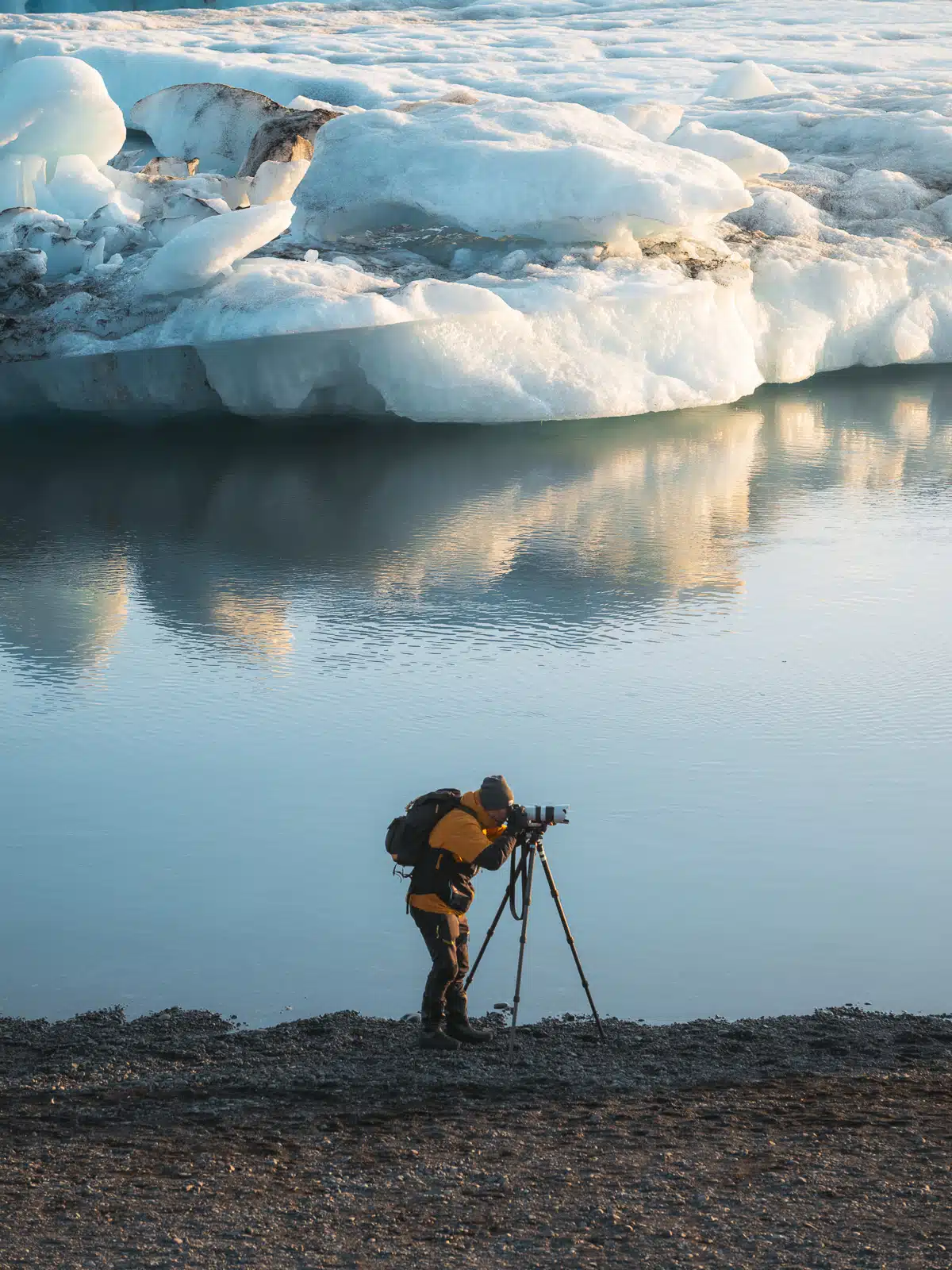
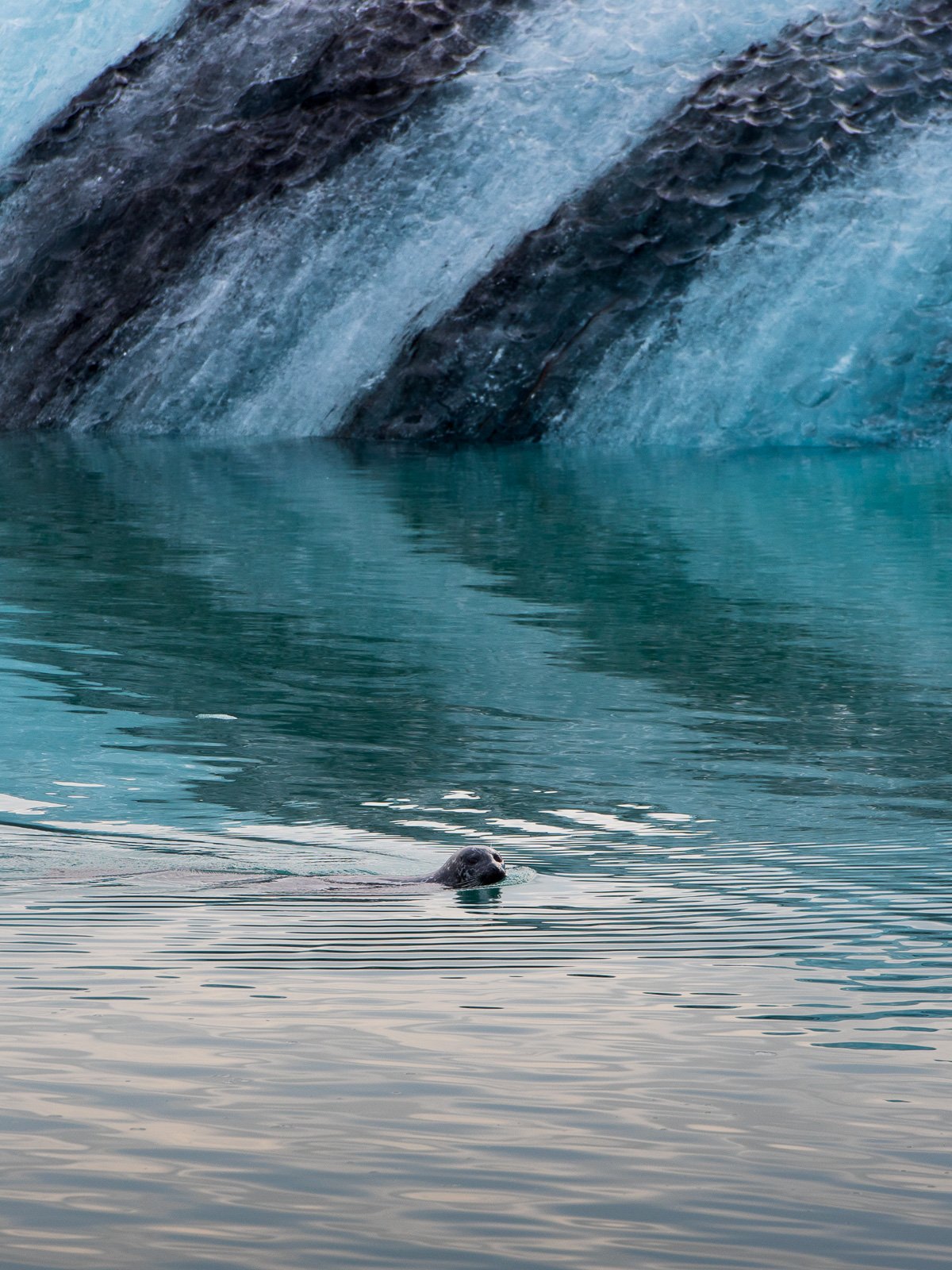
Both spots are a paradise for photographers ! You have absolutely everything you need to be happy : color (black sand, pink golden hour, blue glaciers), opportunities for semi-long exposures, seals and birds in the bay… It’s genuinely hard to leave 😅
- Best time to photograph : sunrise (fewer people, pink-gold light on the ice) and sunset (warm tones on blue icebergs), year-round
- Gear to bring : medium to telephoto (especially at Jökulsárlón to capture wildlife), ND filters, tripod
👉 Of course the number of icebergs vary every day. Don’t be surprised if there aren’t many when you visit, that’s nature !
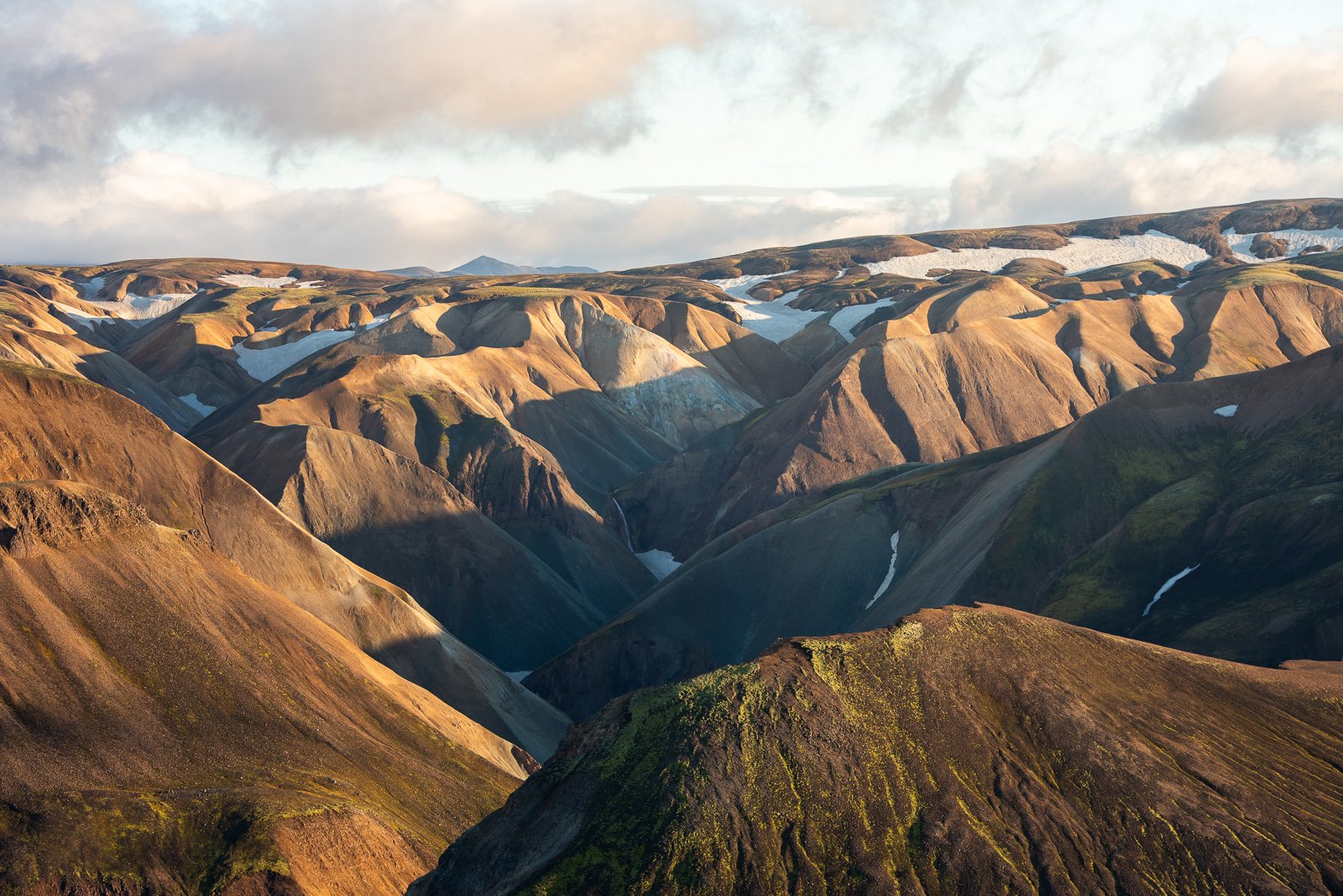
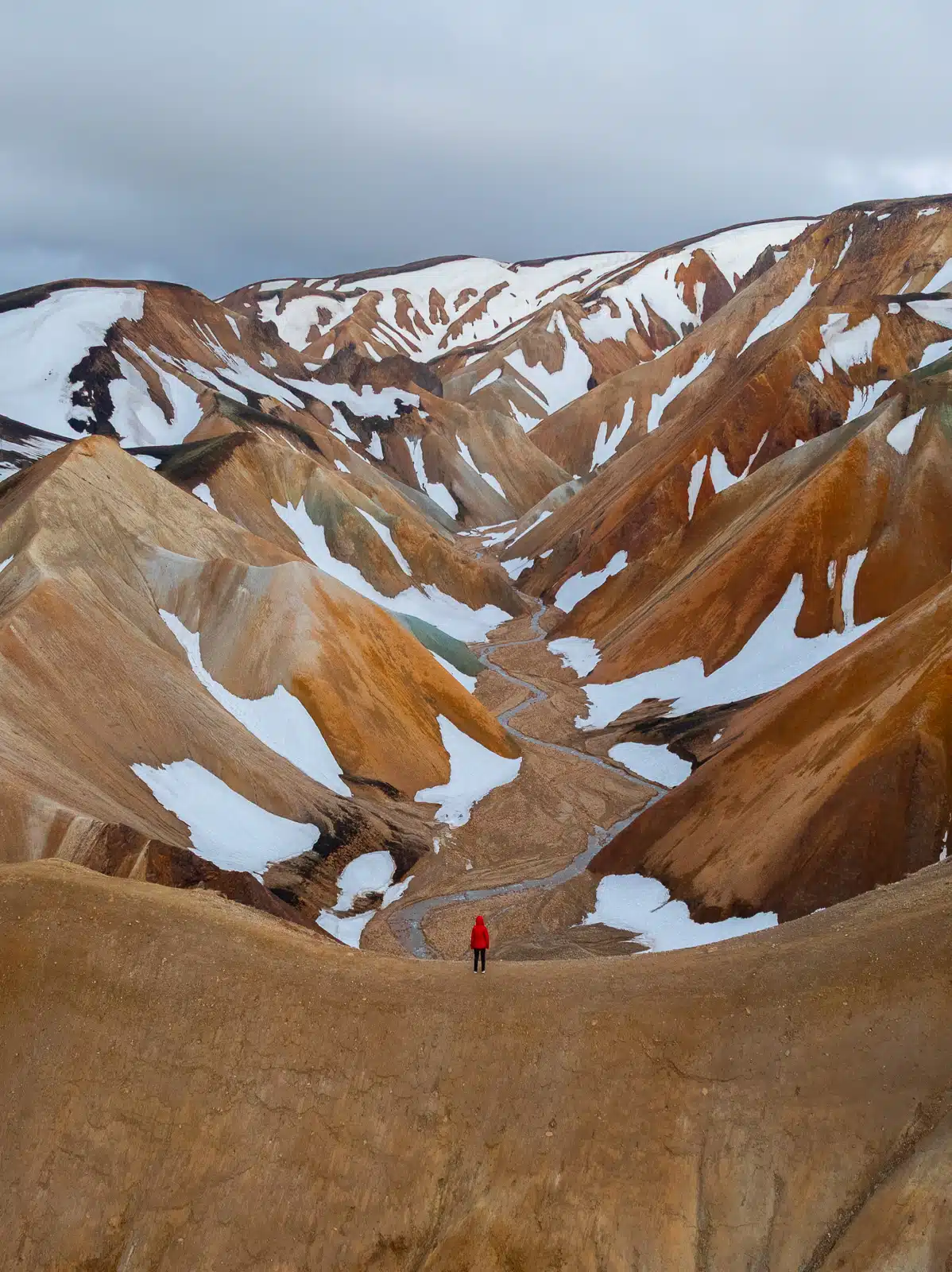
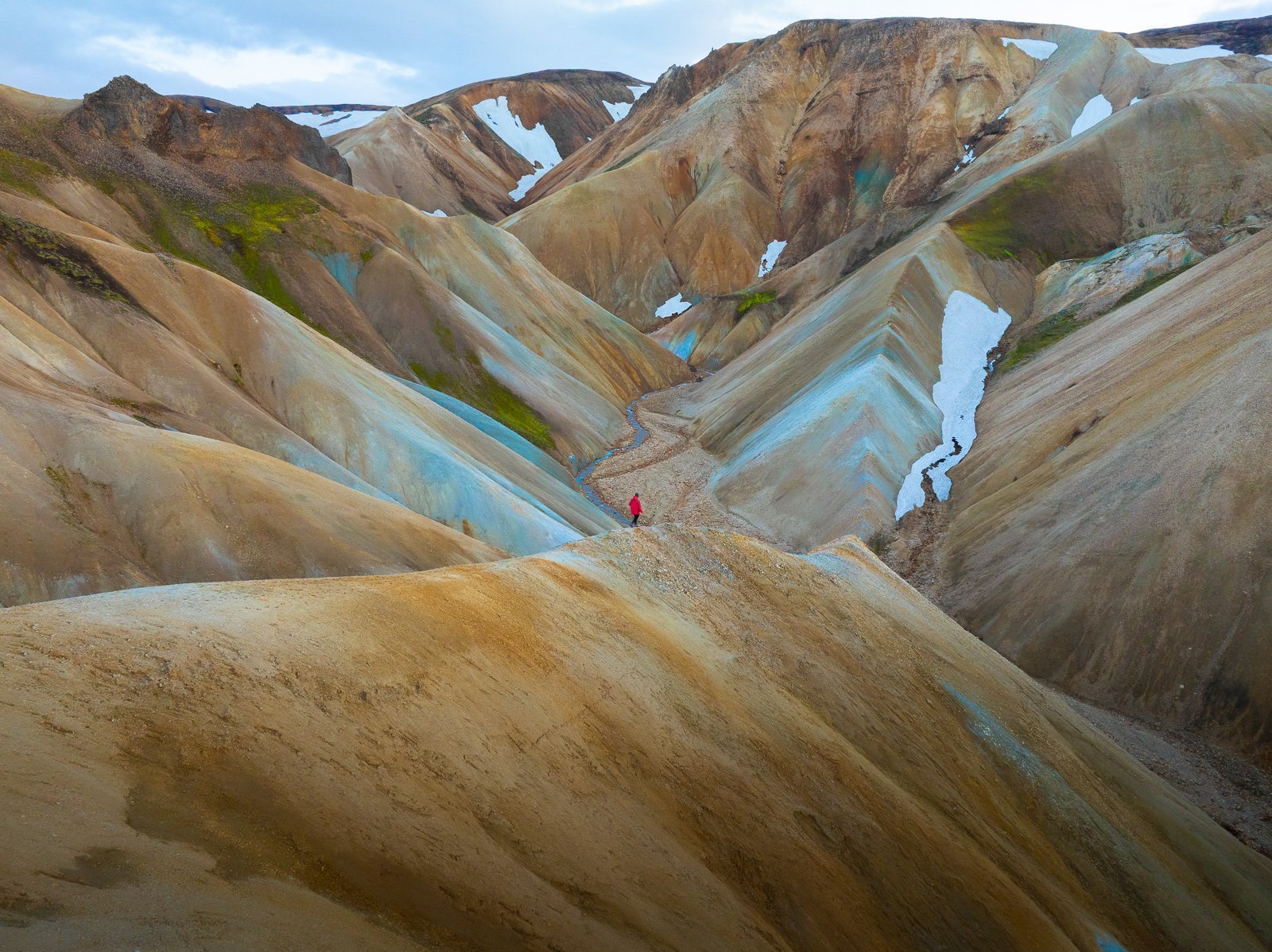
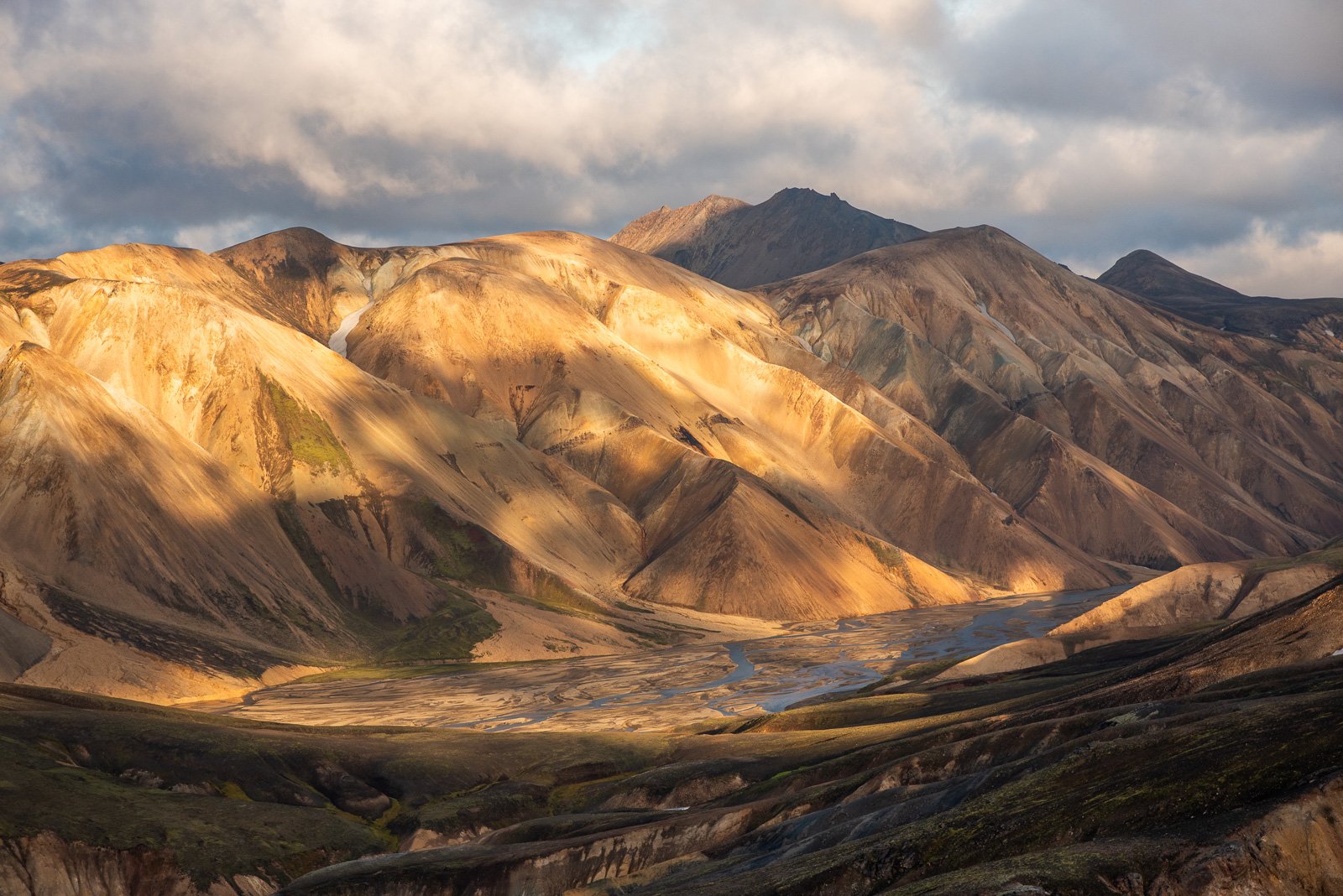
Landmannalaugar : the rainbow mountains
The rhyolite mountains of Landmannalaugar are one of the most unique photographic subjects Iceland has to offer. The mix of green, red, orange, yellow and blue seems impossible in nature, but impossible isn’t Icelandic 😉 The colors shift depending on the light and the time of day. I go into more detail in my article on the most beautiful places of the Highlands.
- Best time to photograph : sunset, in summer
- Gear to bring : medium to telephoto (for compression)
👉 Drone is now forbidden in the Fjallbalak reserve and Landmannalaugar is part of it. If you’re wondering where you can find all the info about flying a drone, regulations, no-drone zone, ect, I’ve detailed everything in my Iceland Guide.
Dyrhólaey : cliffs and puffins
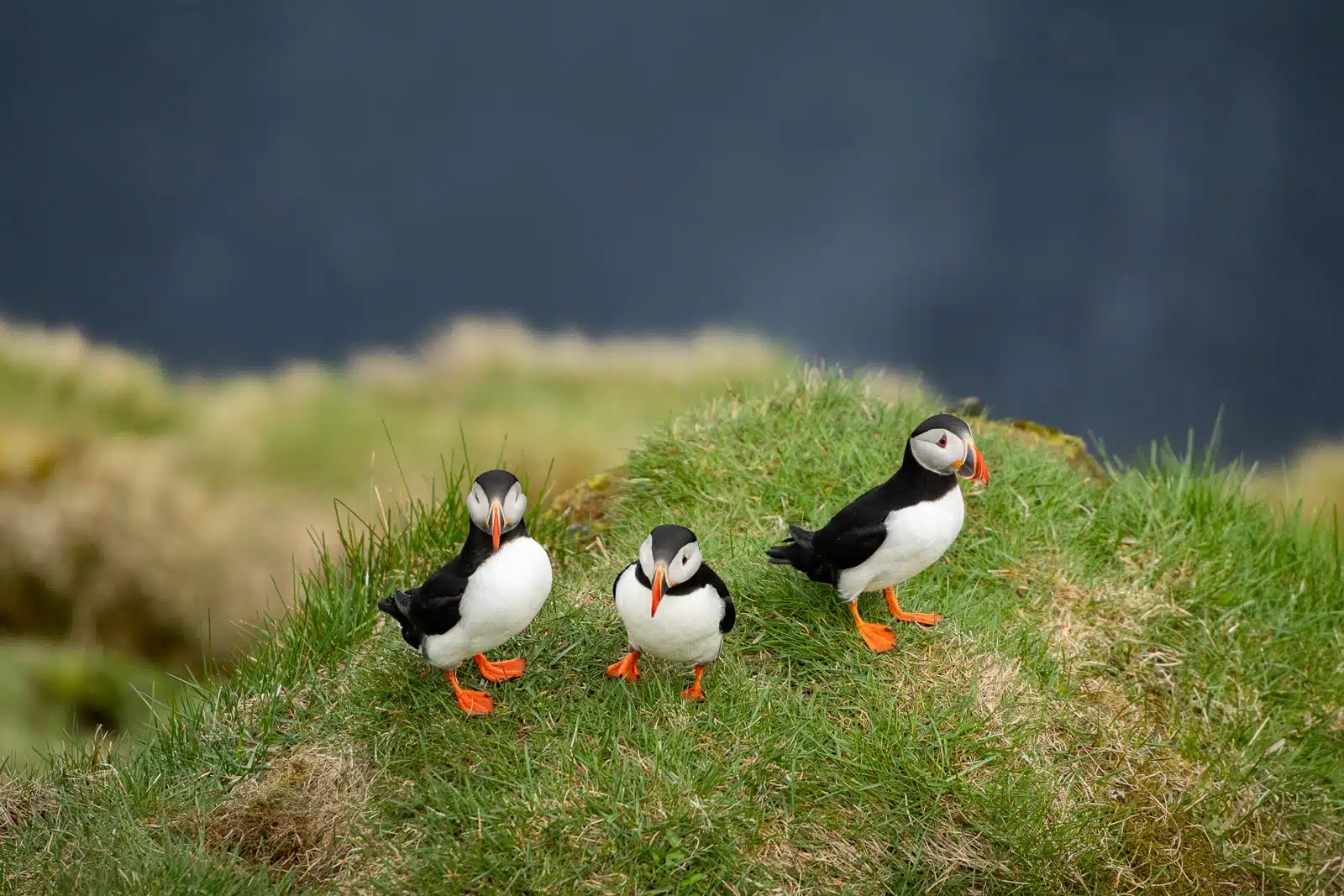
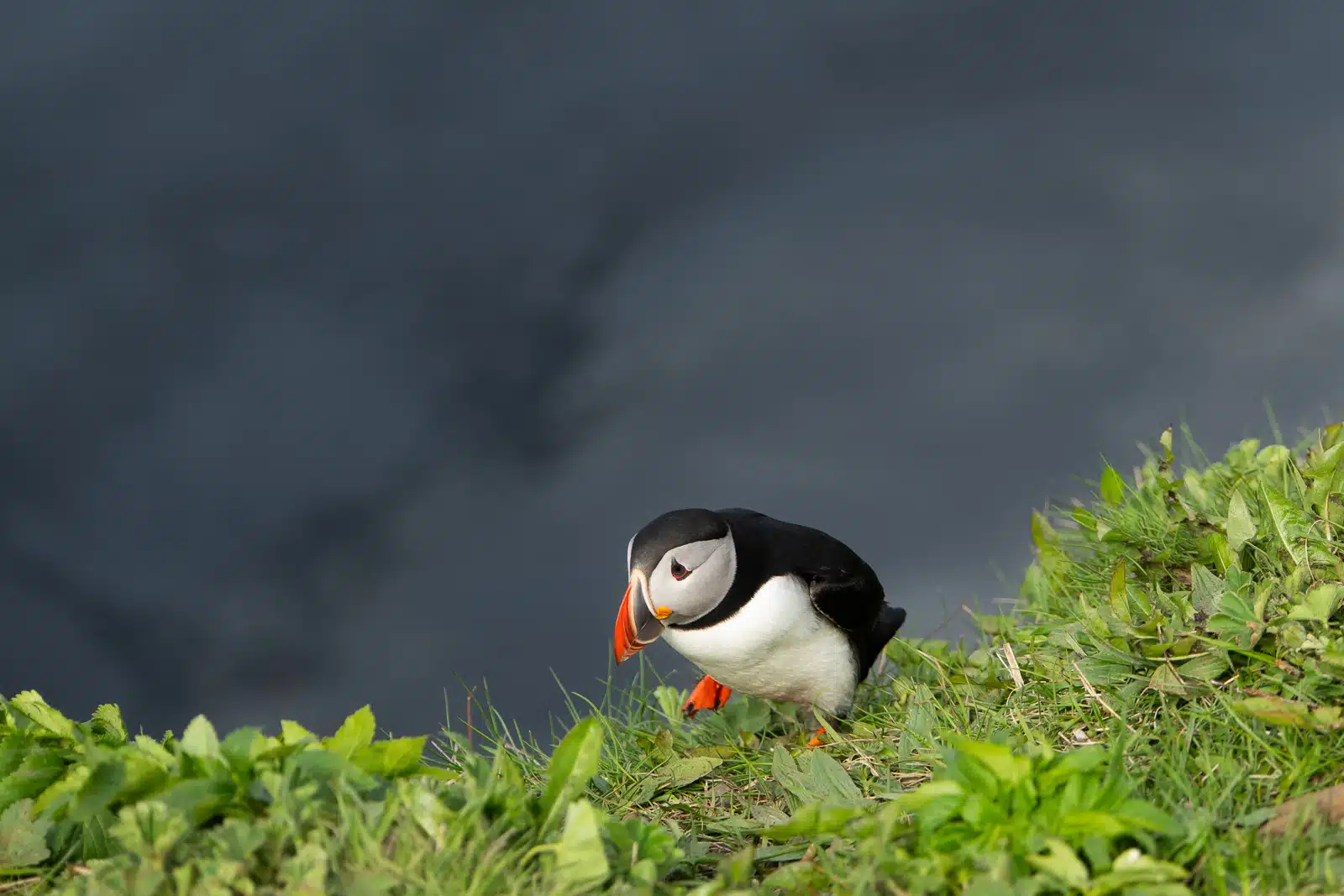
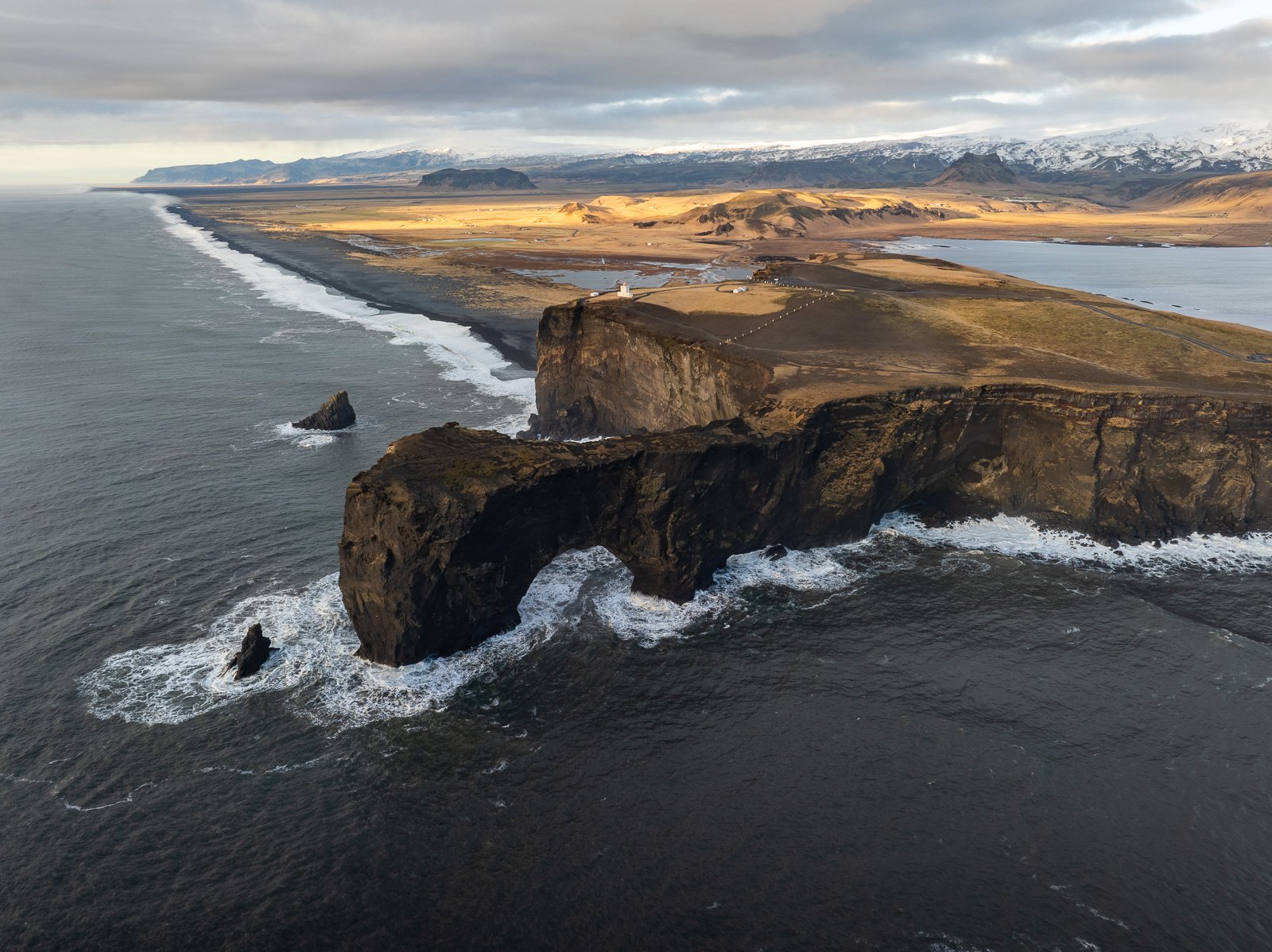
Dyrhólaey is a small volcanic peninsula near Vík that juts out into the Atlantic and opens up into a large natural arch about sixty meters high. It’s one of the strongest photographic subjects in the south, especially late in the day. In summer (mid-May to early August), puffins nest on the Dyrhólaey cliffs, making it a double photo spot : landscape and wildlife. My article on how to photograph puffins covers everything you need to know.
- Best time to photograph : sunset, summer
- Gear to bring : telephoto for puffins
👉 Dyrhólaey is closed from 7PM to 9AM between May 1st and June 25th to protect puffins nesting, so plan accordingly. Drone is now completely forbidden as well, all year long.
Brúarfoss : Iceland’s bluest waterfall
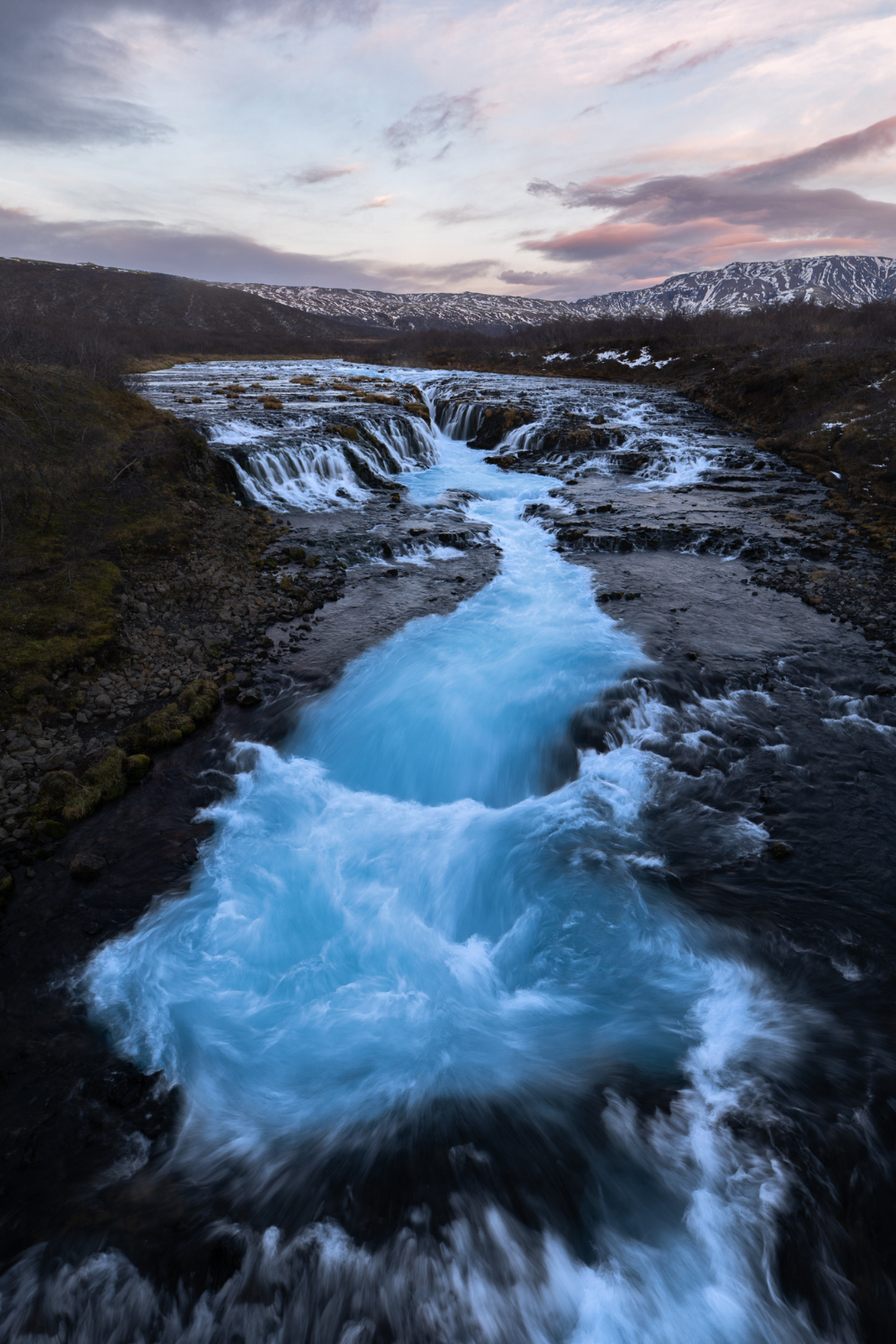
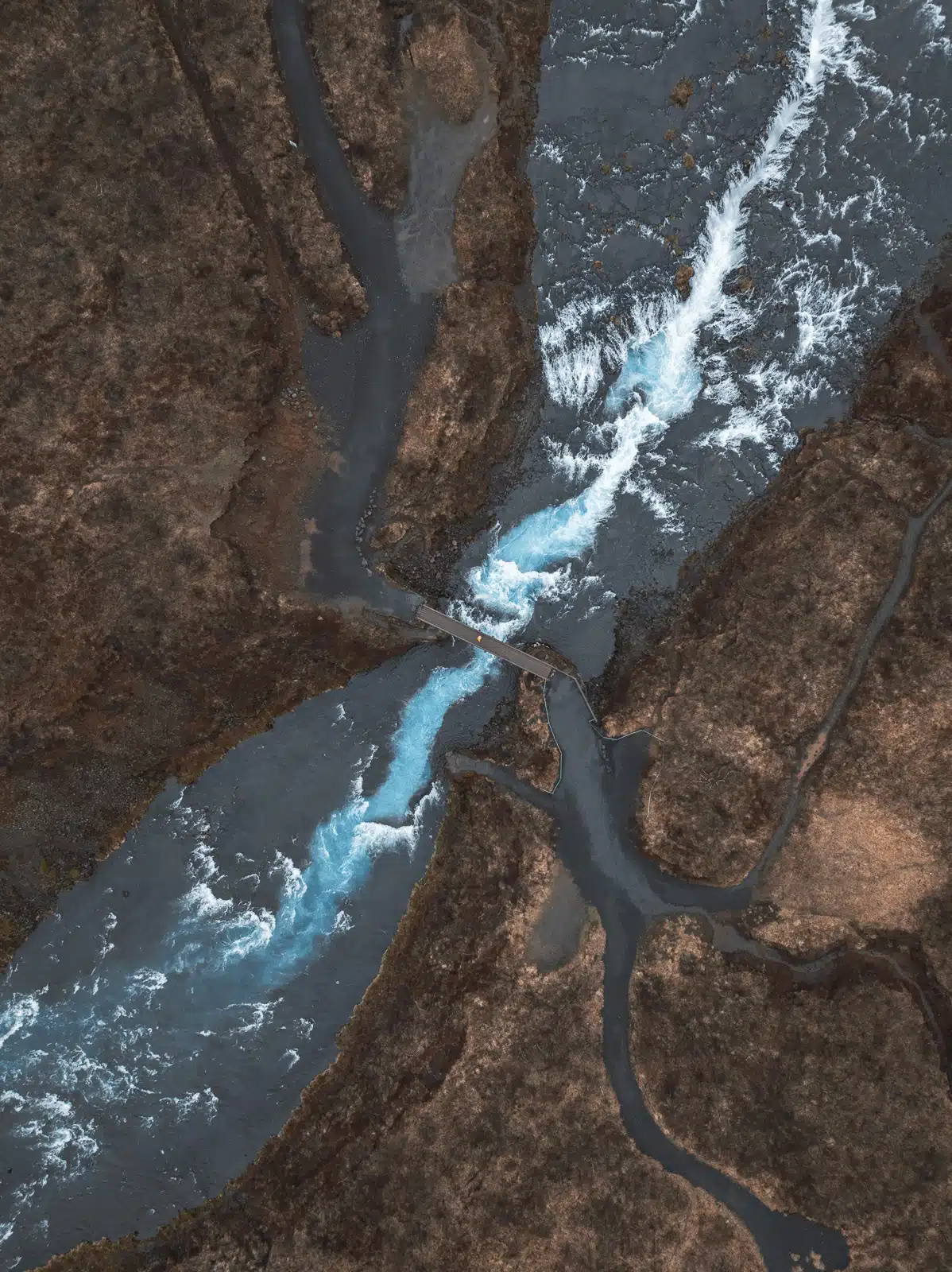
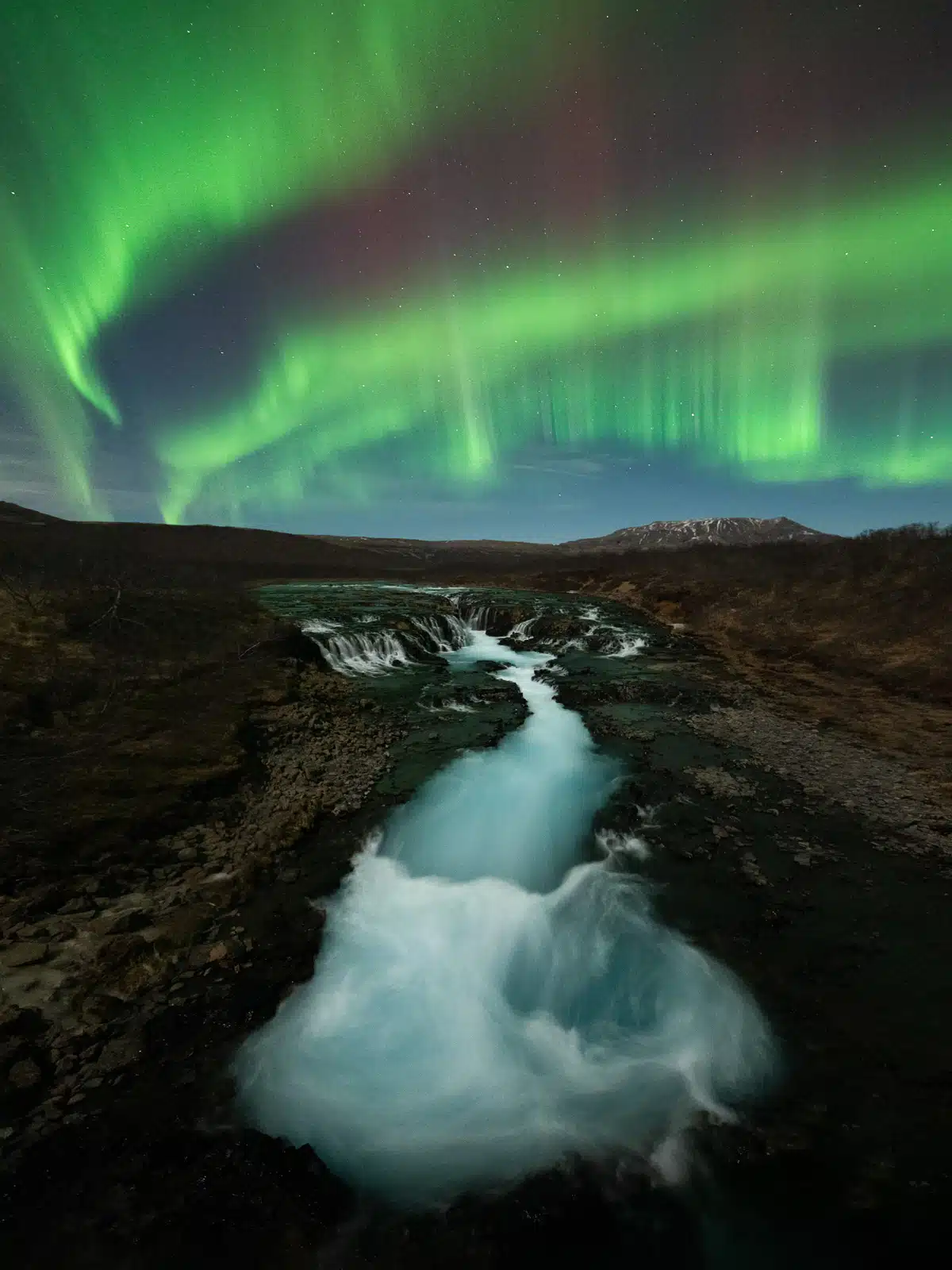
Brúarfoss is in my personal top 5 favourite spots in Iceland ! It’s probably one of the most photogenic places you’ll ever see in your life and the great thing is that not many people stop here, so you’re regularly alone! The Bruará river flows over black rocks, and its supernatural turquoise color comes from glacial meltwater : fine glacial dust carried by the water gives it that very blue color when the sun reflects off it.
The contrast between the black rock and the turquoise water is easy and very satisfying to photograph even without advanced technique.
- Best time to photograph : sunrise
- Gear to bring : wide-angle (essential) + tripod + drone
👉 Try shooting semi-long exposures to slightly freeze the movement of the water. You can also take the drone! If you want to know which other waterfalls are worth visiting in Iceland, I’ve written a detailed article on that topic.
Reynisfjara and Víkurfjara
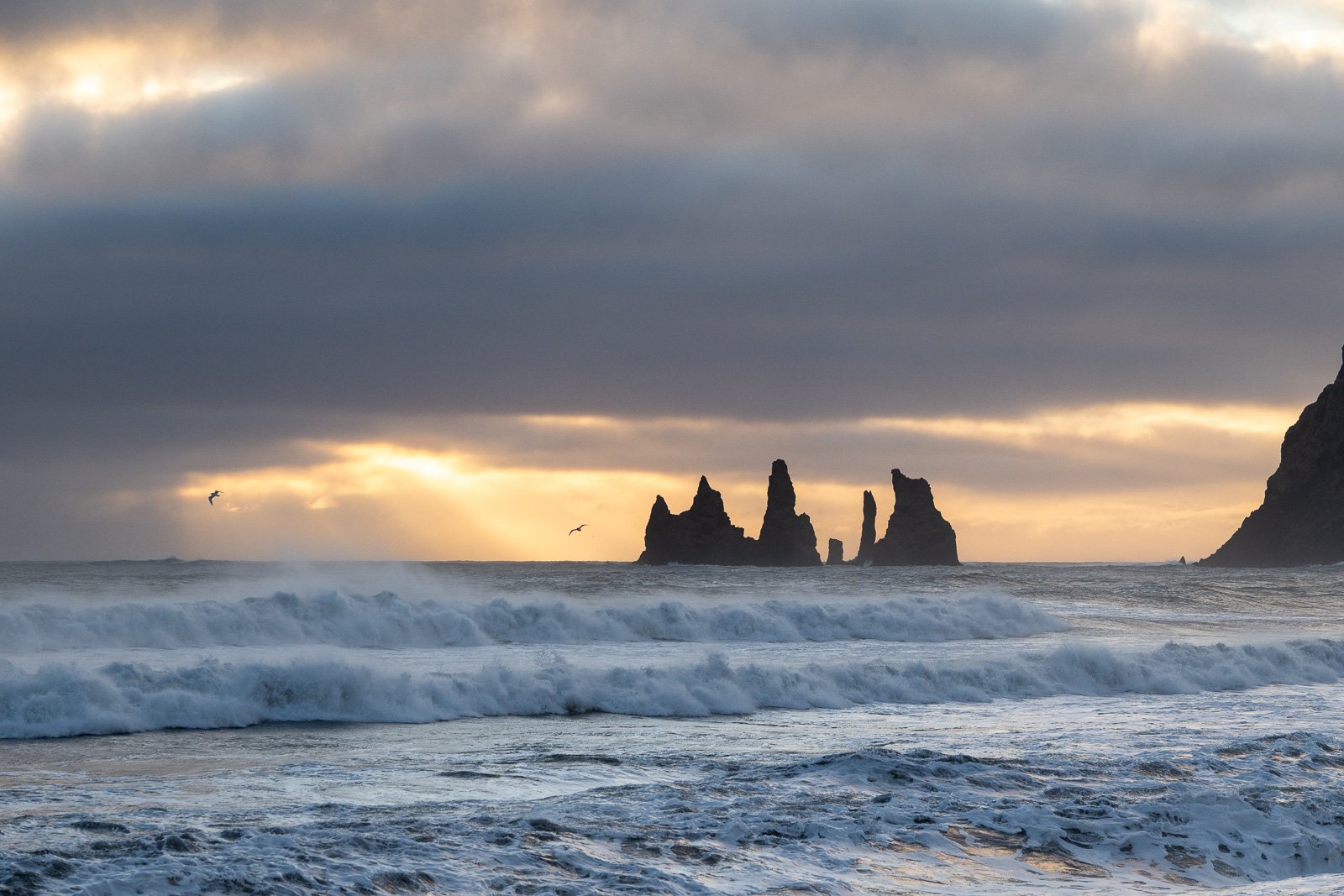
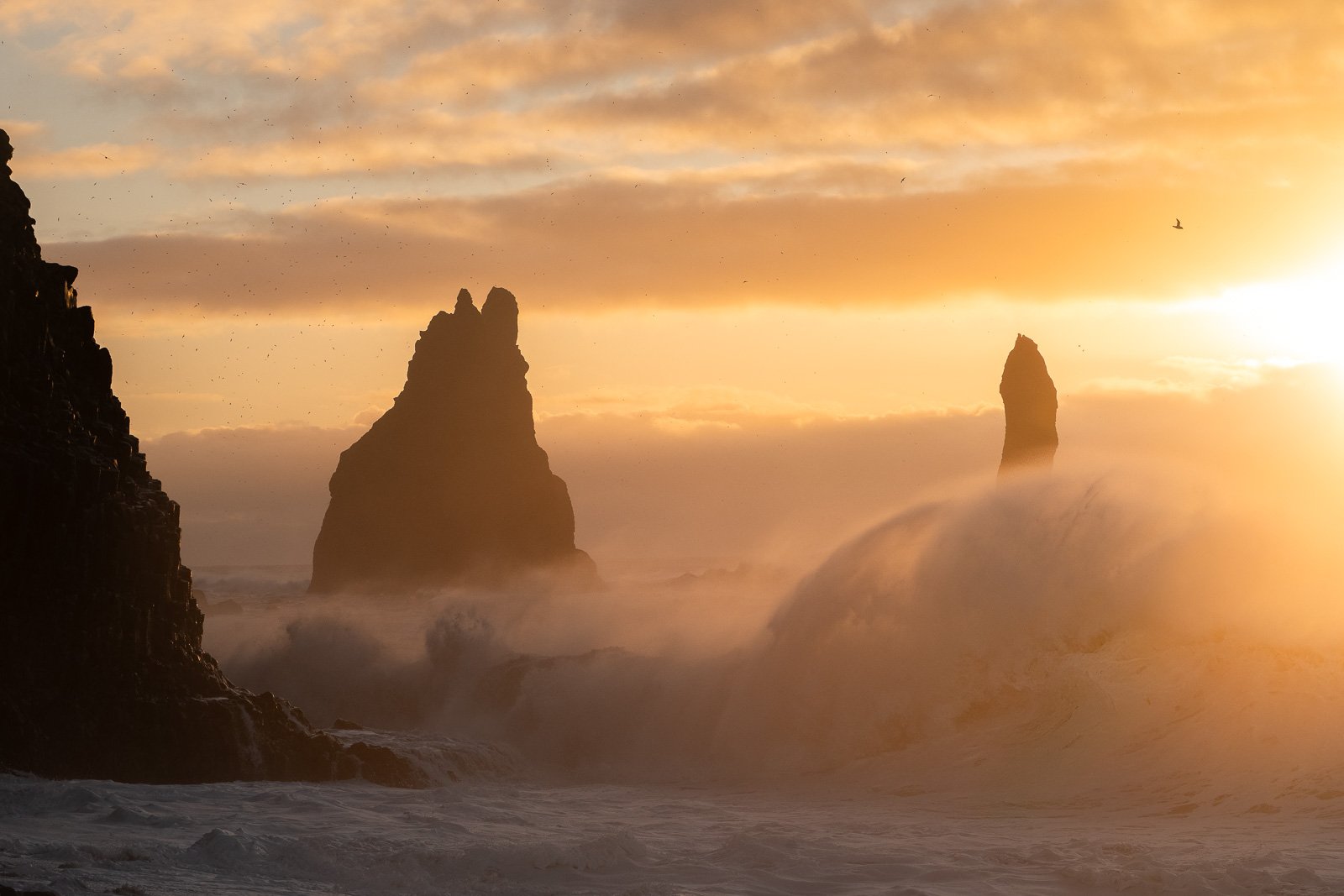
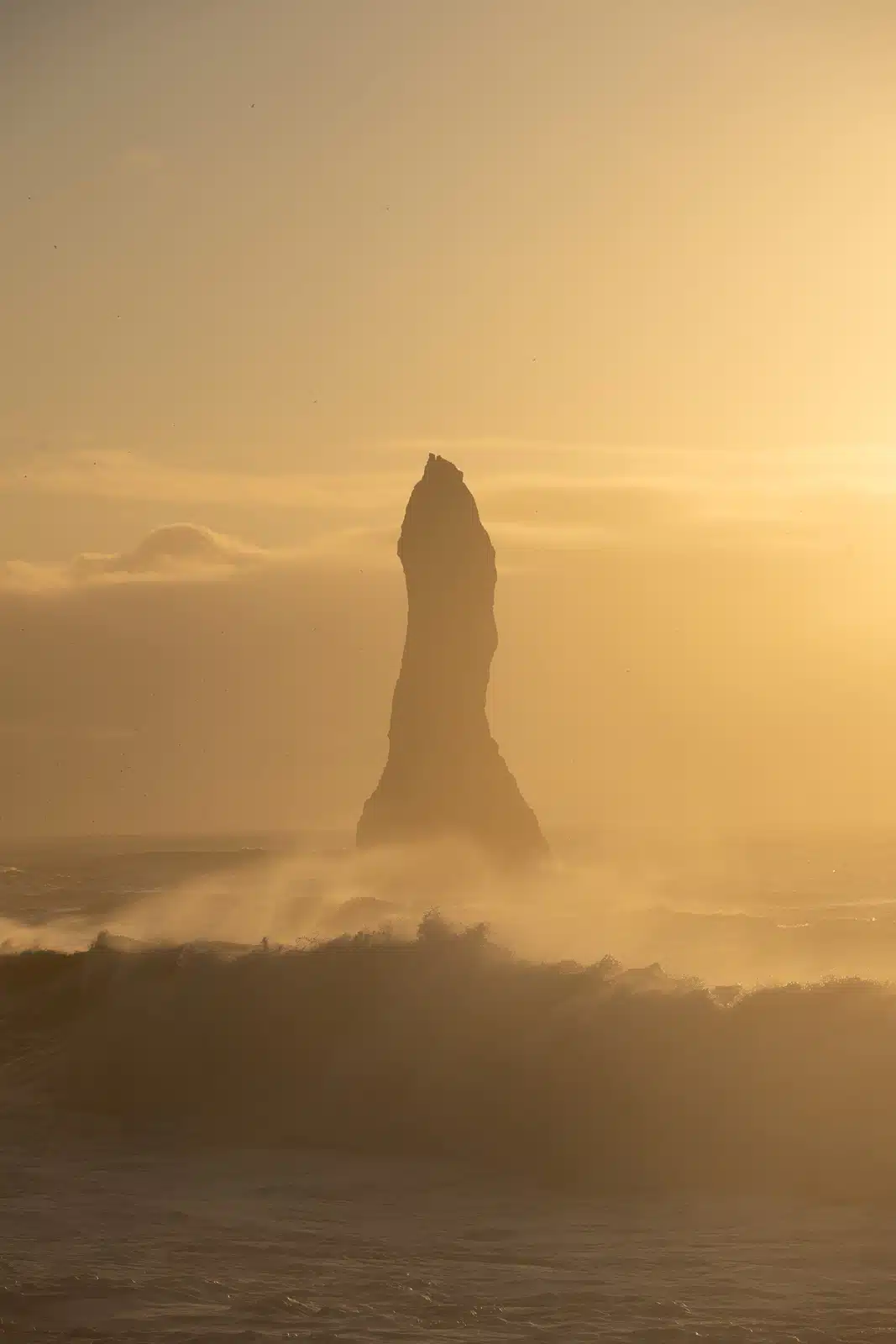
If you’re in the Vík area, it’s almost impossible not to set foot on Reynisfjara and Víkurfjara. Both are black sand beaches bordered by spectacular cliffs, with pointed sea stacks visible from both sides.
Reynisfjara
Reynisfjara is the most famous and most impressive of the two : it’s especially known for its hexagonal basalt columns. There was also a small cave carved into the cliff that offered an additional very graphic natural frame, but unfortunately it’s no longer accessible following a beach shift in February 2026.
Víkurfjara
Víkurfjara, on the other side of the cliff, is less dramatic but also much less visited. That can make it an interesting alternative for photographing the same kind of landscape with more peace and quiet.
- Best time to photograph : sunrise for Reynisfjara / sunset for Víkurfjara
- Gear to bring : telephoto + drone outside nesting season (there are lots of birds near the cliffs)
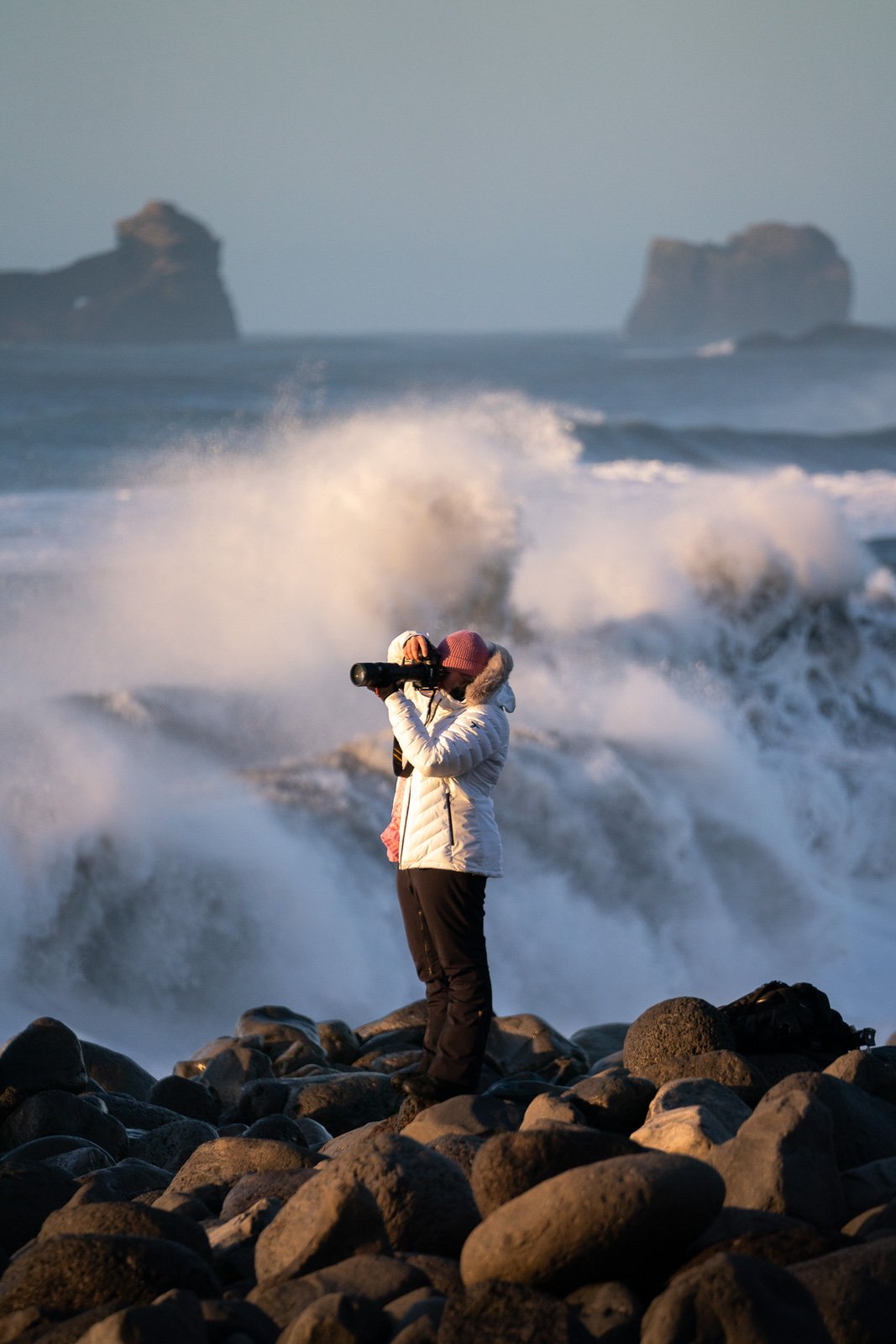
👉 Watch out for sneaker waves on Reynisfjara beach, they’re unpredictable and dangerous. NEVER turn your back to the sea here. You’ll see plenty of signs indicating how far you can go on the beach and the current conditions, don’t ignore them, people have died here.
In conclusion…
I could keep this list going for pages, Iceland has incredible spots in the Westfjords, the Golden Circle, the south, the east… The list could go on forever, but these are the locations I consider unmissable if you’re into landscape photography and want to really discover Iceland.
Either way : arrive early or stay late. The Icelandic light outside of peak hours will send you into another dimension ! Safe travels in Iceland,
Marie
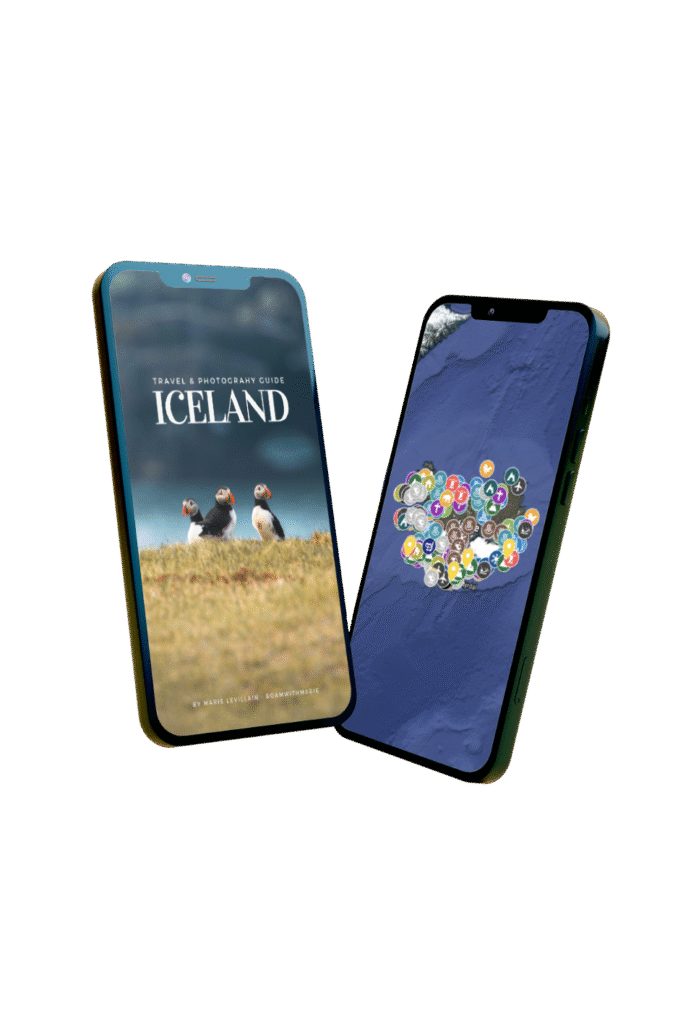
And if you want discover another side of Iceland with less people around, my Iceland Photography Map includes over 500 photo spots spread across the entire island. In the description of each location, you’ll find :
- Access information
- The best light conditions
- What gear to bring
- Where to park and how much it costs
- The best season to visit
- Useful links
Each spot also comes with my own photography tips and composition ideas.
The map helps you build a coherent itinerary without wasting hours cross-checking scattered and sometimes inaccurate information found online.
The map is updated for life, you don’t need to buy it again. Every time I update it, the map on our device is updated too ❤️