While Iceland is full of “bucketlist” spots, there are also more unspoiled and hidden spots. Grímsey definitely falls into the second category. It was maybe the place I was most excited about on this two-month trip, and it was also the first “activity” I booked, even before I booked my ferry tickets to Iceland.
To give you some context : Grimsey is a tiny 5km by 2 island in the north, that lies within the Arctic Circle, it’s home to 90 people and a few thousand birds, and accessible only a few times a week. Few tourists go there, since it’s not part of the “classic” itineraries, and that’s exactly what makes the island special. I chose to visit during a very special time : the summer solstice. It’s the longest day of the year, when the sun skims the horizon at sunset without ever disappearing. The goal is to photograph the puffins in beautiful light and experience a sun that doesn’t set for an entire night !
I’ll take you along with me for 24 hours on the island of Grímsey, from the ferry ride across to the return trip, including a sleepless night under the midnight sun.
Before you go : how to plan a trip to Grímsey
How to get to Grímsey
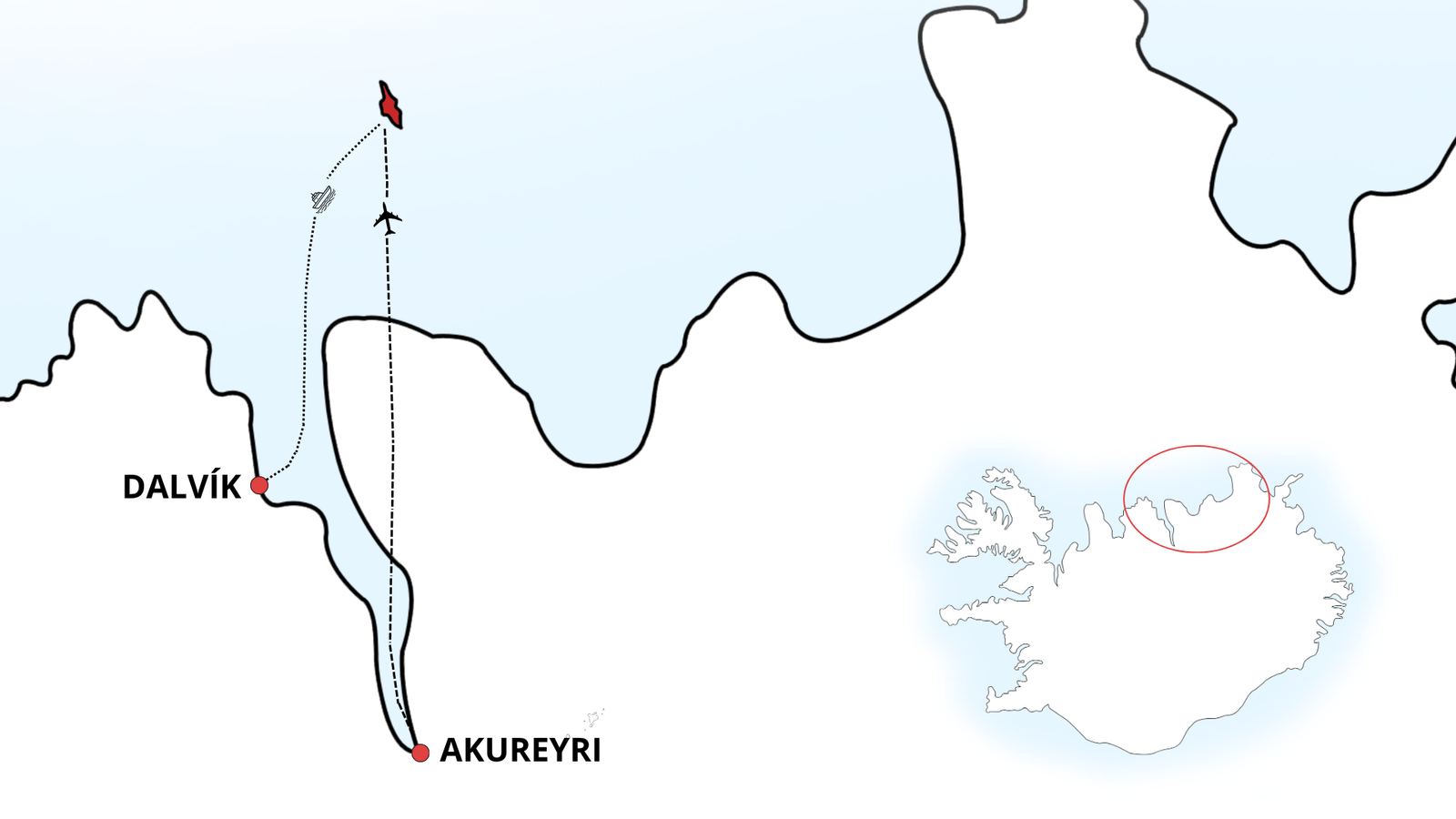
You have two options for getting to the island :
- By ferry : the Sæfari ferry departs from Dalvík three times a week, with a 9AM departure. That’s the option I chose. The crossing takes 3 hours and costs about 8800ISK round-trip (61€). In the summer, the ferry stays on the island for several hours before leaving again, which makes it possible to make a round trip in a single day. To spend the night on the island, which I highly recommend, you’ll need to book accommodations. You’ll have to take the ferry back the next day in the late afternoon (around 5PM). Book here.
- By plane : Norlandair offers a flight from Akureyri to Grímsey year-round, five times a week in July and August and three times a week (Wednesdays, Fridays, and Saturdays) the rest of the year. The flight takes 30 minutes, and the plane stays on the island for 1.5 hour. It costs an average of 260€ round-trip, and you can book it here.
Where to stay in Grímsey
On the island, there’s a small hotel and a guesthouse near the airport. There’s also a campground near the pool, which is somewhat sheltered from the wind. Everything must be booked in advance during high season, right here. The accommodations are basic and functional, people usually come to Grímsey to enjoy nature, not to relax at the hotel.
What to bring to Grímsey
- Warm clothes, even in the summer (the wind on the cliffs is freezing)
- A waterproof windbreaker (a must-have, I have this one from Alpine Nation and have absolutely no regrets)
- A telephoto lens for puffins and other birds
- A wide-angle lens for landscapes and cliffs
- Binoculars
- Food and water (the store has fairly limited hours and inventory)
- A portable charger (just in case)
Day 1 : the crossing from Dalvík
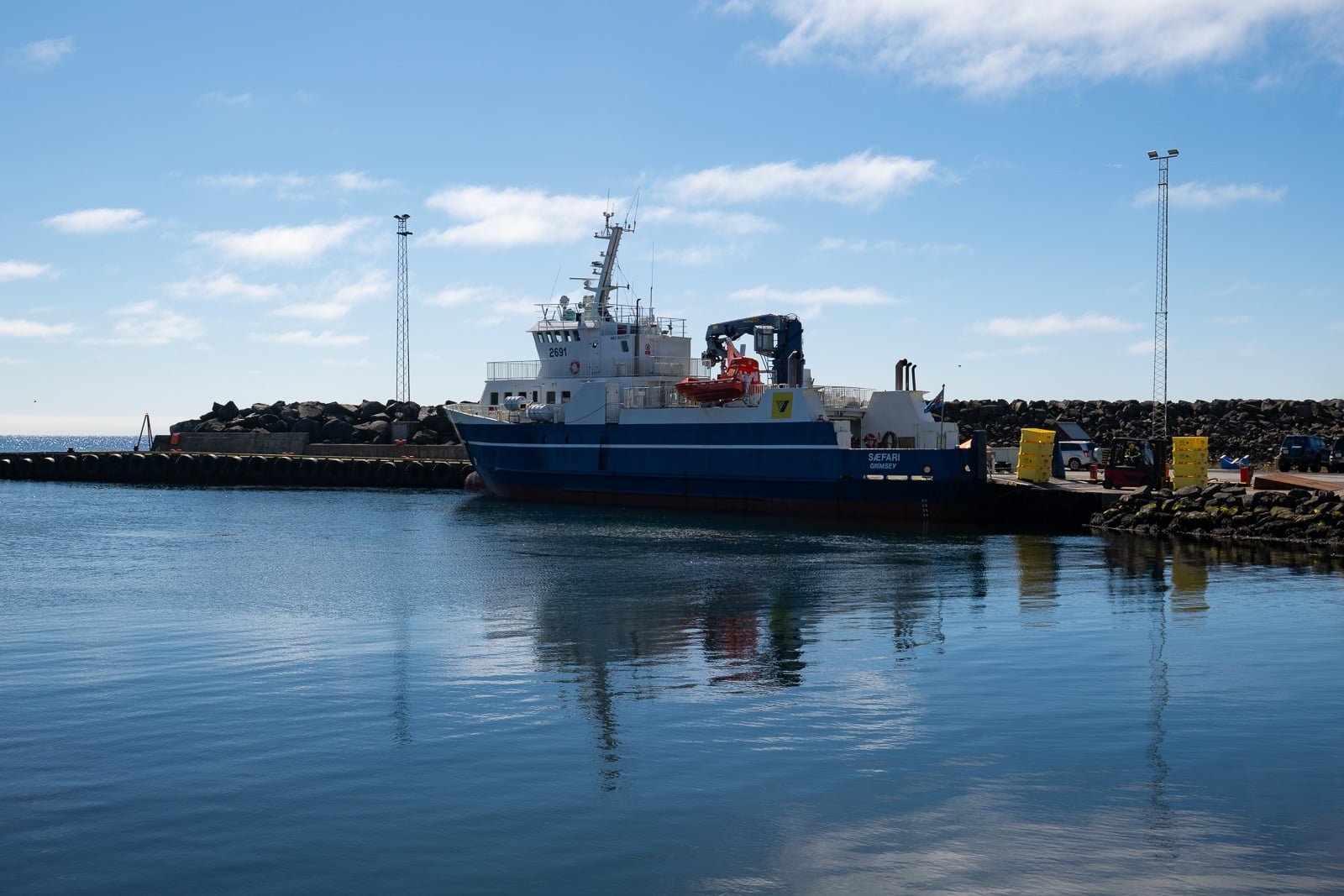
The ferry leaves Dalvík at 9AM sharp, and you need to be at the dock about 30 minutes beforehand. Finding the meeting point is pretty easy, and boarding is fairly relaxed. The boat is on the small side, and there are clearly fewer than thirty of us on board. The crossing takes 3 hours, which gives you plenty of time to take in the scenery from the deck. I love the ocean and sailing, so after taking the ferry to Iceland, it was a joy to be back on board so soon.
I wanted to use those three hours to write the first part of this article, but…Honestly I had to call it off quickly because the swell was terrible, and I ended up dozing off a lot. A lot of passengers got seasick. So between the smell of vomit and the sight of the waves, it quickly became impossible to type. I was hoping to spot some dolphins and whales, but I only saw them in my dreams.
The three-hour ferry ride flies by, however, and the island of Grímsey soon comes into view in the distance. From a distance, the island looks like a vast meadow. The coastal cliffs rise 105 meters high and are visible from the open sea. If you look closely, you can see thousands of moving black and white dots. I knew there were plenty of puffins, but not this many. I can tell I’m in for a treat!
Arrival on the island : the village and the Arctic Circle
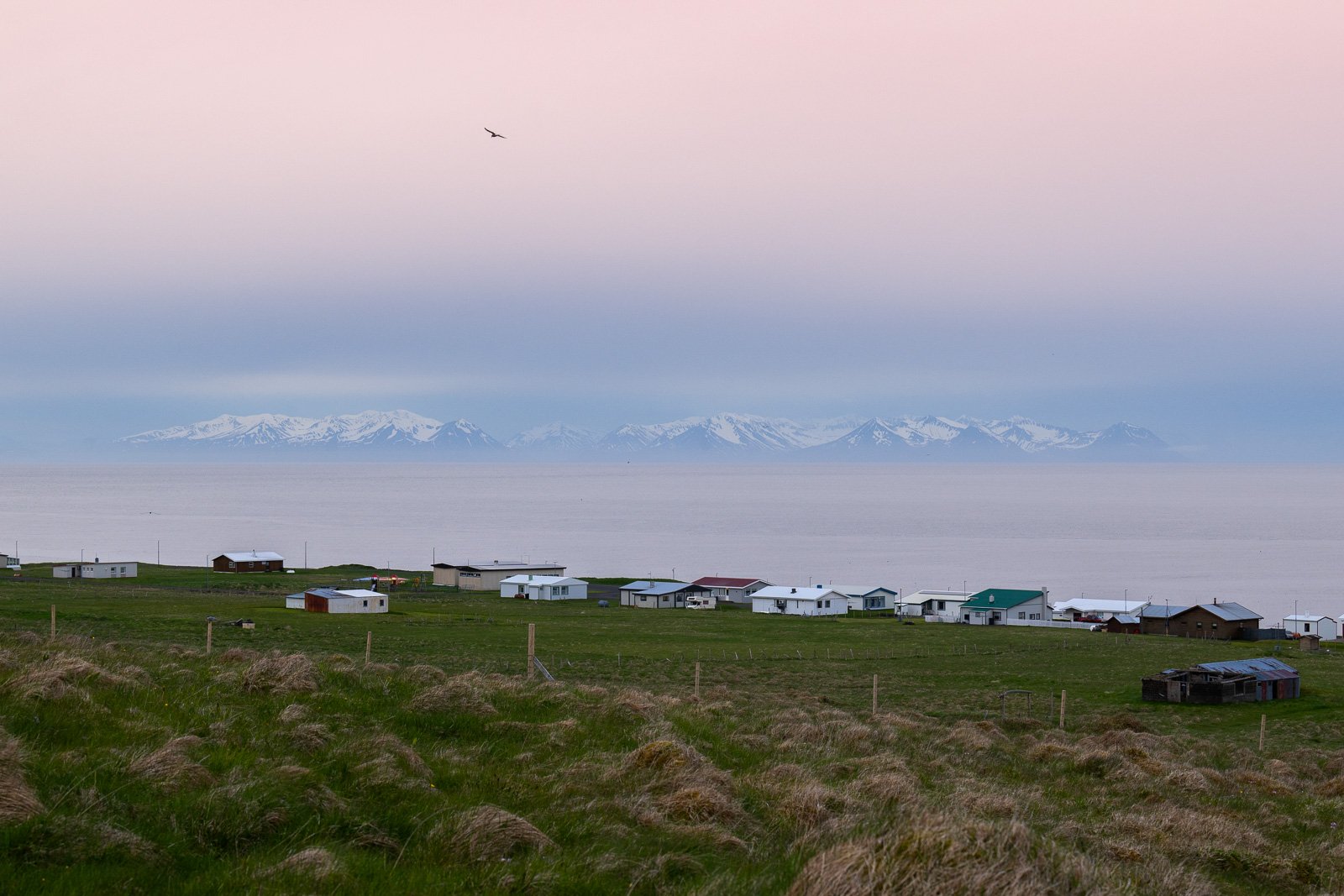
Finally, we arrive at the port of Grímsey around noon. It’s tiny, there are a few fishing boats, a shed, and the road leading up to the village. The “village” is just one long street with a landing strip, the harbor, bed-and-breakfasts, a store, a restaurant, a library, and a swimming pool. Ninety residents, birds everywhere, and above all, a sense of peacefulness that’s truly refreshing.
We all disembark, and the fresh air clearly invigorates everyone. As for me, after nearly five days of rain, the weather is finally nice, and seeing the sun restores an energy I thought was gone (or maybe it’s the extra three hours of sleep that’s doing me good). It’s noon and the sun is high in the sky, it’s almost warm for June 21. After wandering around the “village” for a few minutes, looking at the map of the island, it’s time to set off to see the puffins. I can’t wait!
Hiking along the cliffs : paradise for birds
You can only get around the island on foot, it takes about 2.5 hours to walk all the way around it. Of course, it took me much longer because I stopped every two meters 😅
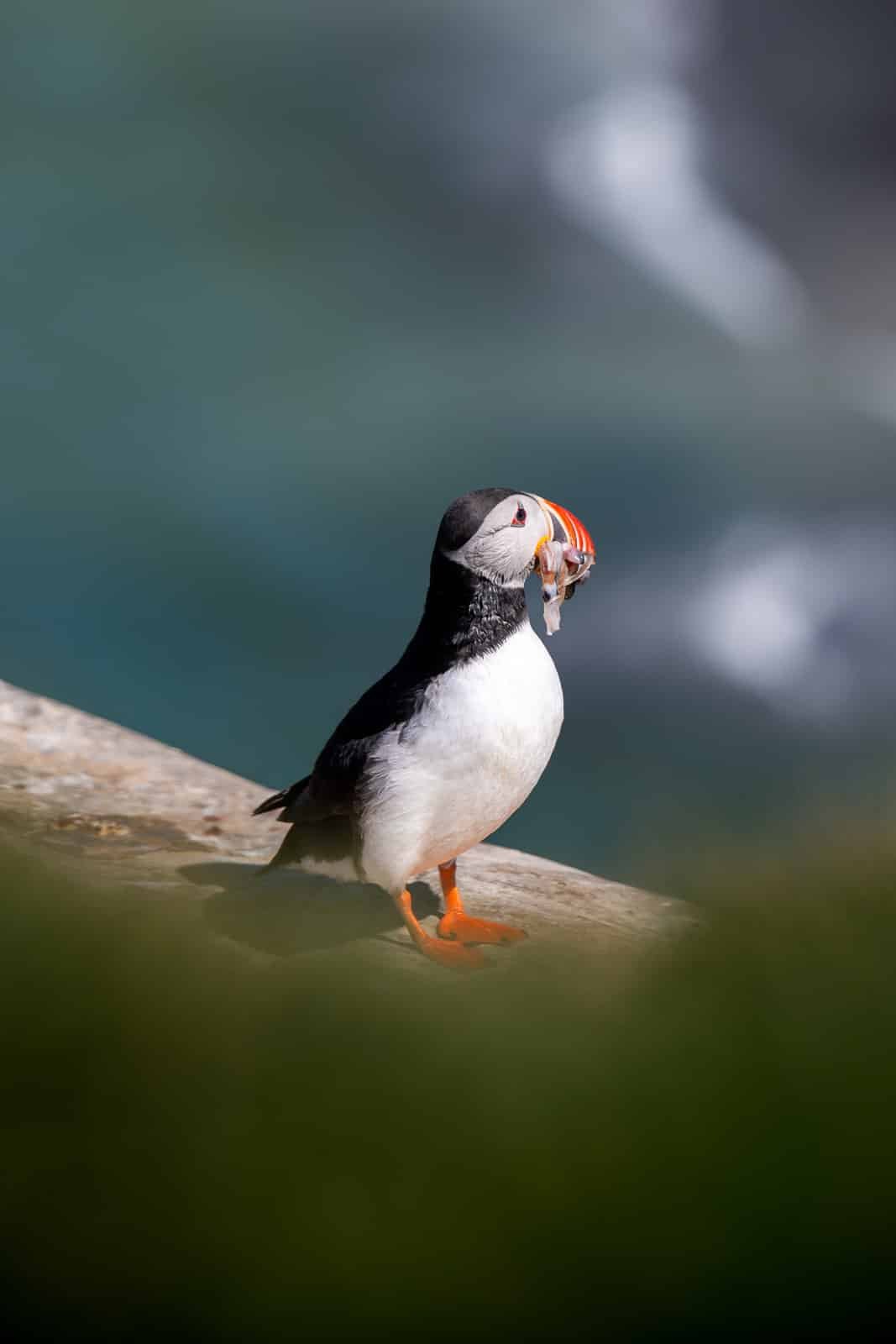
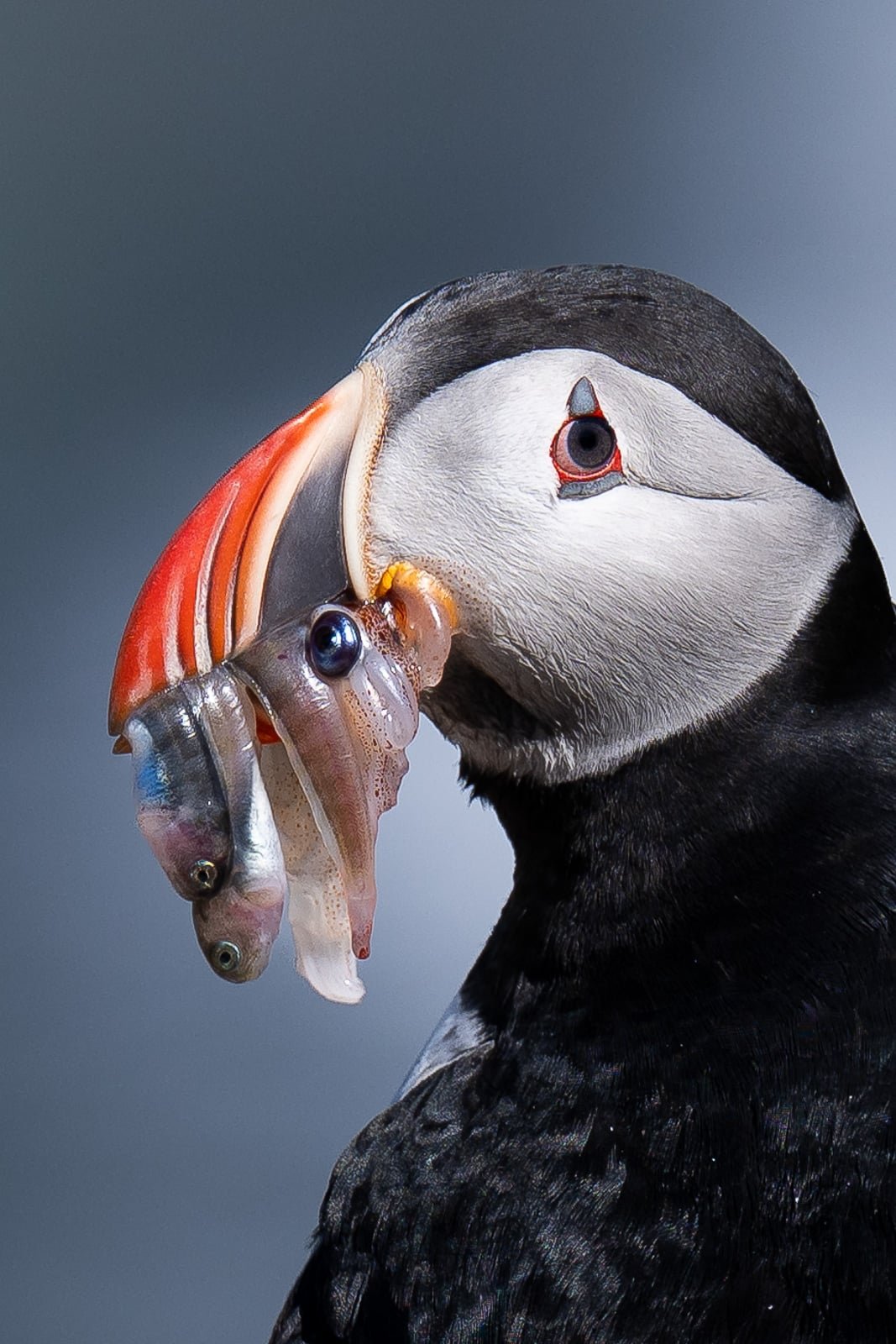
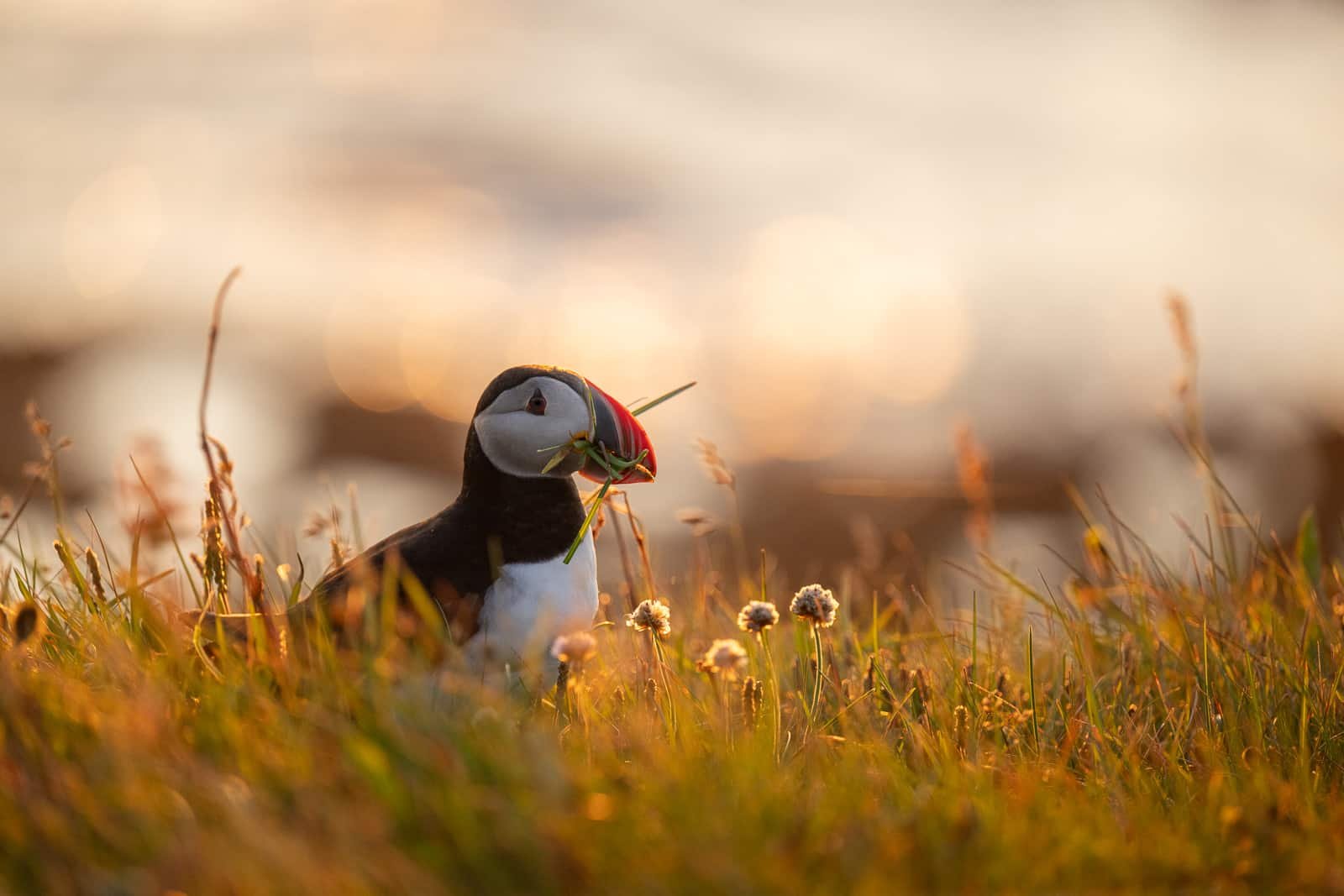
As I was walking toward the northern tip of the island, I saw some photographers in the distance, clearly in awe. I walked over and was lucky enough to see a puffin with a cuttlefish in its beak! It was a real photo model, it stayed there posing for a good ten minutes.
👉 I actually thought the Nikon 70-200mm would be too short to capture the puffins, but this first session put my mind at ease. All you have to do is lie down in the grass to get to the same level as the birds. Sometimes the 200mm is too close, but it’s enough to take slightly tight portraits. The 70–120mm range works quite well for capturing the surrounding landscape and providing context for the photos.
Orbis and Globus : crossing the Arctic Circle
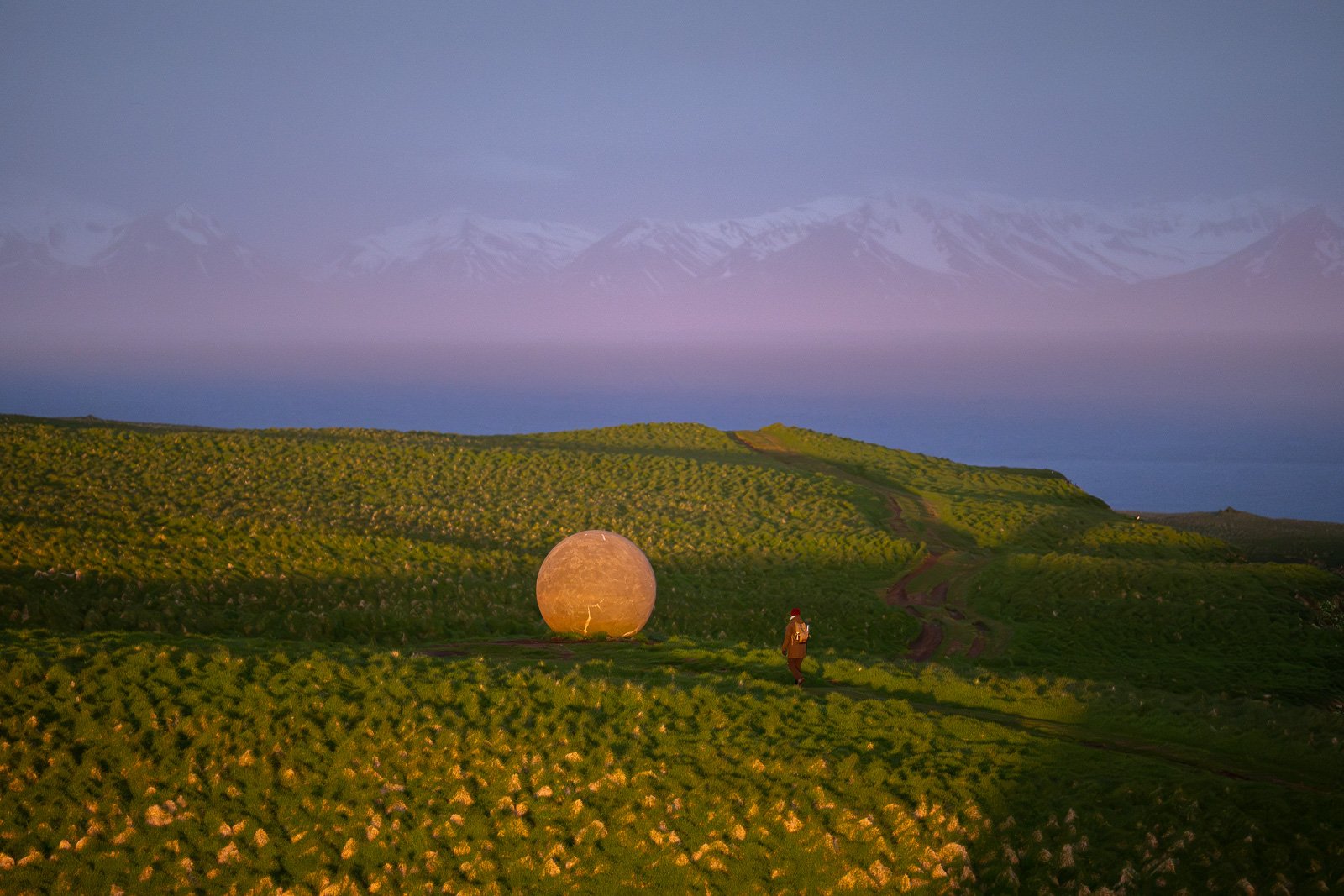
Feeling reenergized after that experience, I continued further north until I reached the Orbis and Globus monument at the very northern tip of the island. It’s a concrete sphere that marks the exact crossing of the Arctic Circle (latitude 66°33’N). The Arctic Circle moves about 15 meters northward each year, so the monument is repositioned regularly. Once you’ve passed north of this giant ball, you’re officially in the Arctic! In total, it takes a 40-minute walk from the ferry to reach it. Everything is very well marked with signs. In any case, the sphere is visible from a great distance, and the island isn’t very big.
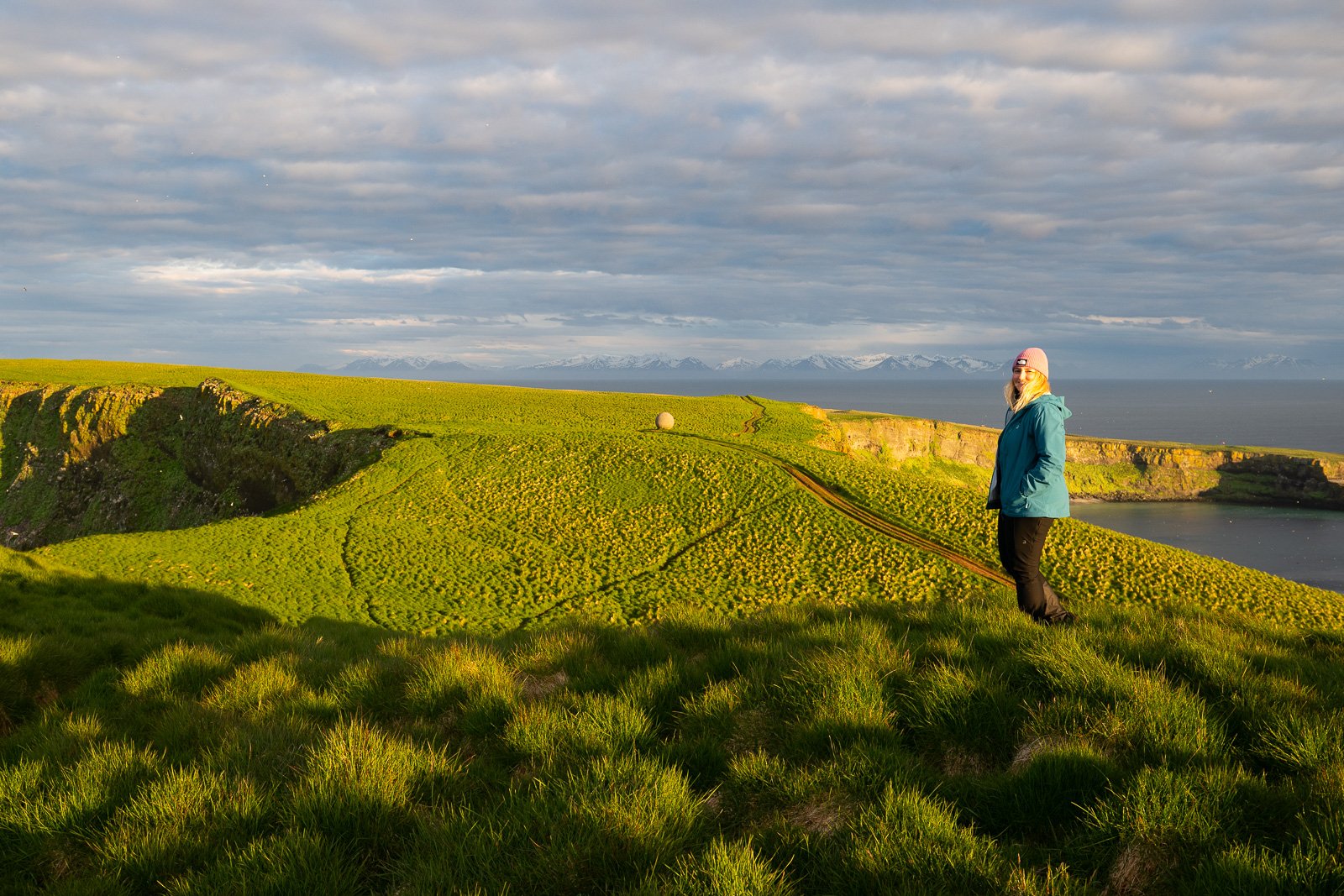
After a short nap and a sandwich at Iceland’s northernmost point, I decided to stay in the area for sunset. I took the opportunity to study how the light would change as the evening wore on. In any case, I already knew it was going to be an intense night!
The night of the solstice : the midnight sun beyond the Arctic Circle
Anyone who knows me already knows that sleeping is optional when I travel, but this time it was truly unthinkable. I stayed in Iceland for two months, so the pace was naturally slower than usual, but it was impossible to sleep with that incredible light. Plus, I hadn’t reserved a spot at the Grímsey campground, so with that already “taken care” of in advance, there was no rest possible.
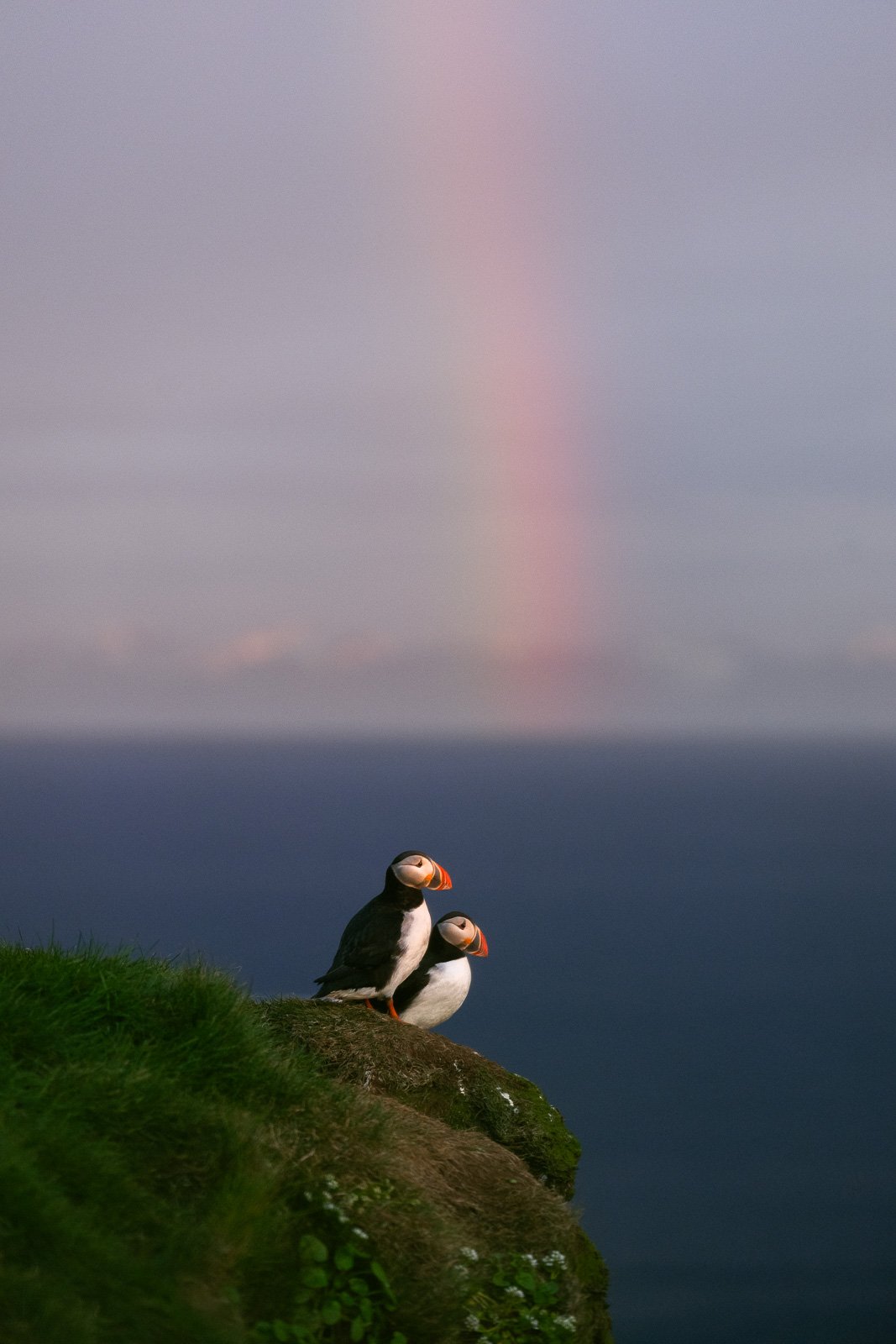
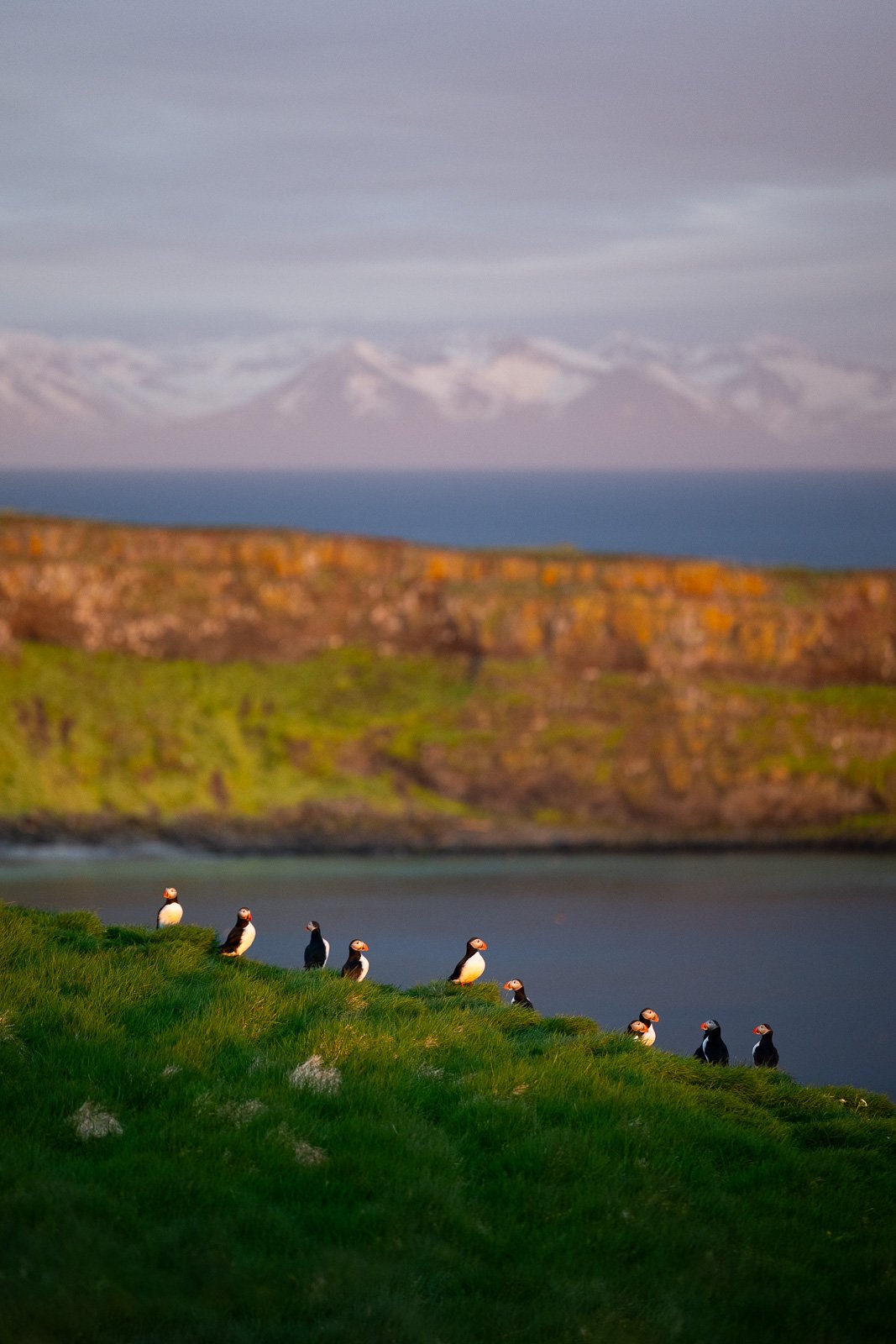
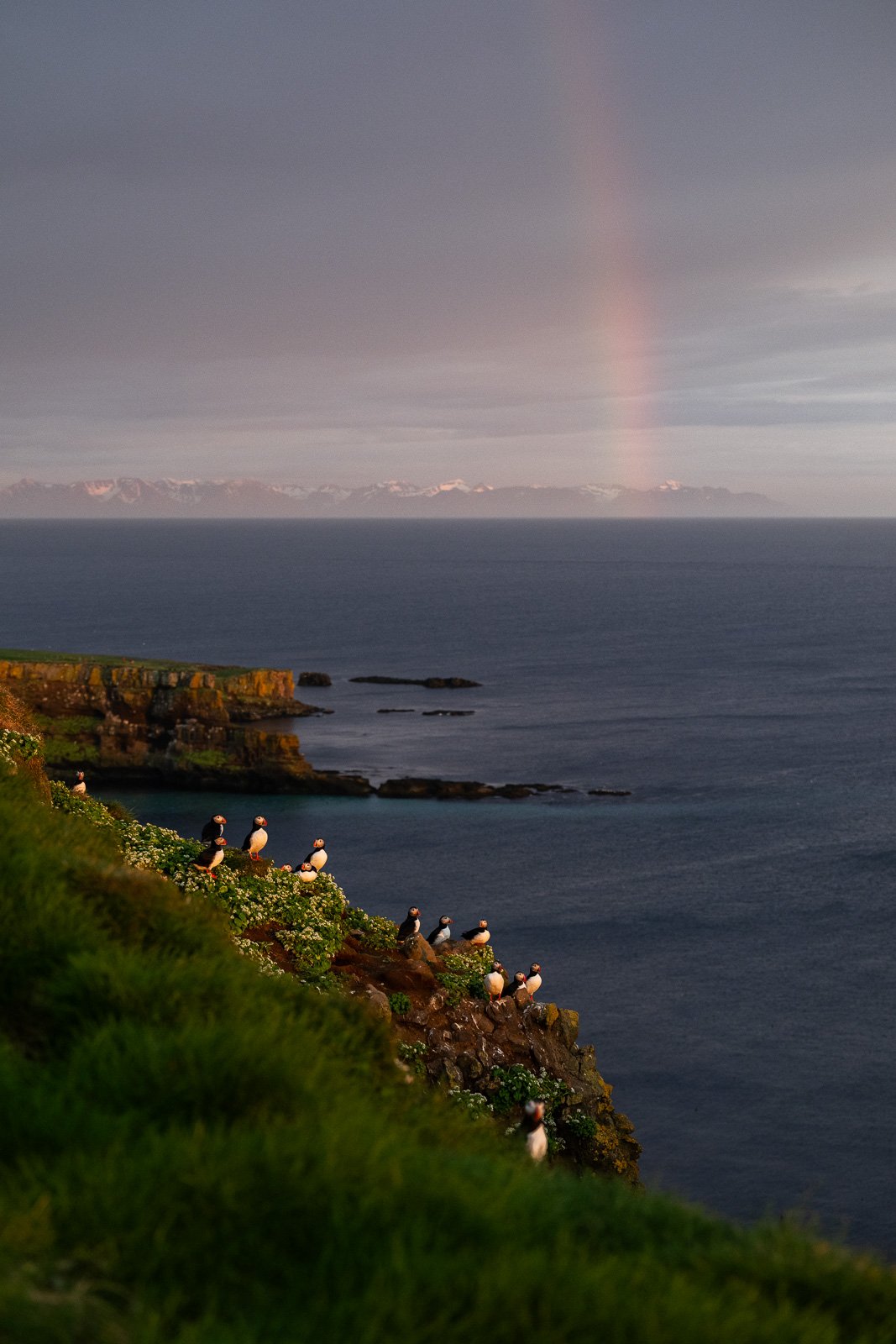
On the summer solstice, June 21, Grímsey is one of the few inhabited places in the world where the sun never sets at all. It just skims the northern horizon, bounces slightly, and rises again. There is no night, not even a truly dark twilight, just an orange and golden light that stretches on for hours, shifts direction, illuminates the cliffs, turns the sea copper-colored, and bathes the puffins in golden hues.
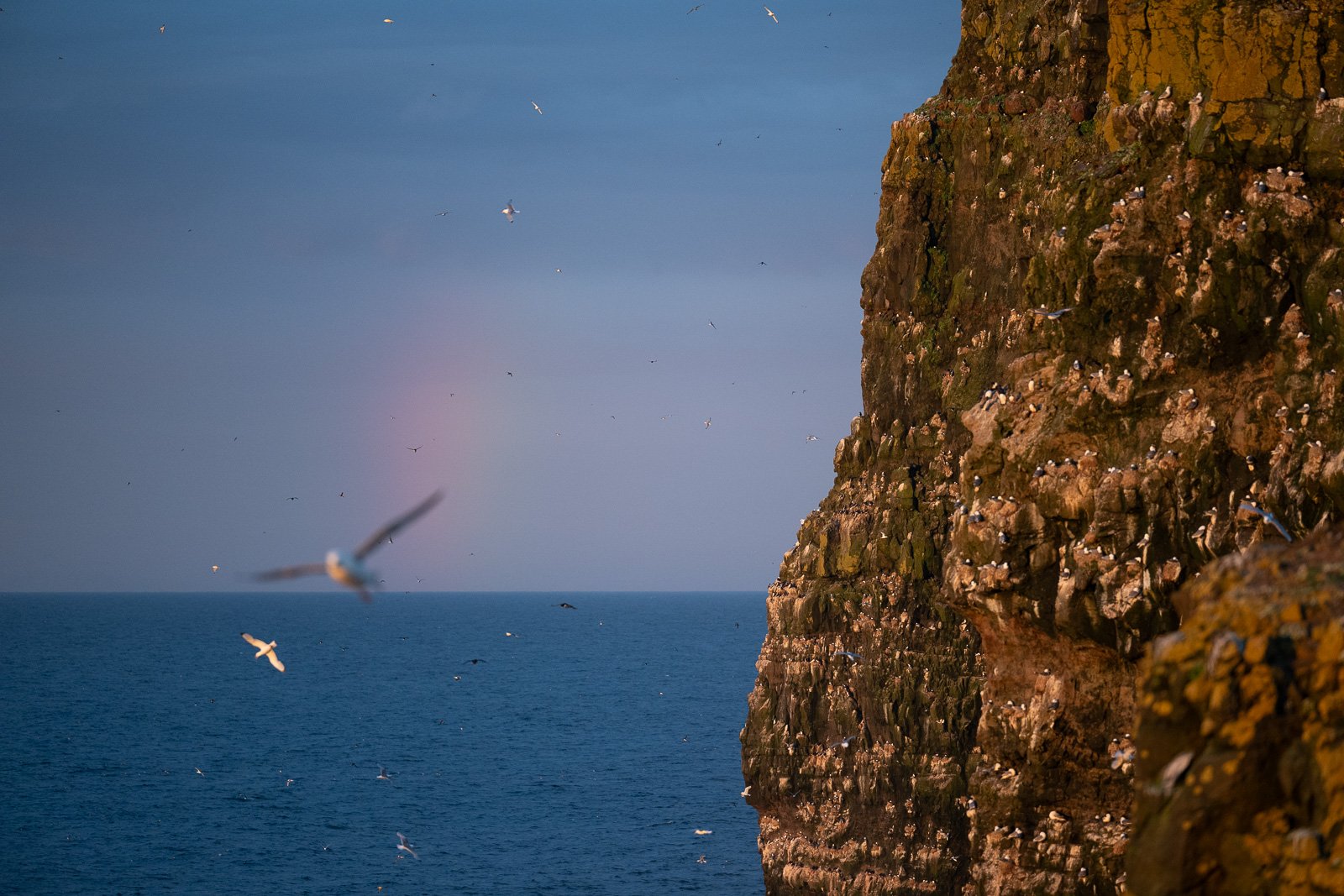
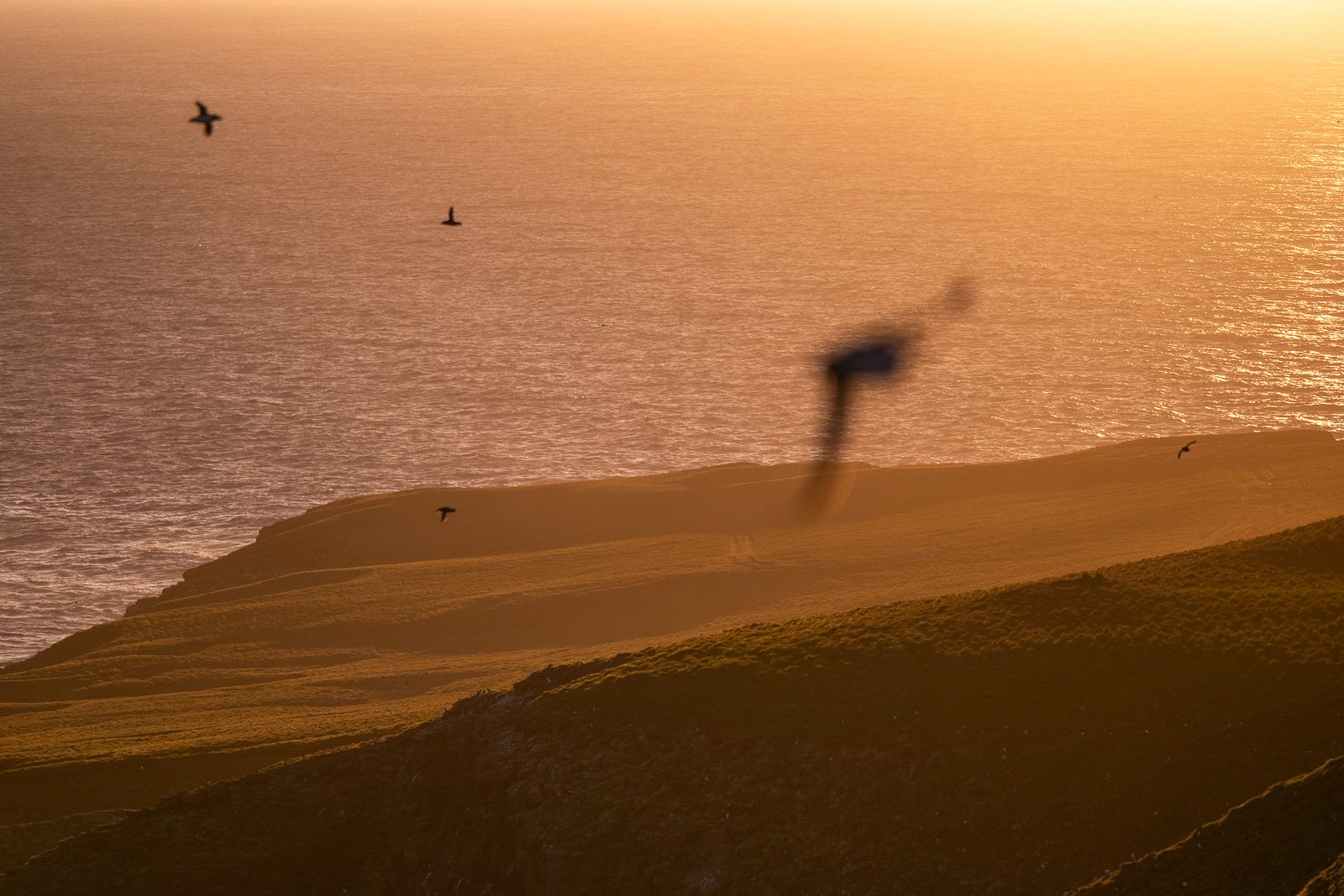
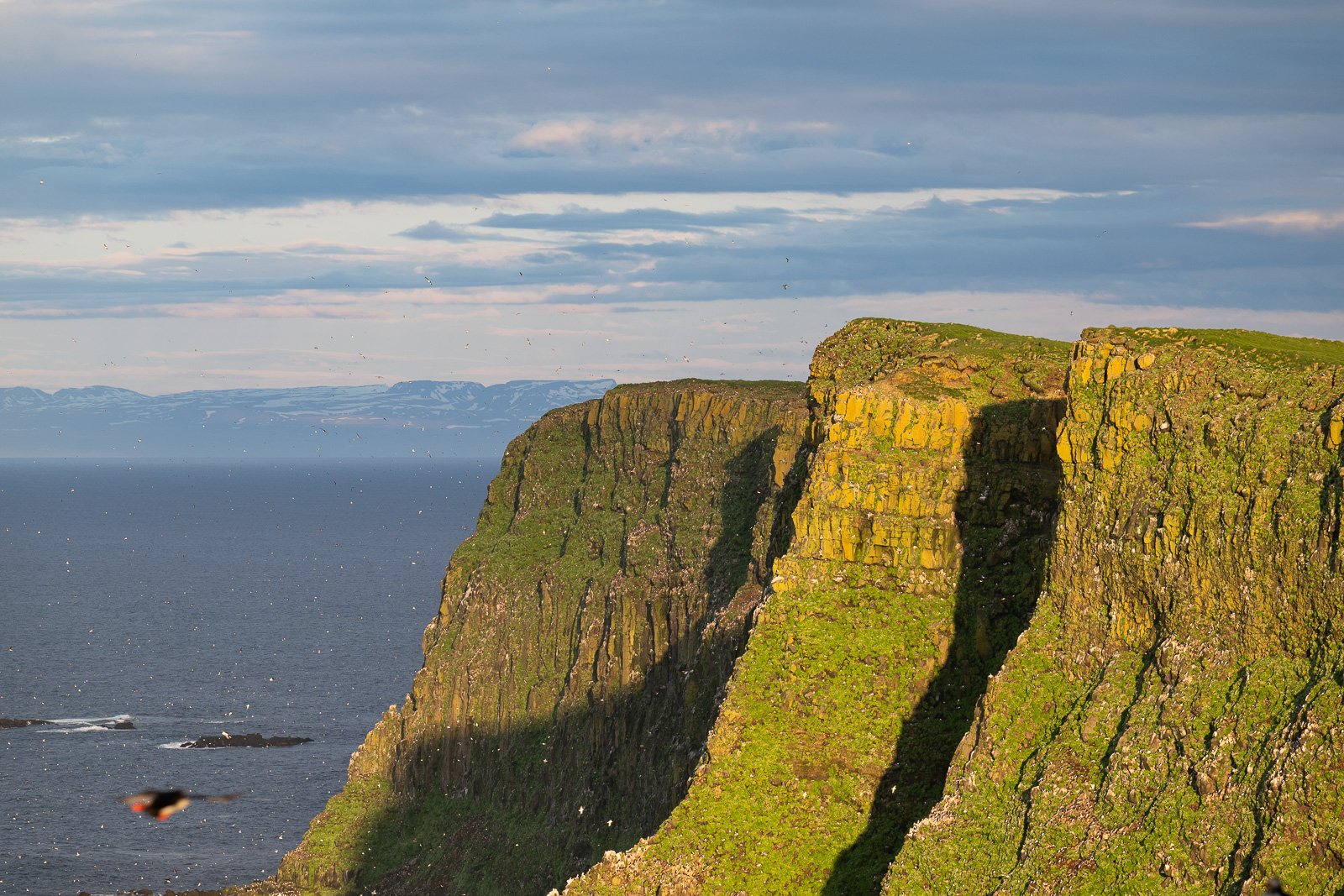
I spent the night photographing the puffins and running all over the place. The photos I took that night are among my favorites from this trip, if not from this entire year. Surprisingly, I was practically alone on the cliffs all night, the other tourists had either left on the 5PM ferry or went to sleep. The birds stayed active all night, so there was no way I could go to sleep with a show like that going on.
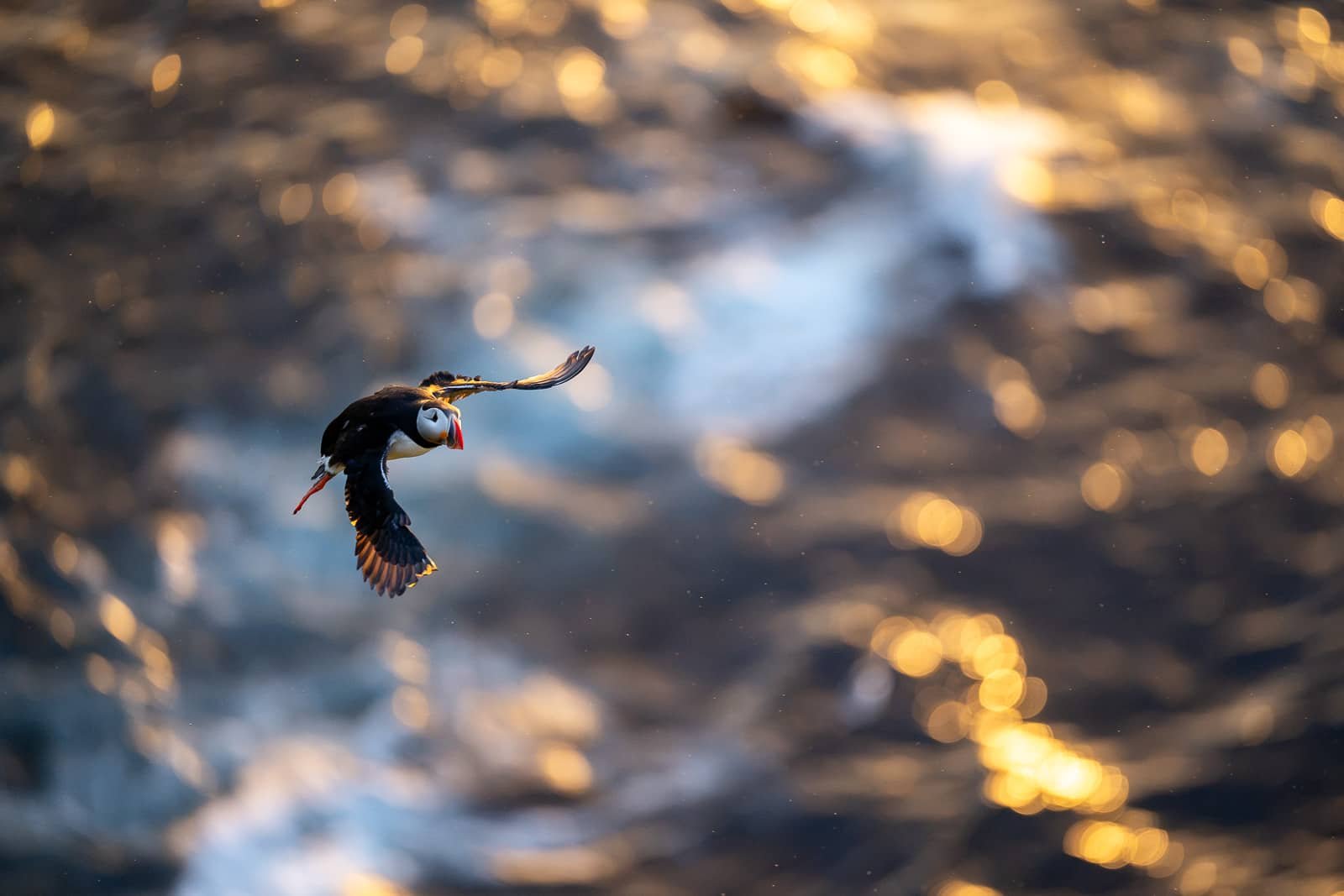
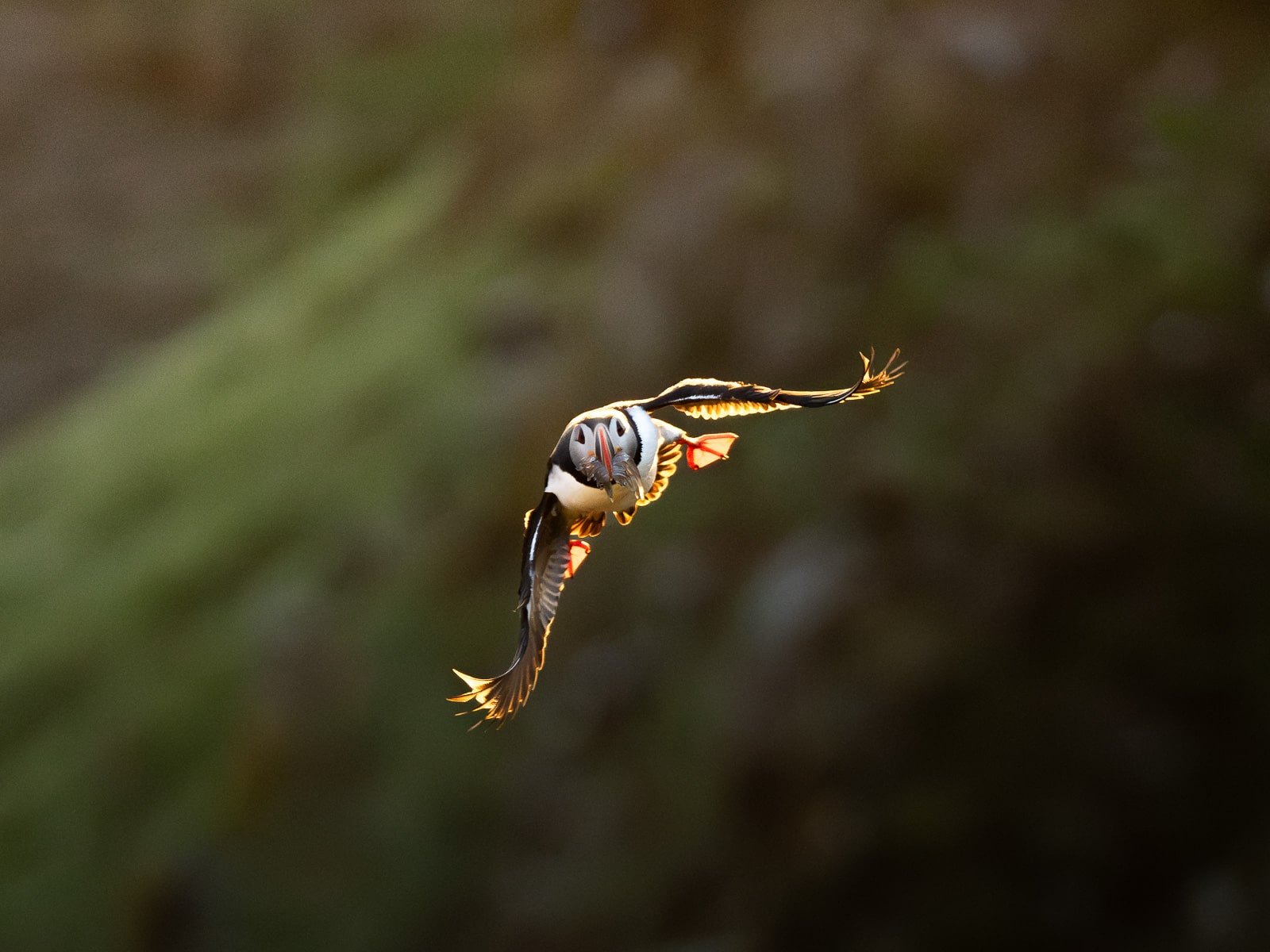
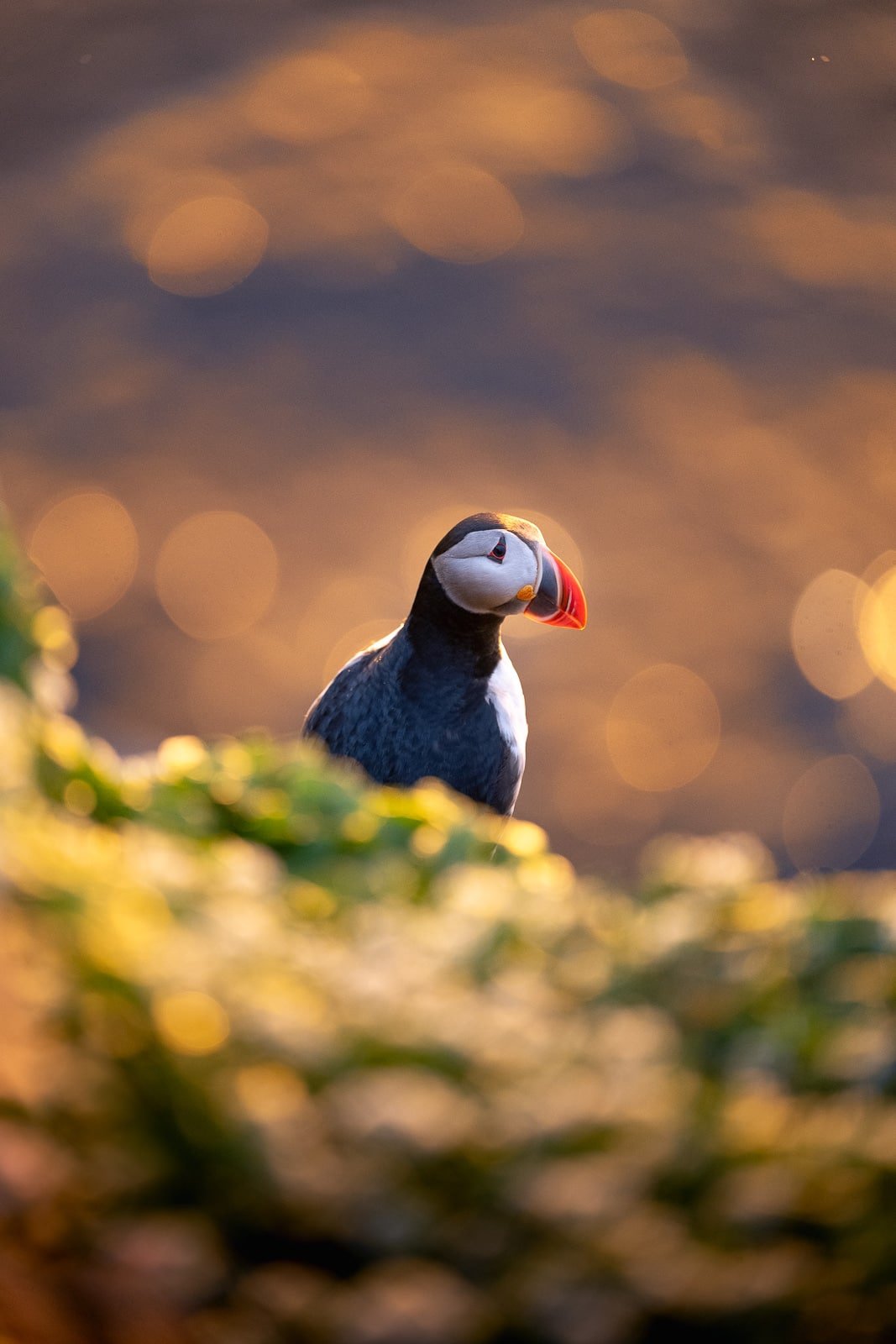
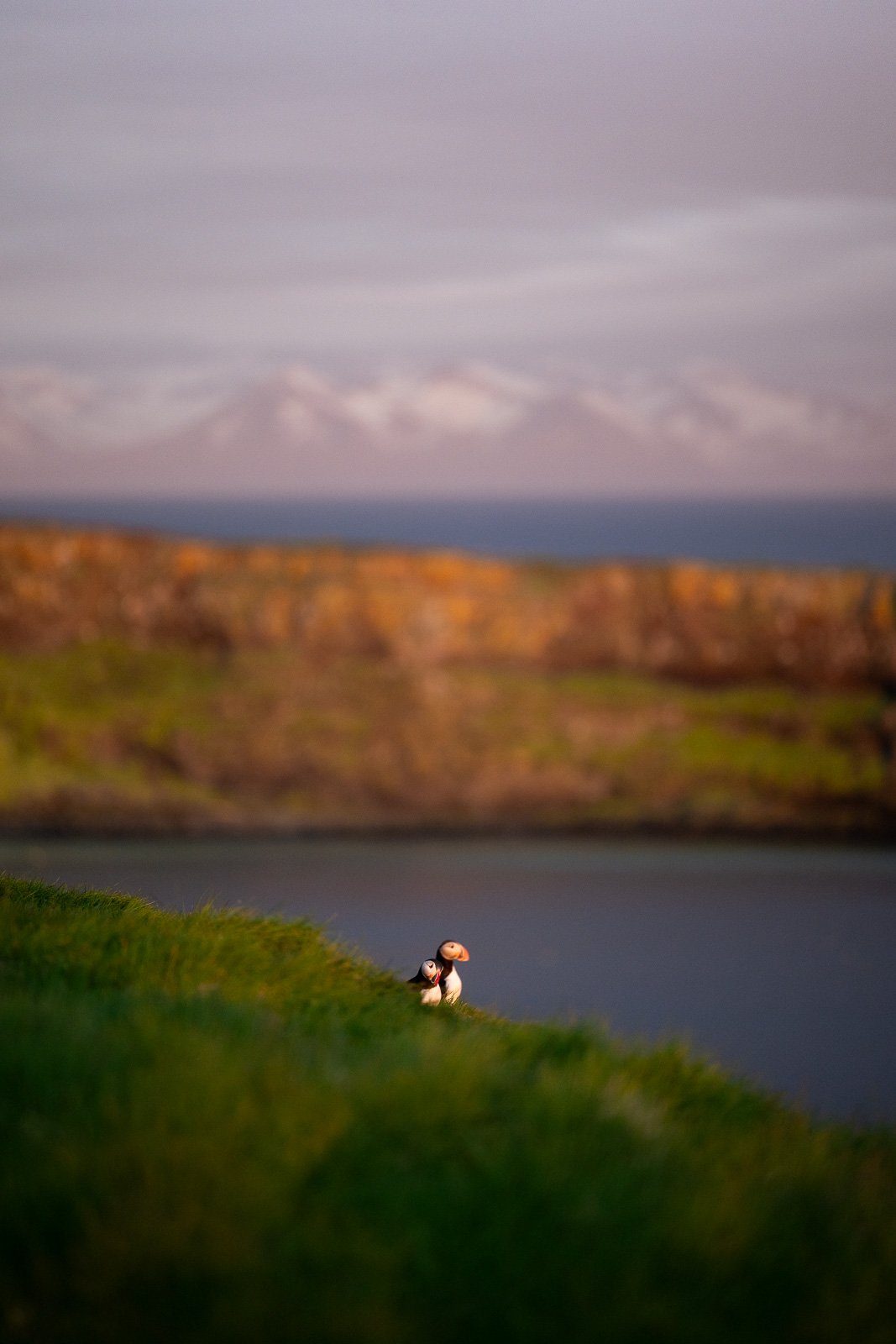
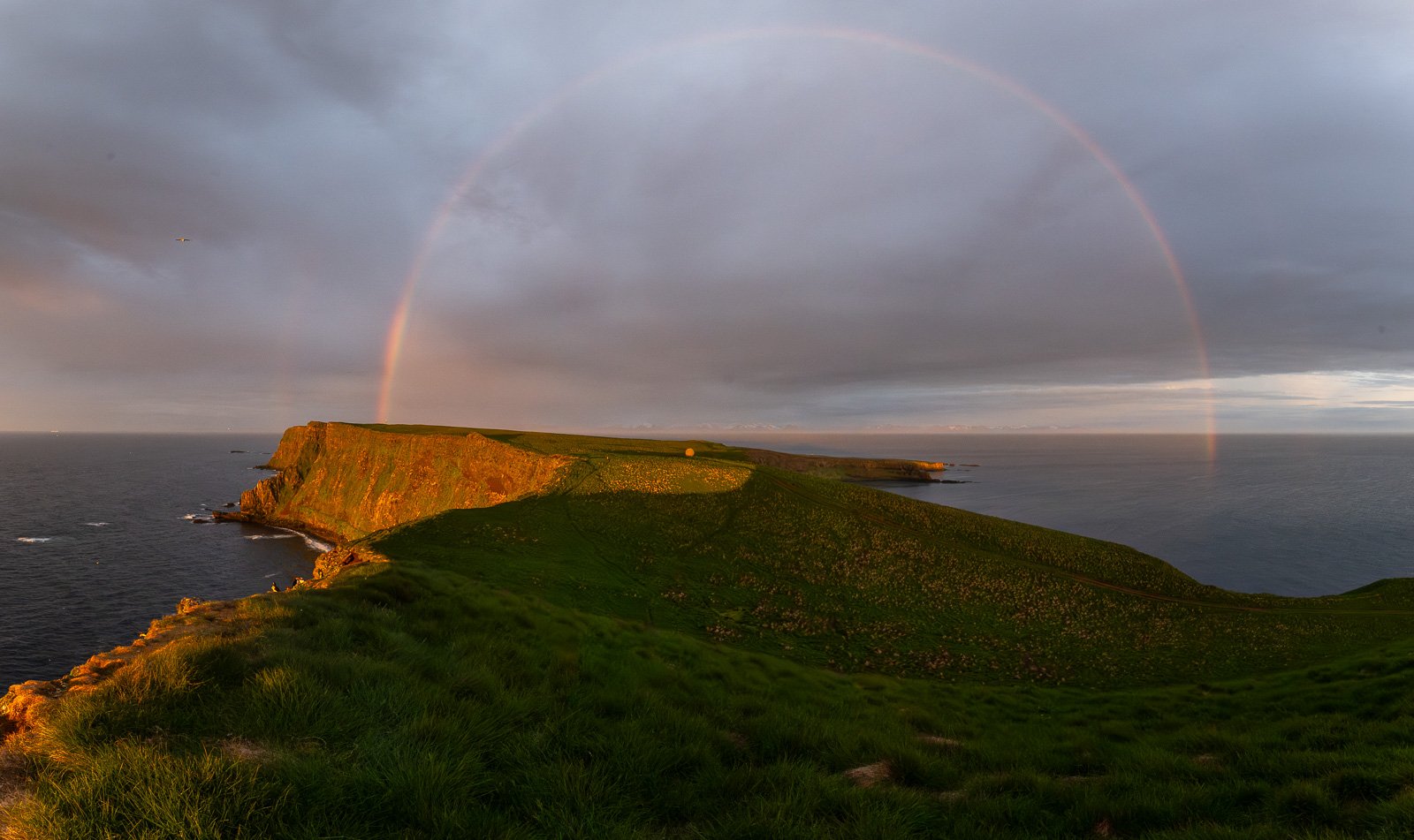
Just as the sun was touching the horizon, it started to rain, creating a giant rainbow that lasted a good hour. I managed to take a panoramic shot of the entire island with the rainbow in it, as well as a few photos of the puffins.
Day 2 : the return trip by ferry
With stars in my eyes and my SD card full, I started making my way back down to the harbor. The rain started falling again, so I took shelter in a wooden hide near a pond. I dozed off for a few hours, downloaded and edited a few photos before giving in and closing my eyes for good. It was the birds’ calls and the growling of my stomach that woke me up. Yesterday’s sandwich was long gone 😂
I went to treat myself to a hot chocolate in the pouring rain at the little café that also doubles as a souvenir shop. I took the opportunity to buy a certificate from the Arctic Circle : it certifies that you’ve crossed the 66°33′ North latitude. It’s a nice souvenir and it costs 1400ISK (9,70€). It will join the one I got when I crossed the equator in the Gulf of Aden in 2019.
One thing I didn’t like at all
👉 I had planned to grab a bite to eat at the island’s only restaurant, but… once I looked at the menu, I discovered they serve puffin. Not only is it a vulnerable species (listed on the International Union for Conservation of Nature’s Red List), but I find it utterly disgusting and hypocritical to promote tourism centered on birdwatching and conservation while serving them in a restaurant. I understand that Icelanders used to eat whatever was available several decades ago, but nowadays it’s no longer a necessity. I urge you to avoid this kind of tourist trap in Iceland (the same goes for restaurants that serve whale meat).
So I ate my last sandwich at the harbor before heading back to see the puffins one last time. The next time I’ll see them will be in the south, near Dyrhólaey in the south, a completely different atmosphere and landscape. I made my way to the ferry and began the return crossing. There was much less swell than on the way there, which allowed me to get a good 3 hours of sleep. The return crossing offers a different perspective on the island. As we watch it recede into the distance, the cliffs grow smaller, and the birds continue their dance, completely oblivious to our departure.
Photography tips for Grímsey
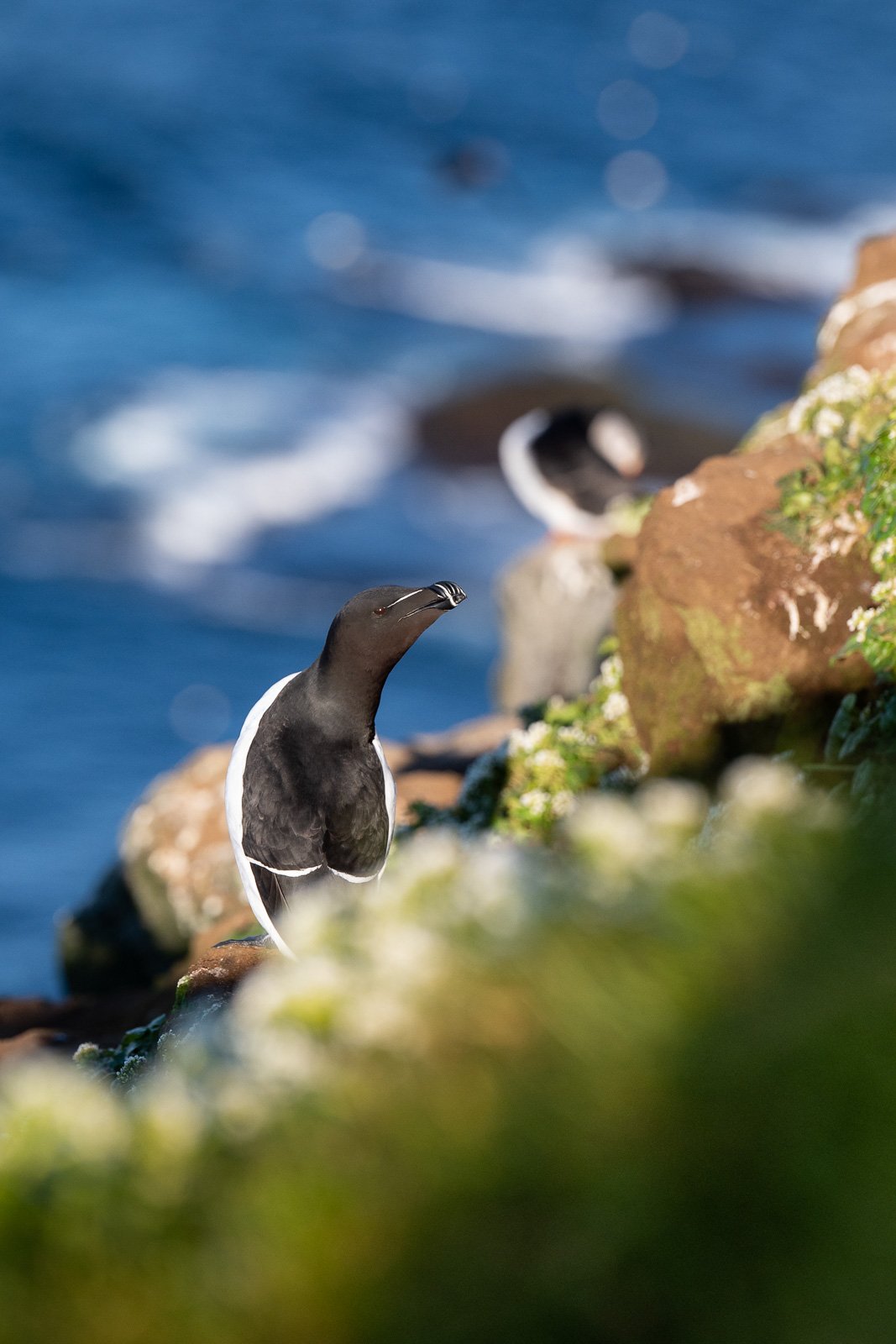
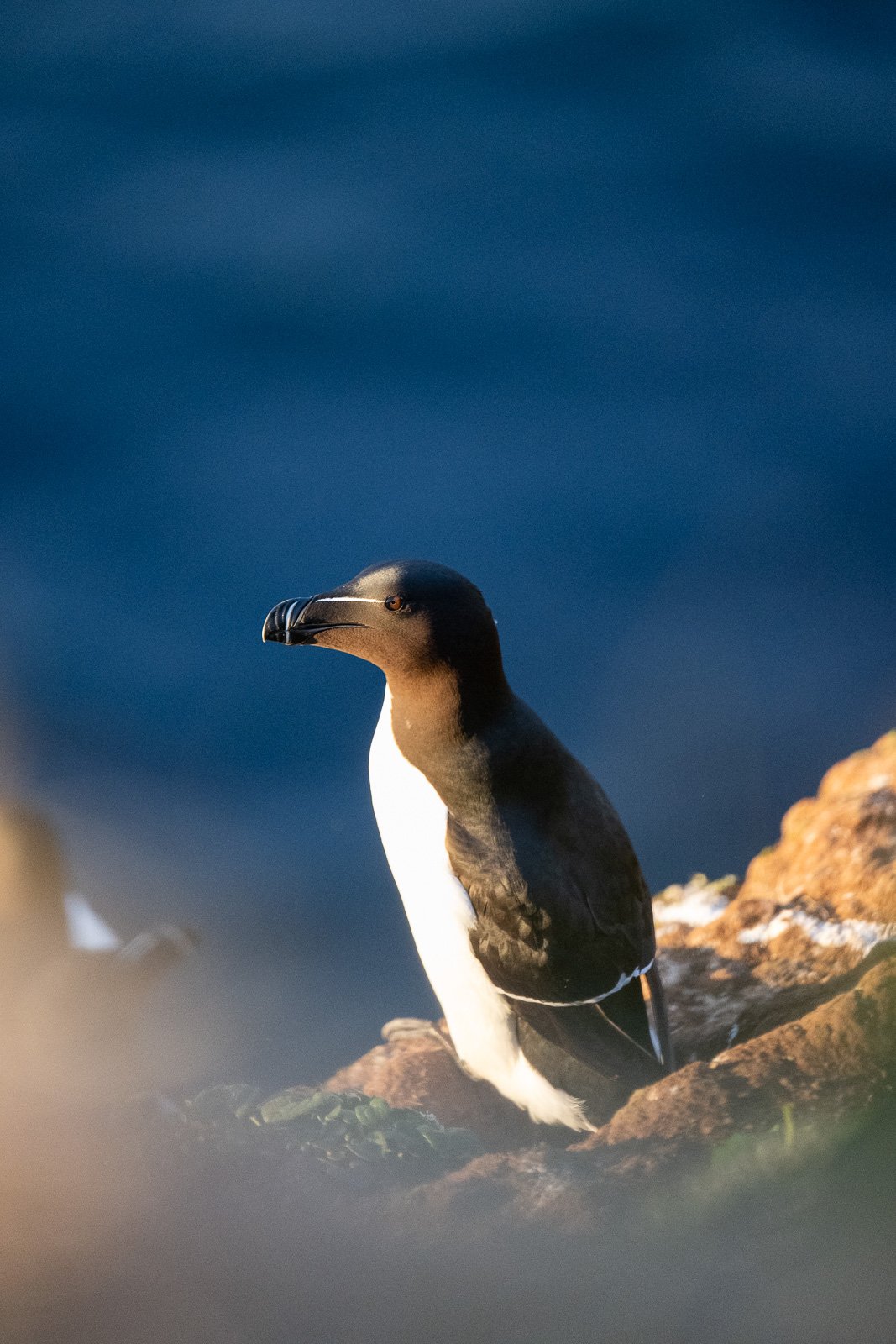
It’s not just puffins on the cliffs in June : you’ll find guillemots, razorbills, fulmars, Arctic terns, and black-legged kittiwakes. Watch out for the terns, they’ll attack if you get too close to their nests. Bring binoculars to watch the birds in action (those incubating eggs or feeding their chicks). I didn’t have any, and I didn’t miss them terribly since I had my 70-200mm lens, but I know some people prefer watching through binoculars. If I had to do it again, I would bring them just for the pleasure of watching them even more closely.
Photography tips
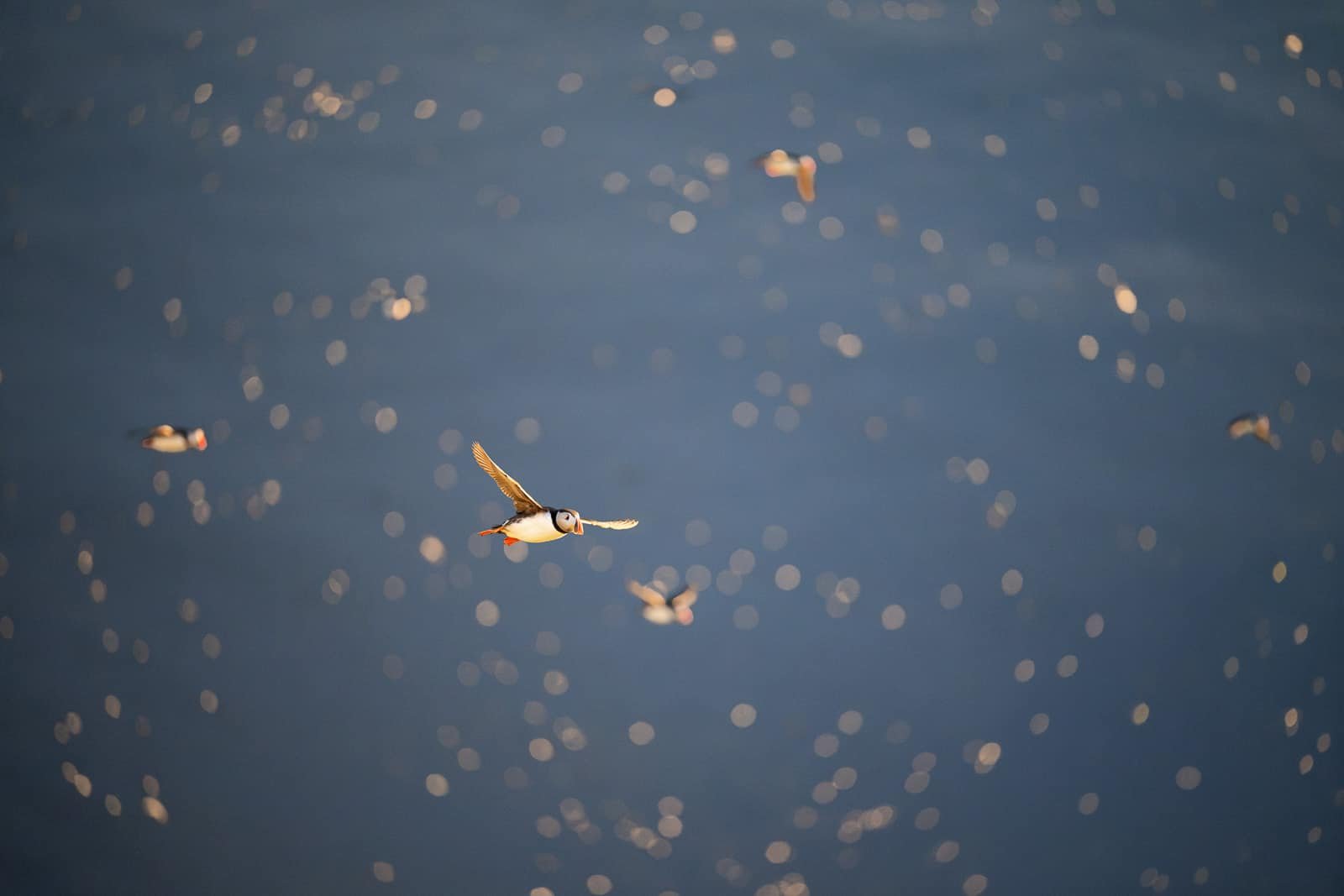
☀️ Light : around the summer solstice, the light is golden practically all night long. From 11PM to 4AM, it’s the most incredible light I’ve ever seen ! The sun stays close to the horizon and illuminates the birds from below.
🐧 Puffins : there are way less people here than at Dyrhólaey or Borgarfjörður Eystri, so you can set up and wait in peace. A 70-200mm lens covers most situations, but I wish I had a 180-600mm to take very close-up portraits.
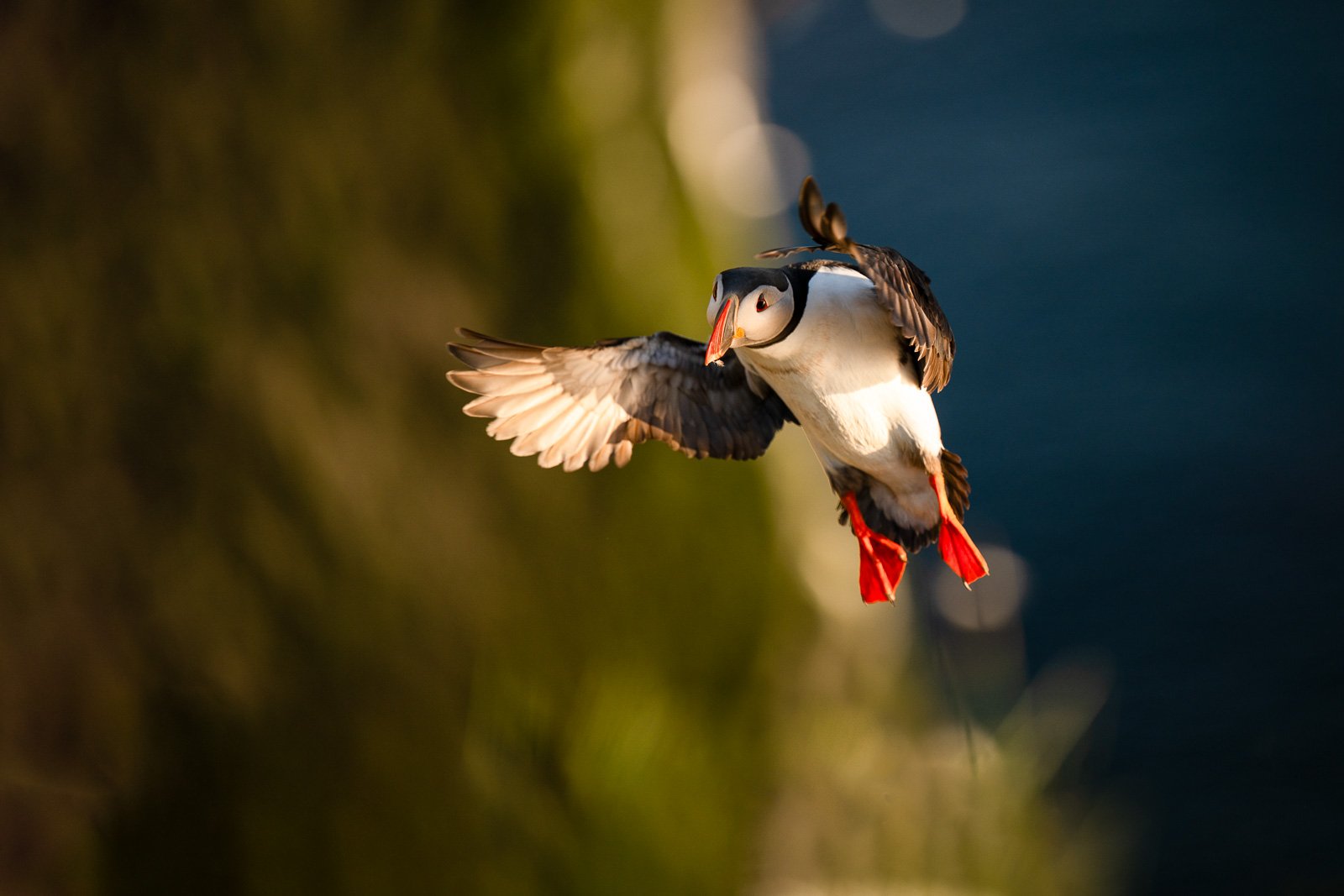
🪶 Birds in flight : if you want to capture puffins in flight, keep in mind that they flap their wings extremely fast, so you’ll need to use a shutter speed of at least 1/4000s. Be sure to set your camera to burst mode. Puffins fly back and forth between the sea to fish and their burrows to feed their chicks, and they always return along the same flight paths. So if you position yourself and follow the birds, you’ll be able to capture some beautiful scenes of them in flight.
🏔️ The cliffs themselves : the Borgir and Stuðlaberg cliffs are very interesting, with hexagonal basalt columns, so be sure to pack a wide-angle lens (14-24 mm) and a standard zoom lens (24-70 mm). I wasn’t able to go there this time, but I’ve seen photos of them, and they look magnificent.
👉 If you plan to photograph puffins there, my article on how to photograph puffins will give you all the camera settings and ethical guidelines you need to know. In this other article, you’ll find tips to help you take better photos.
Conclusion
I hope you enjoyed this blog article, I have others pending (including one about my expedition to Hornstrandir arctic fox reserve). I also hope it inspires you to explore Grímsey ! It’s the kind of place that leaves a lasting impression, not because it’s spectacular or over-the-top, but because it’s truly authentic. To be perfectly honest, I’m sad to leave this island, but glad I got to visit it. I’m very happy with the photos I took, and I can’t wait to come back !
Safe travels to Iceland,
Marie