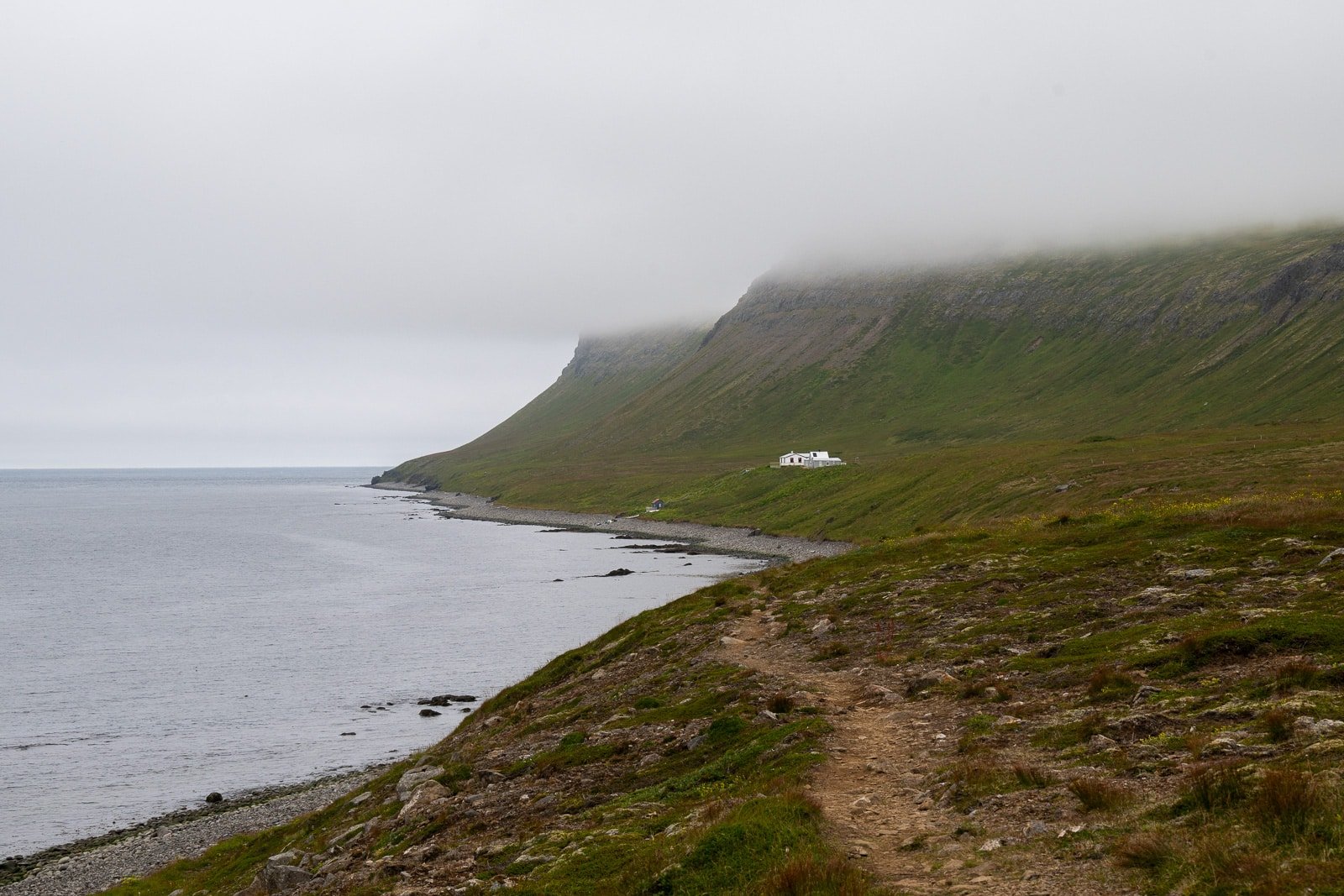
Hornstrandir feels like the end of the world in Iceland. The nature reserve is located at the northern tip of the Westfjords, and I’ll be direct : this isn’t a destination for those who seek comfort. There are no roads, no cell service, no residents and no stores. The reserve has been almost completely uninhabited since the 1950s and can only be reached by boat. It’s an exceptional protected area, the most remote in Iceland, and it’s precisely for these reasons that it’s so extraordinary.
If you want to read about my three days expedition there, click here. In this article, I’ll focus solely on the logistics : how to get there, where to stay, what to pack, and everything else you need to know to plan your trip to Hornstrandir.
When to go to Hornstrandir
The reserve is accessible only from early July through mid-August. Weather conditions make any off-season visit very risky, and the ferries operate only during this period. July and August are ideal : the fox cubs and birds are more active and curious, the days are longer, and, in theory, the weather is better.
👉 In any case, expect fog, wind, and rain no matter when you go. At least if you get great weather you’ll get a nice surprise 😅 I was very lucky during the three days I was there, I only had half a day of rain and two cloudy days. Always remember to check the weather forecast on vedur.is before you go and to register your travel plans on safetravel.is.
Winter is also a wonderful time of year to visit there, but I think it’s best to go with a guide. Some photographers offer photo tours through Borea (the ferry company), and thanks to their knowledge of the weather and area, they can help you take great photos of foxes.
How to go to Hornstrandir
Step one : travel to Ísafjörður
Ísafjörður is the only way to get to Hornstrandir. You have two options to get there :
- By plane from Reykjavík with Iceland Air (45 minutes) : this is the option I recommend if you want to make the most of your time there. Flights are frequent in the summer, and prices are relatively reasonable (around 250-300€ round-trip).
- By car from Reykjavík (around 6 hours). The road is winding and spectacular, with fjords stretching out on both sides. If you have time and the Westfjords are part of your itinerary, this is a wonderful option.
Step two : take the ferry from Ísafjörður
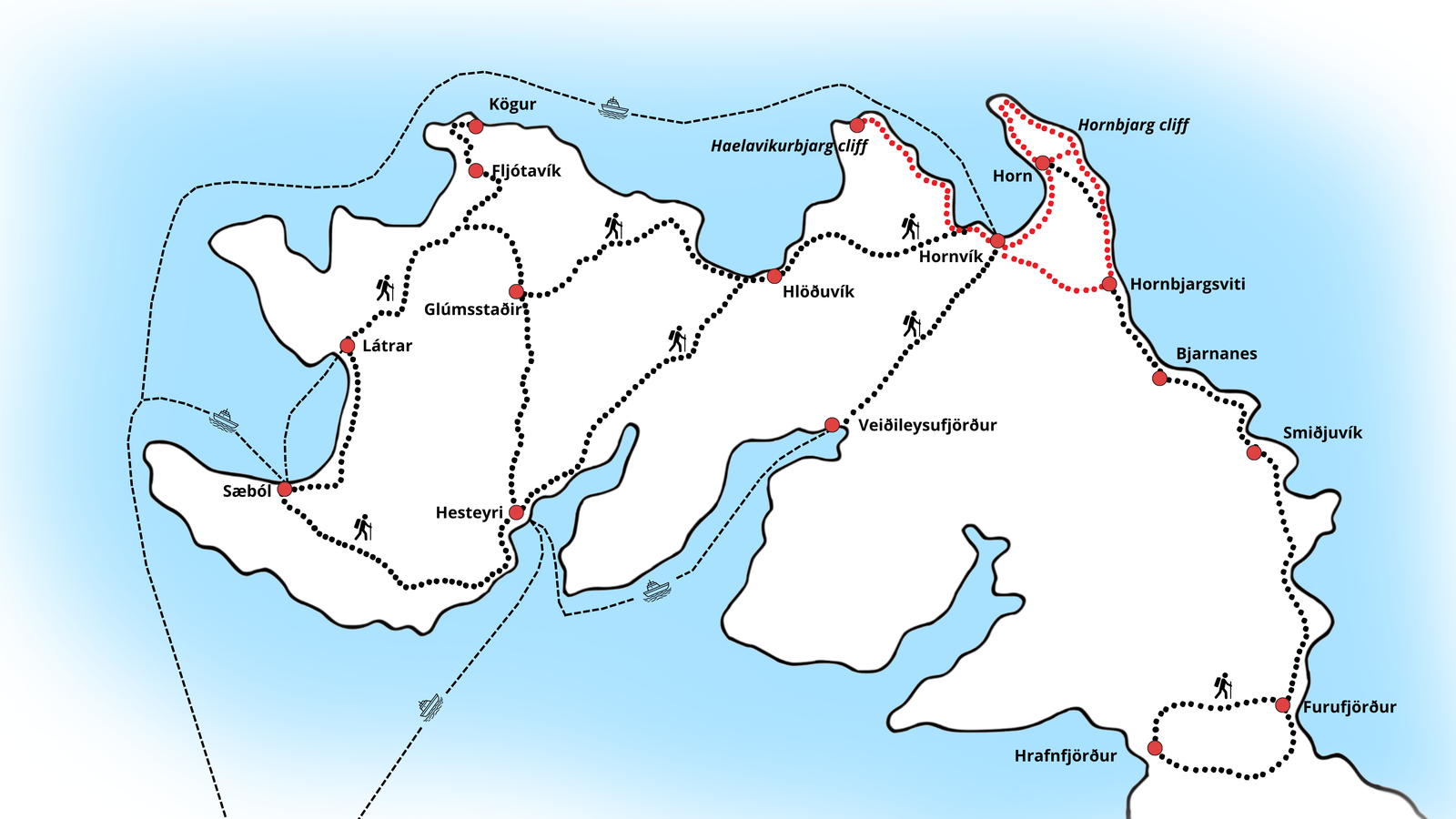
This is the fastest way to enter the reserve. Three companies operate ferries to Hornstrandir from Ísafjörður : Borea Adventures and Sjóferðir (WestTours) are the main ones. The crossings take between 30 minutes and 3 hours, depending on the destination. The main landing points are as follows :
- Veiðileysufjörður : for hikers (you need hike from this point)
- Hesteyri : the most accessible arrival point, near the Old Doctor’s House
- Hornvík : to go directly to Hornvík horn and the Hornbjarg Cliffs
💰 Bookings : during peak season, be sure to book several weeks in advance, as space on the ferry is limited. You can find all the schedules and arrival ports right here. Expect to pay between 200€ and 300€ for a round-trip ticket, depending on your destination.
Where to stay in Hornstrandir
Campings
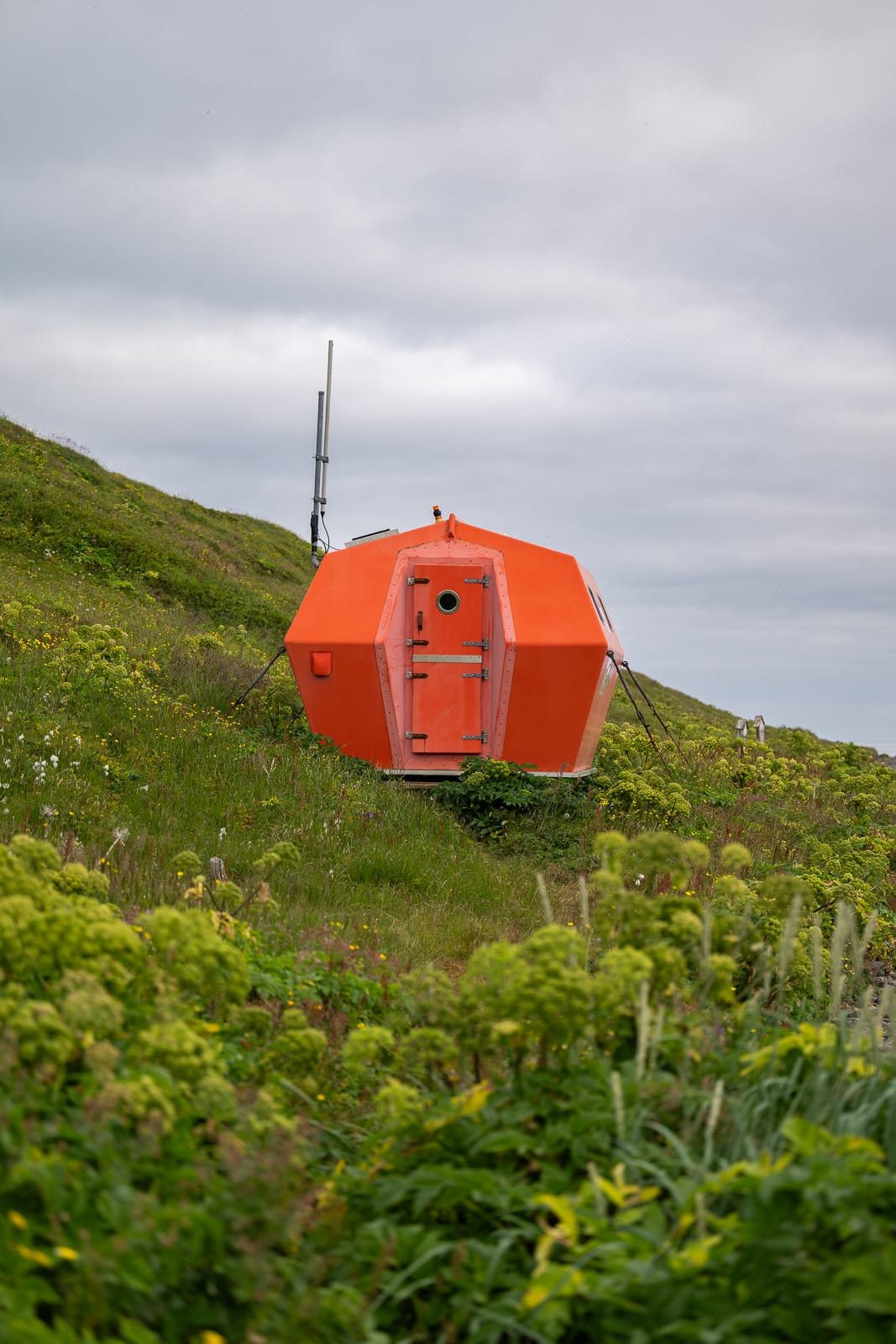
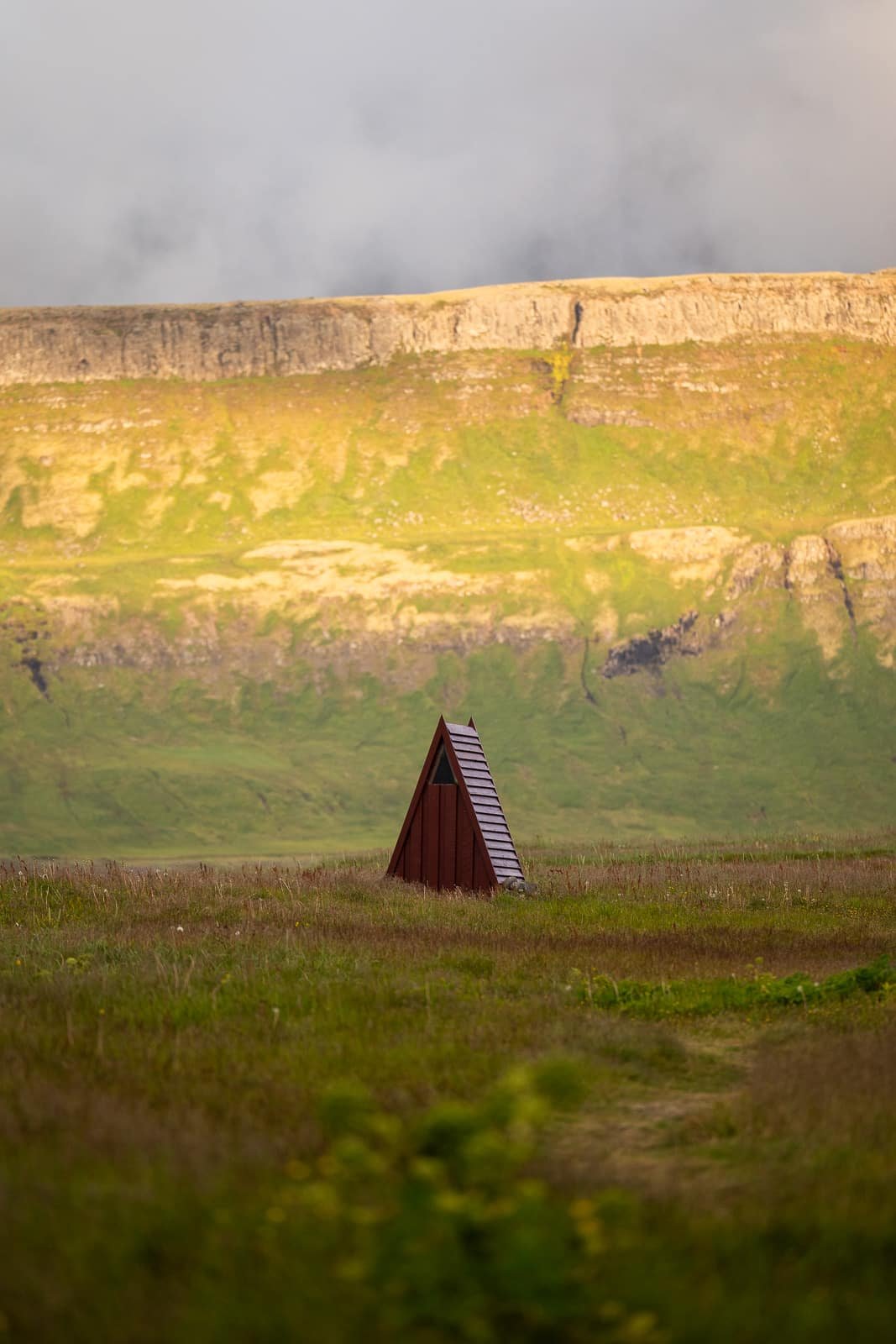
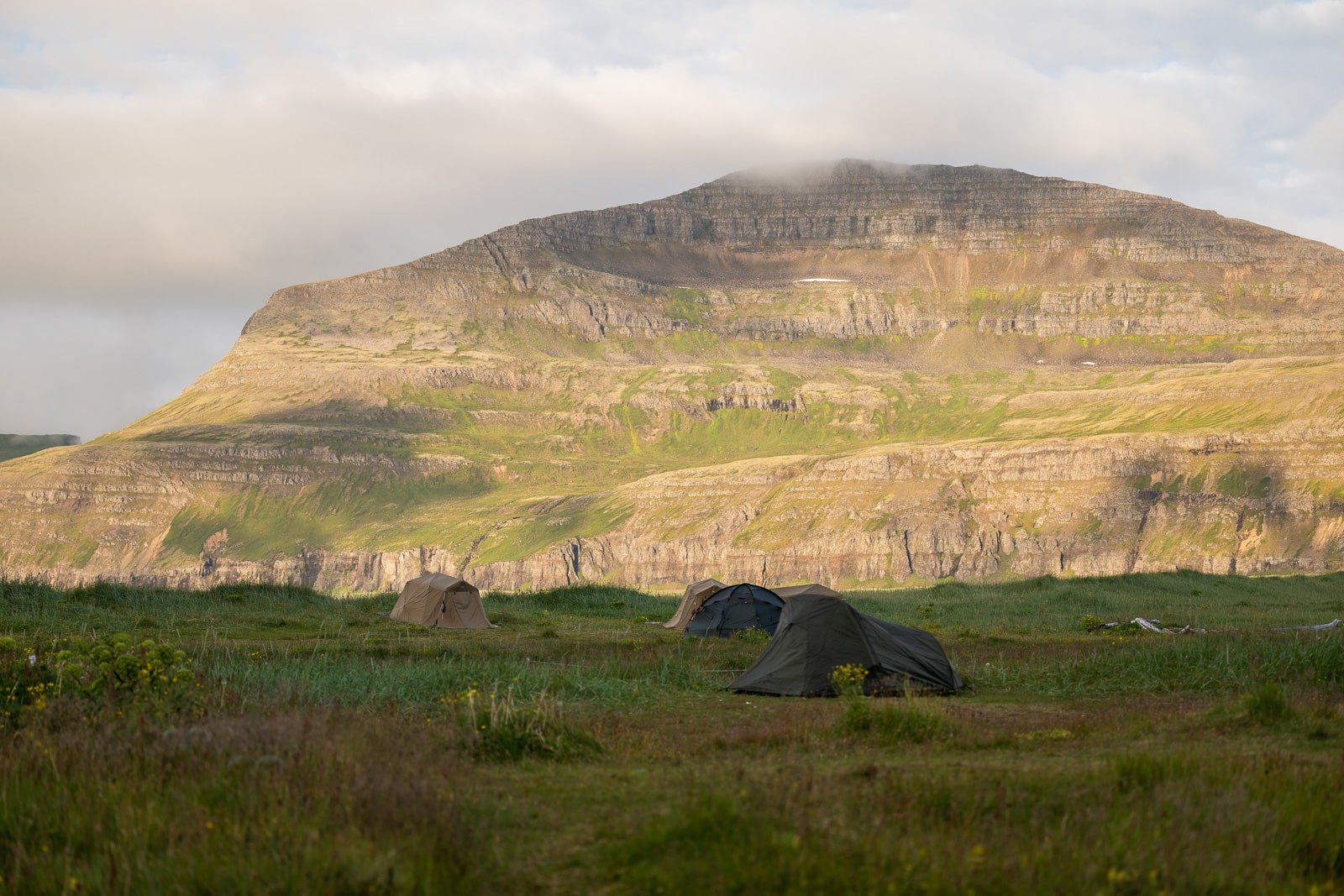
If you want to stay overnight, camping is the way to go. Wild camping is prohibited, there are specific areas where you can pitch your tent, often equipped with dry toilets, a water source, and an emergency shelter. The campsites are very basic and rustic, so be sure to respect the area and leave no trace of your visit. Camping is free. The complete list of campsites is right here.
There are no showers at the Hornvík campground. I don’t know about the others. Be sure to bring wet wipes and deodorant, you might start to smell like a fox after a few days 😂 However, there are dry toilets and “permanent” toilets, with toilet paper. You can always bring your own just in case, but I don’t see the point.
Guesthouses
There are also two guesthouses in Hornstrandir, which are usually booked well in advance by groups or photographers organizing photography workshops :
- Old Doctor’s House in Hesteyri : there are 16 beds available. You’ll need to send them an email using the form on their website to check availability. They also serve breakfast and pancakes that are apparently very good.
- Hornbjargsviti : The hostel is right next to the lighthouse and has 40 beds. I heard the waffles are good. A shower costs 7€ (2026).
Where to eat in Hornstrandir
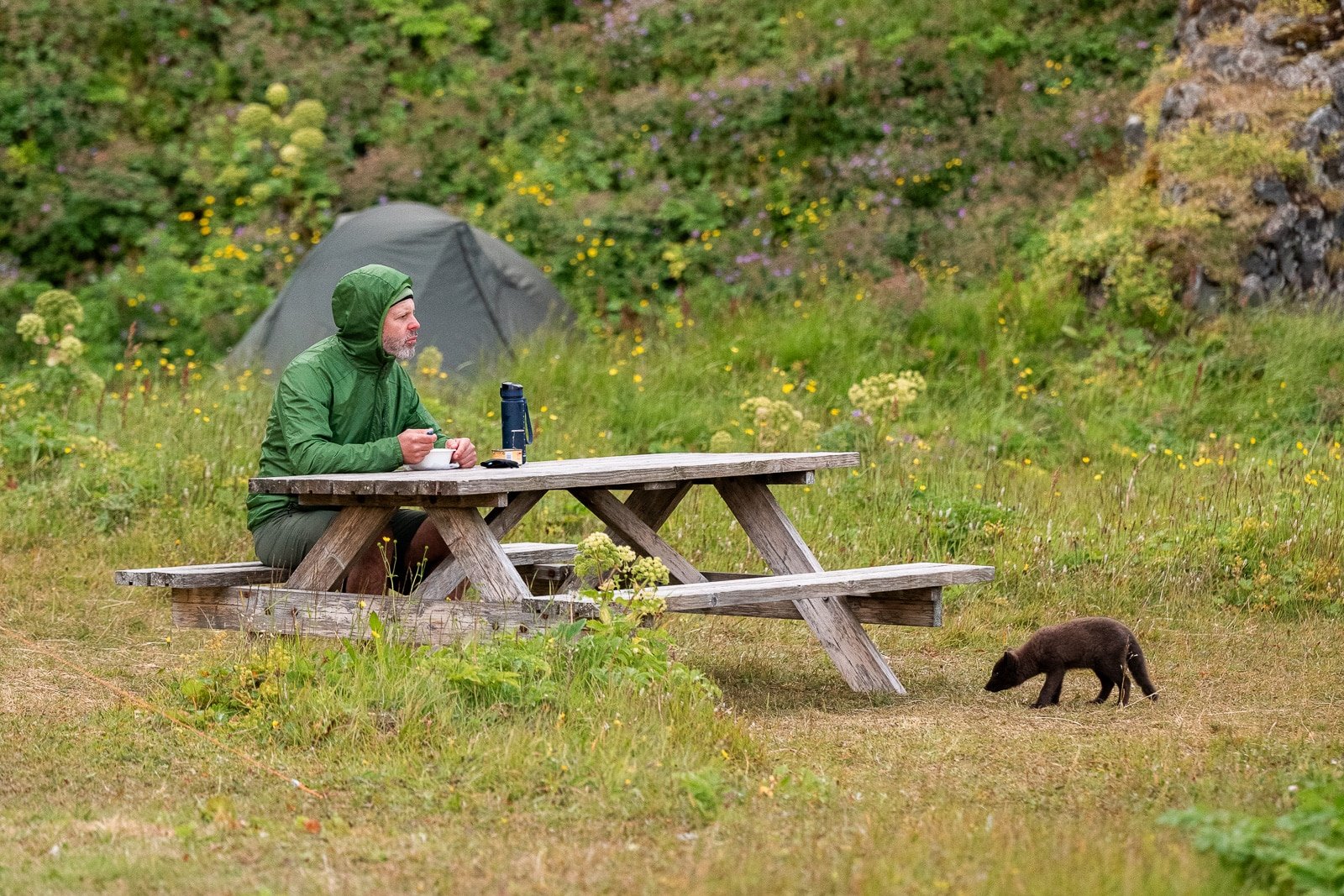
The answer is (almost) nowhere. Going to Hornstrandir means you’ll be completely self-sufficient when it comes to food. There are no stores in the area, the only place to eat anything there is at the guesthouses. Prepare your meals in advance and bring enough food for the duration of your stay, plus an extra day’s worth in case bad weather delays the return ferry. I bought a small Jetboil before leaving and made myself a few sandwiches for the three days I was there.
💦 On the other hand, you’ll find plenty of water sources, whether at campgrounds or along rivers. As with the rest of Iceland, it’s safe to drink water straight from nature. Be sure to bring a water bottle to refill it regularly. There’s running water in the restrooms at the Hornvík campground (I’m not sure about the others).
How to charge batteries in Hornstrandir
There’s no electricity in Hornstrandir, it’s a wild and unspoiled place. Be sure to fully charge your devices beforehand and bring a portable charger to charge your gear once you’re there. I’ve had a Juovi power bank for a few years now, and it lets me charge my phone or laptop while traveling without any problems.
What to pack for Hornstrandir
Of course, this list should be tailored to the length of your trip, your physical abilities, and your camera gear.
Essential basic equipment :
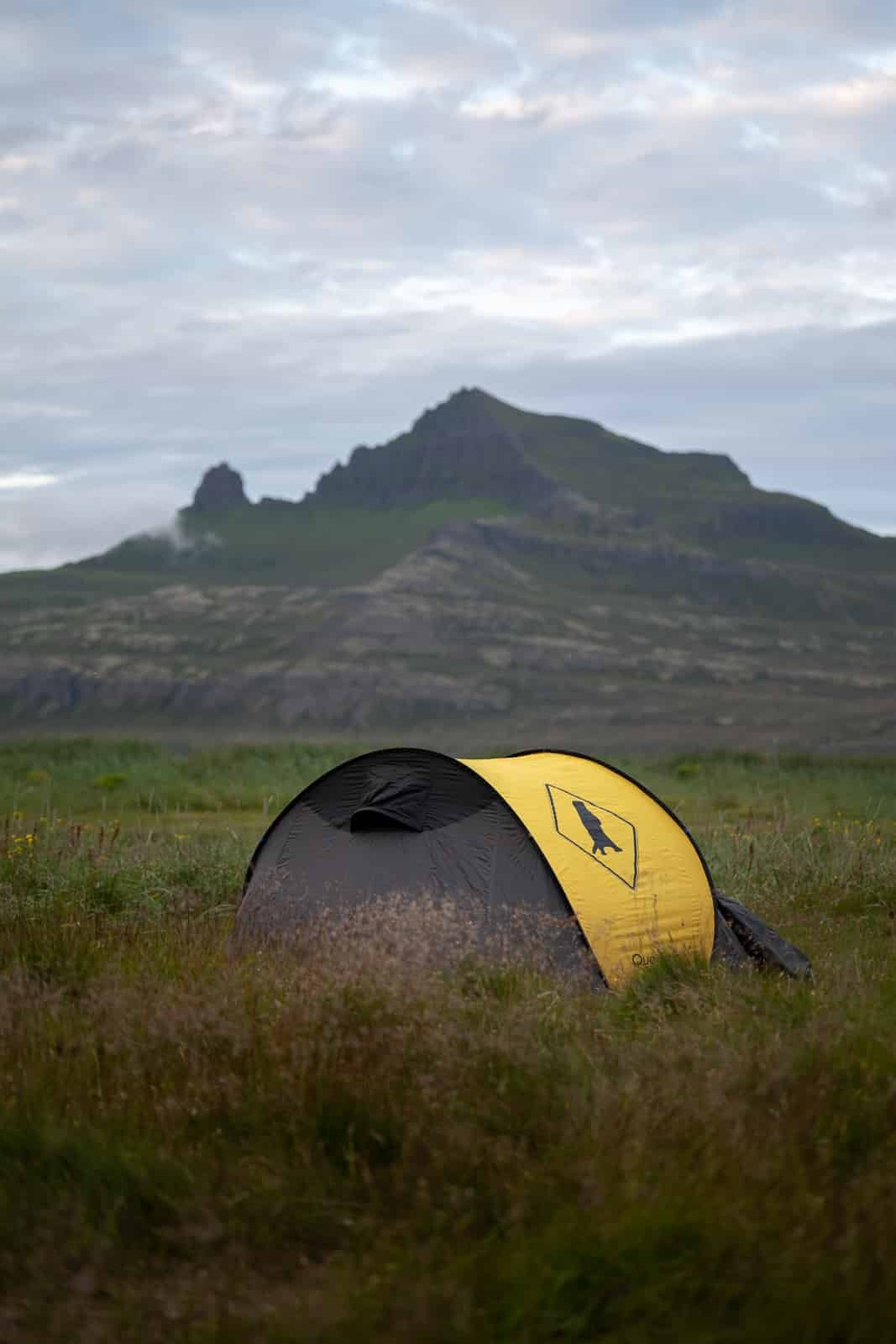
- A 4-season tent (the wind can be strong, even in summer). Don’t make the same mistake I did and don’t bring a 2-second tent from Quechua…
- Warm sleeping bag (5–10°C at night) + sleeping mattress
- Waterproof and warm clothing (see this article for gear recommendations)
- Hiking poles (optional)
- GPS or paper map (no cell service on site)
- Satellite communication device (optional but highly recommended if you go on long hikes)
- Food for the duration of the stay + 1 day’s supply (+ JetBoil)
- Water bottle (there are many sources)
- Fully charged external battery (no electricity)
- Wipes/deodorant (for personal hygiene)
For photography :
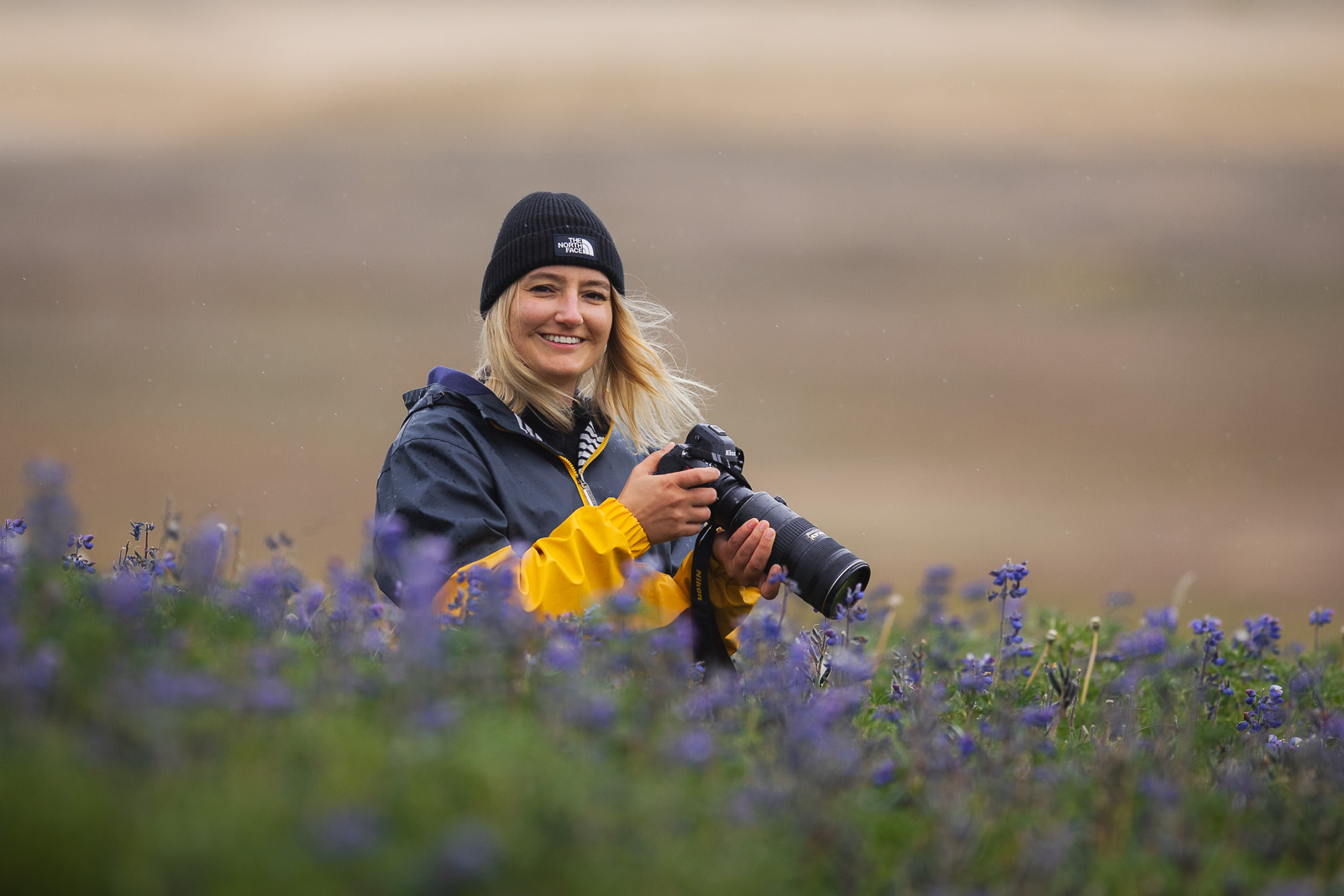
- A 70-200mm telephoto lens at a minimum for foxes and birds, ideally, 400mm
- Wide-angle lens for landscapes and cliffs
- Waterproof cover for your gear and backpack
Arctic foxes : what you need to know
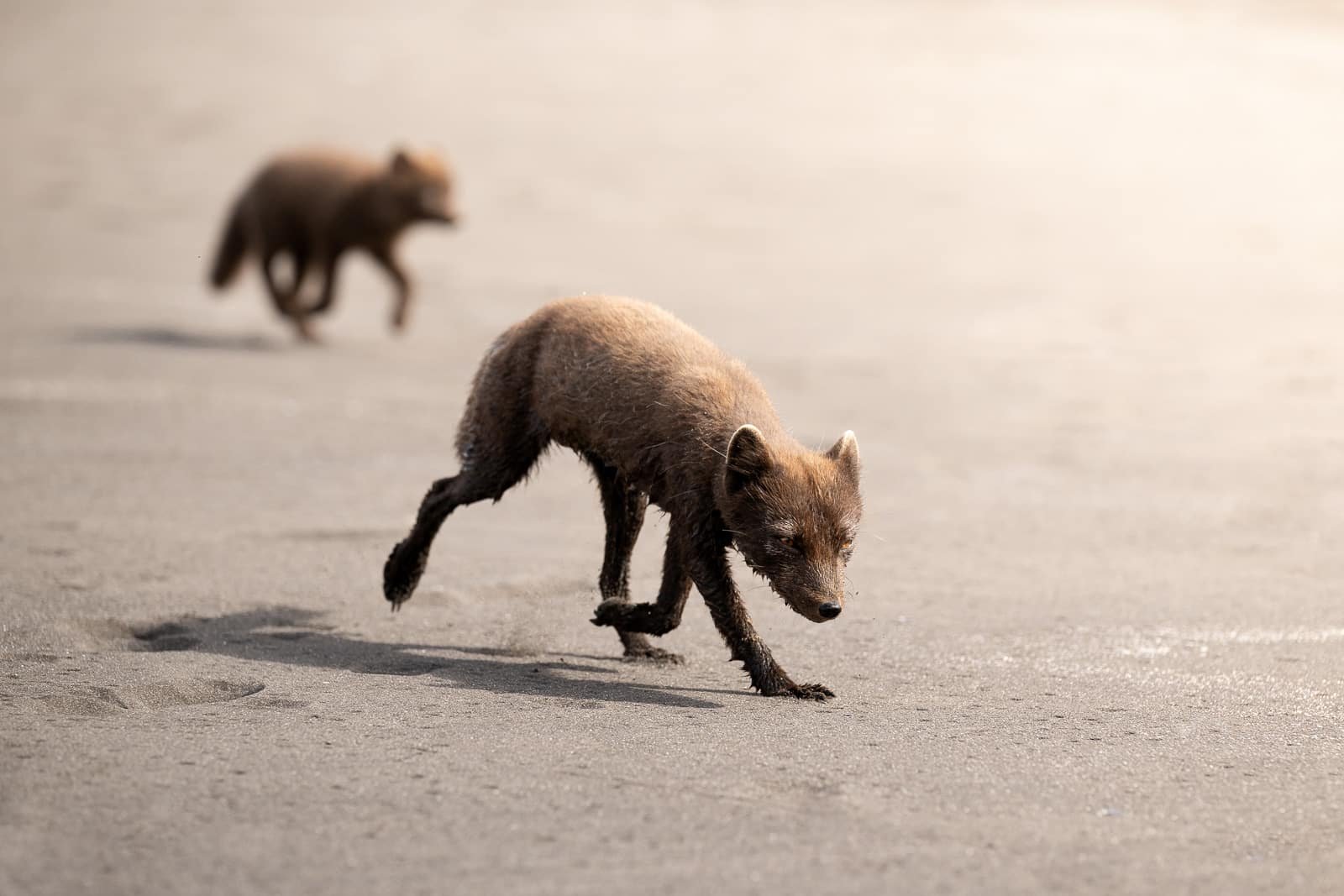
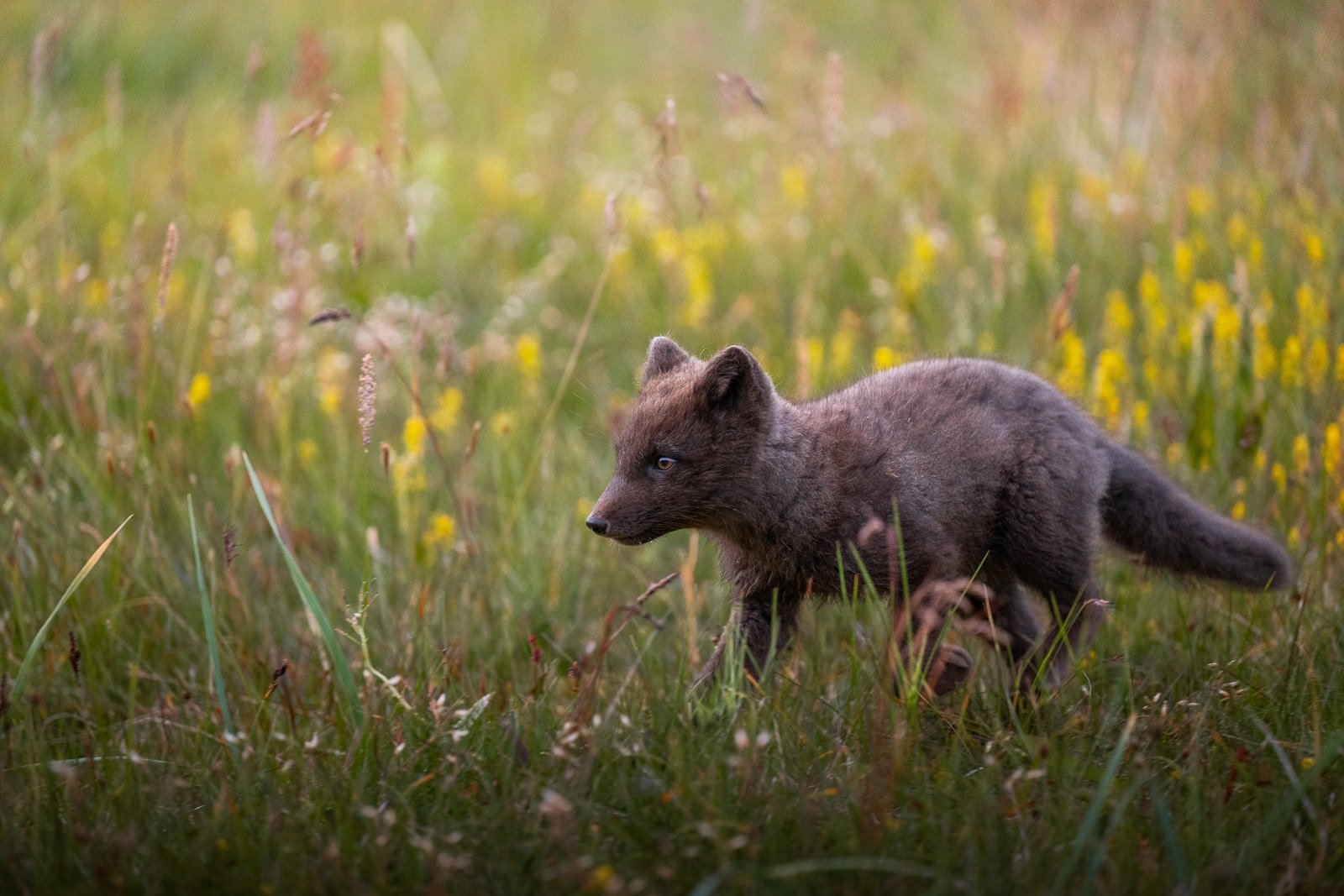
That’s THE main reason to visit Hornstrandir, at least for me. The reserve is the only place in Iceland where arctic foxes are actively protected and where hunting them is prohibited. As a result, unlike all other Icelandic foxes, the ones in Hornstrandir aren’t shy. They sometimes come to sniff around just a few meters from the campground.
Hornvík is the area with the highest density of foxes in the entire reserve. In July and August, fox cubs begin to explore their surroundings, making this the best time to observe them.
⚠️ Please note : there are no puffins at Hornstrandir. The high density of Arctic foxes, which prey on ground-nesting birds, prevents the puffins from settling there. However, you will see plenty of guillemots, fulmars, black-legged kittiwakes, and other cliff-nesting birds.
Hiking in Hornstrandir
Hornstrandir is not a network of marked trails like those found elsewhere in Iceland. The routes are often barely marked on the ground, sometimes reduced to faint paths in the grass or scattered cairns. This is a self-guided hike through a highly varied alpine and coastal landscape, featuring river crossings and steep ascents and descents. If possible, bring a paper map or download your routes from AllTrails before you go, as there is no official trail network. Here are the main routes.
From Hornvík to the cliffs of Hornbjarg (a must-see)
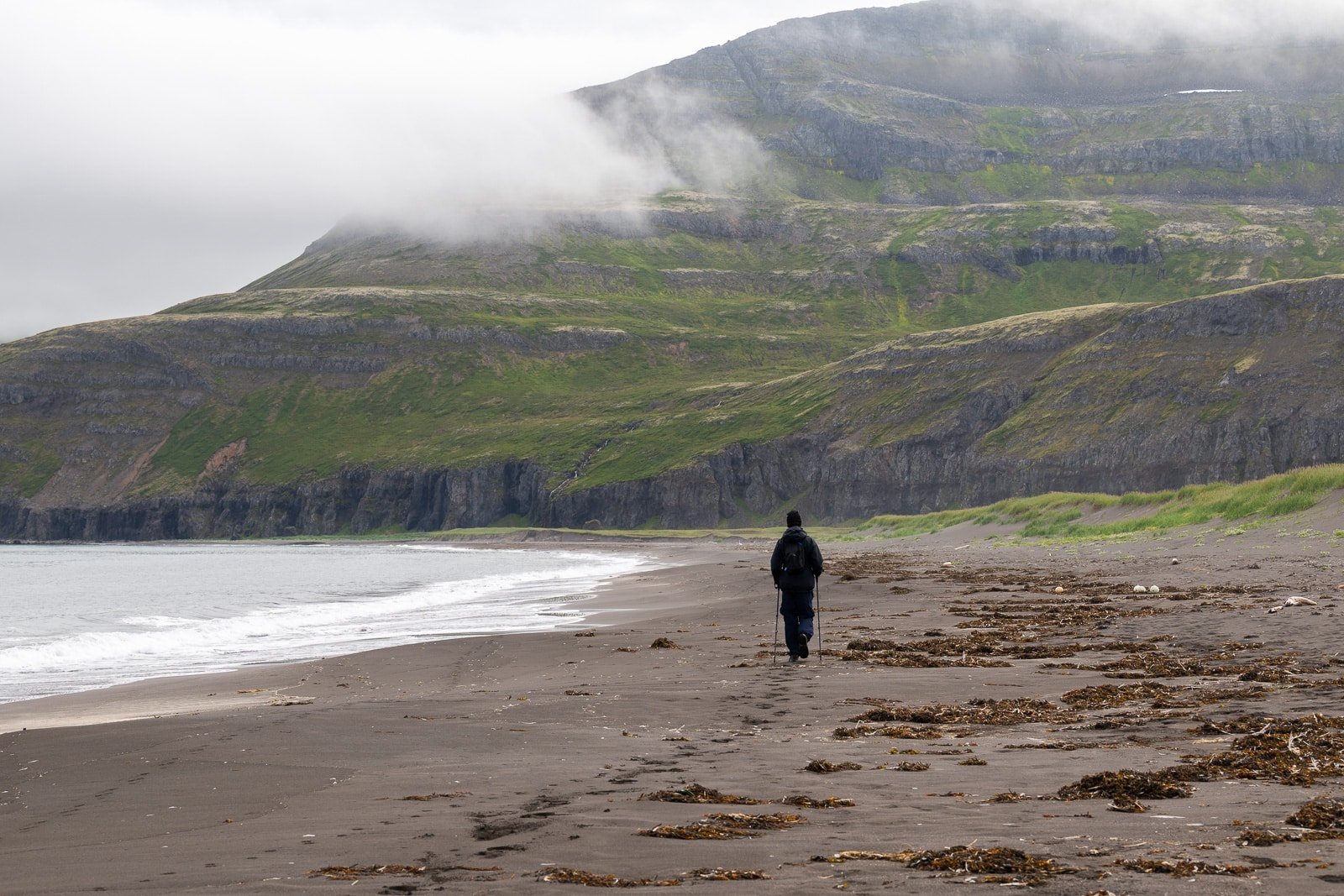
This is the reserve’s most famous hike, and it was the main reason I chose Hornvík as a first-time destination. The trail runs along the beach before climbing up to the Hornbjarg cliffs, which rise to 534 meters. From the cliff’s edge, you can see large bird colonies, and it’s quite common to spot foxes there. The descent offers a different perspective of the bay and the mountains in the background. It’s very common for there to be clouds at the summit, so if you get a clear window, go for it!
- Start hike : camping of Hornvík
- Distance : 6km one-way (12km round-trip)
- Elevation : ~400m
- Duration : 3,5 hours depending on your rythm
- Difficulty : moderate
From Veiðileysufjörður to Hornvík
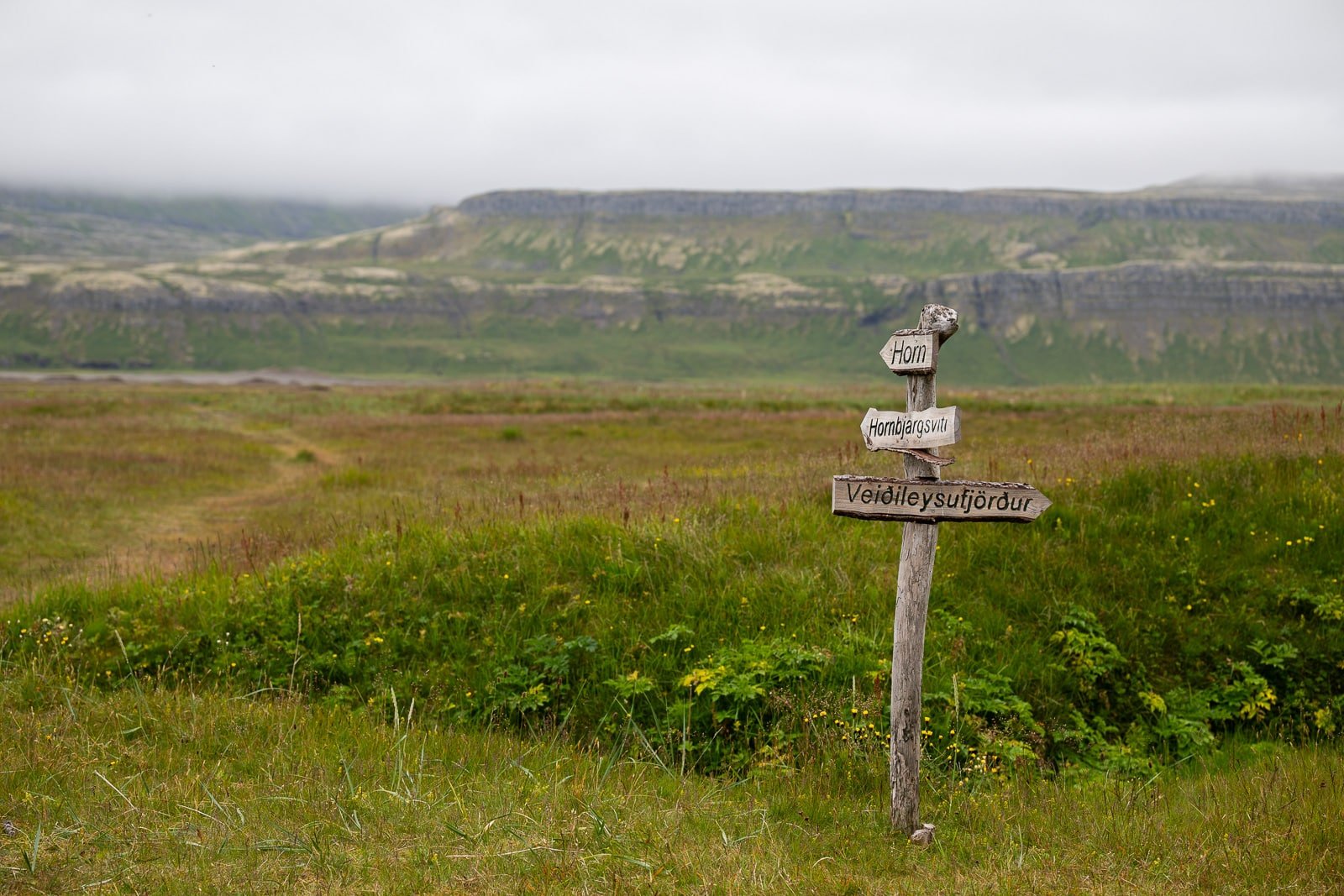
Apparently one of the most beautiful and wildest trails in the reserve. It connects Veiðileysufjörður fjord to Hornvík bay, crossing the Hafnarskarð pass. For example, you can take the ferry from Veiðileysufjörður on the way there and return from Hornvík. The one-way trip is 10km and requires a good level of fitness.
Some general tips for hiking in Hornstrandir
🌊 You’ll cross rivers frequently. In the summer, snowmelt causes rivers to swell, so bring lightweight sandals or flip-flops, and be prepared to get your feet wet. At the Hornvík campground, the ranger posts the tide times for crossing the river on a small board.
🪶 Arctic terns nest on the ground along certain coastal trails and won’t hesitate to attack if you get too close to their nests. Usually, it’s enough to just move away, but you can also raise your walking sticks or tripod above your head if they persist.
🌦️ The weather can change very quickly. Always bring extra food, and don’t schedule your ferry ride back too close to the end of your last day of hiking.
🥾 GPS tracks from apps like Gaia GPS, AllTrails, and Komoot can supplement a paper map, but the trails in Hornstrandir are either poorly documented or contain a lot of confusing information. Download whatever you can find online, and always check with the rangers, who know the area and trails well.
Of course, there are other hikes in Hornstrandir besides the ones I mentioned above. Here’s the AllTrails link so you can download the app and check them out.
To conclude
Hornstrandir is a beautiful, lesser-known, and remote region in Iceland, but it’s definitely worth the trip. If you’re not comfortable with the idea of spending several days sleeping in a tent in unpredictable weather, eating sandwiches, and drinking water from wild springs, this might not be the ideal place for you. On the other hand, if you’re willing to sacrifice a little comfort for hiking, birdwatching, and spotting arctic foxes in the wild, then go for it, I highly recommend this region. If you want to read about my three-day trip to Hornstrandir, click here.
Safe travels to Iceland,
Marie