After six trips to Iceland, it was high time I finally discovered the Hornstrandir nature reserve. Fun fact: a few months ago, I found a “list of 100 dreams” I had written when I was 18, and “see Arctic foxes in Hornstrandir, Iceland” was on it. There was no way I could not make my teenage dream come true in summer 2026 ☺️
But Hornstrandir takes some preparation, because the place is very remote and you have to be completely self-sufficient (tent, food, sleeping bag…). So I went alone, for three days, with one main goal being seeing Arctic foxes. And I can already spoil it for you : it’s one of my best memories from this 2-month trip to Iceland!
If you want to know how to get to Hornstrandir, how to plan your expedition, what facilities there are on site, and so on, I’ve written a dedicated article on that topic. In this article, I’ll tell you about the three days I spent there and how it all went !
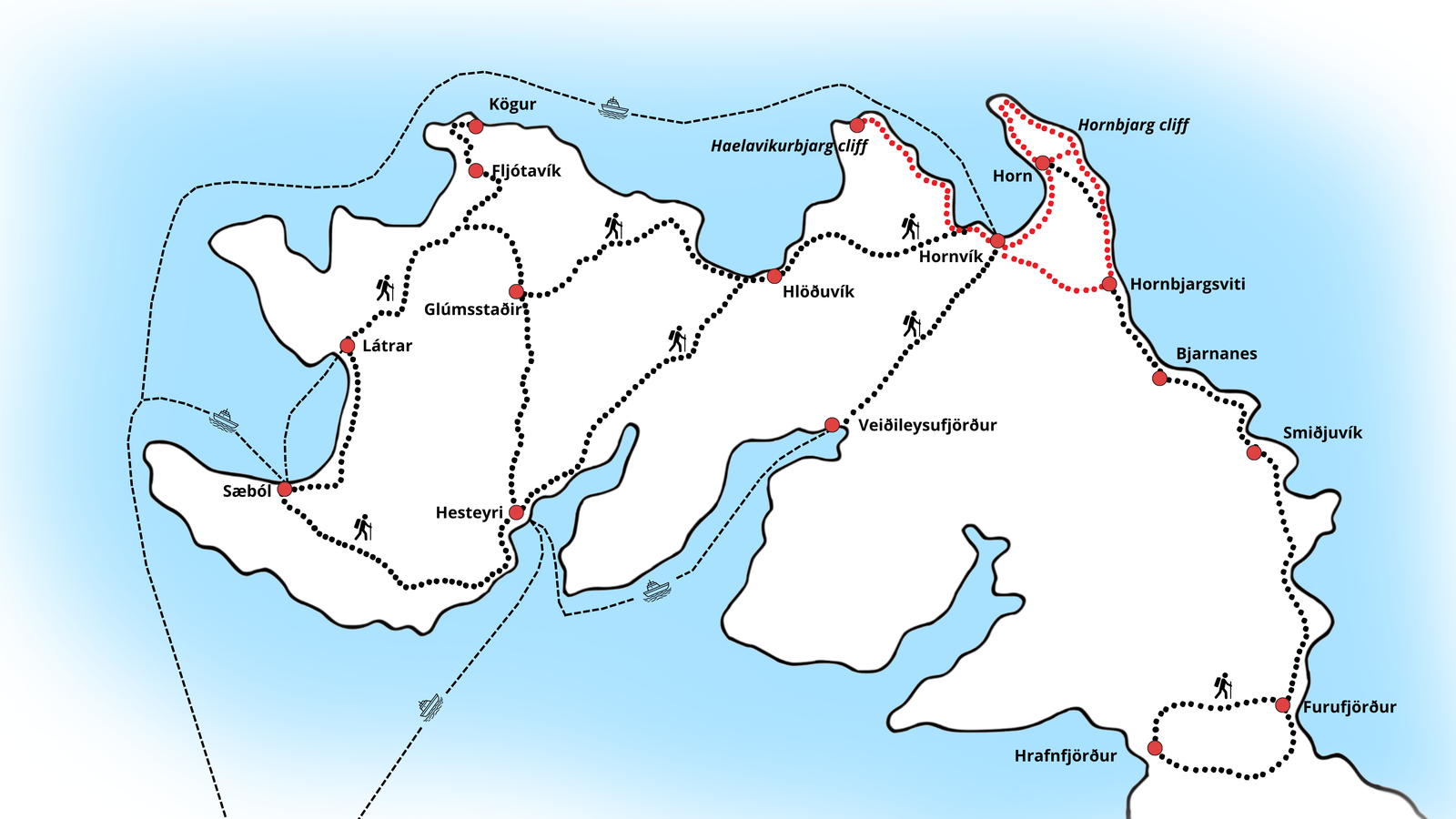
Planning my expedition to the Hornstrandir nature reserve
I dreamt of seeing arctic foxes in their natural habitat, so Hornstrandir was the ideal place. It’s the only place in Iceland where they are protected and not hunted, so they live their best lives without the fear of being shot.
Booking the tickets
I booked my tickets in May for early August, because I contacted the ferry company and they told me seats sell out fairly quickly, especially with the solar eclipse the following week. I went with Borea Adventures for the Ísafjörður to Hornvík crossing, and paid 274€ round trip through their website. My initial plan was to get off at Veiðileysufjörður and hike to Hornvík, but the idea of 10km with 600m of elevation gain and 20kg on my back discouraged me. For once, I chose to listen to reason and chose the easy option. I left my car at the port in Ísafjörður, where there’s a small dedicated parking lot.
What I packed
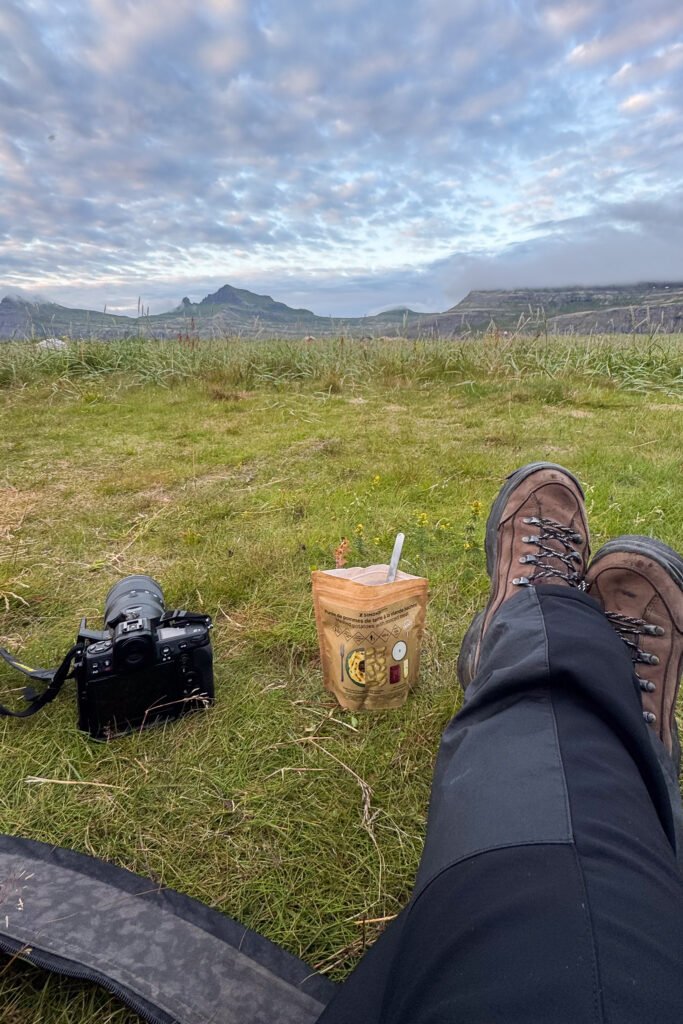
In my bag I took my tent, my sleeping bag, an inflatable sleeping mattress from Coziya, a pillow (yes, I got enough room for that, might as well be comfortable), my camera gear, and 4 days of food. I alternated between sandwiches and dehydrated meals from Decathlon. I had to bring my Jetboil stove, but I didn’t regret it once!
👉 Remember to bring a small trash bag for your waste, which you’ll have to take back with you to Ísafjörður. It will also help you keep your tent clean 🙂
Reaching Ísafjörður
I was already roaming around the Westfjords, so getting to Ísafjörður didn’t take long. From Reykjavik, count on 6 hours of driving on average, not including photo stops. Ísafjörður is a pretty, colorful village with a supermarket and a gas station. While waiting for departure, I took the opportunity to do some last-minute groceries shopping and sleep at the Sudavík campsite (which I highly recommend). I had a beautiful sunset the evening before departure, so I was pretty excited to see the weather was on my side. At least, that’s what the forecasts promised.
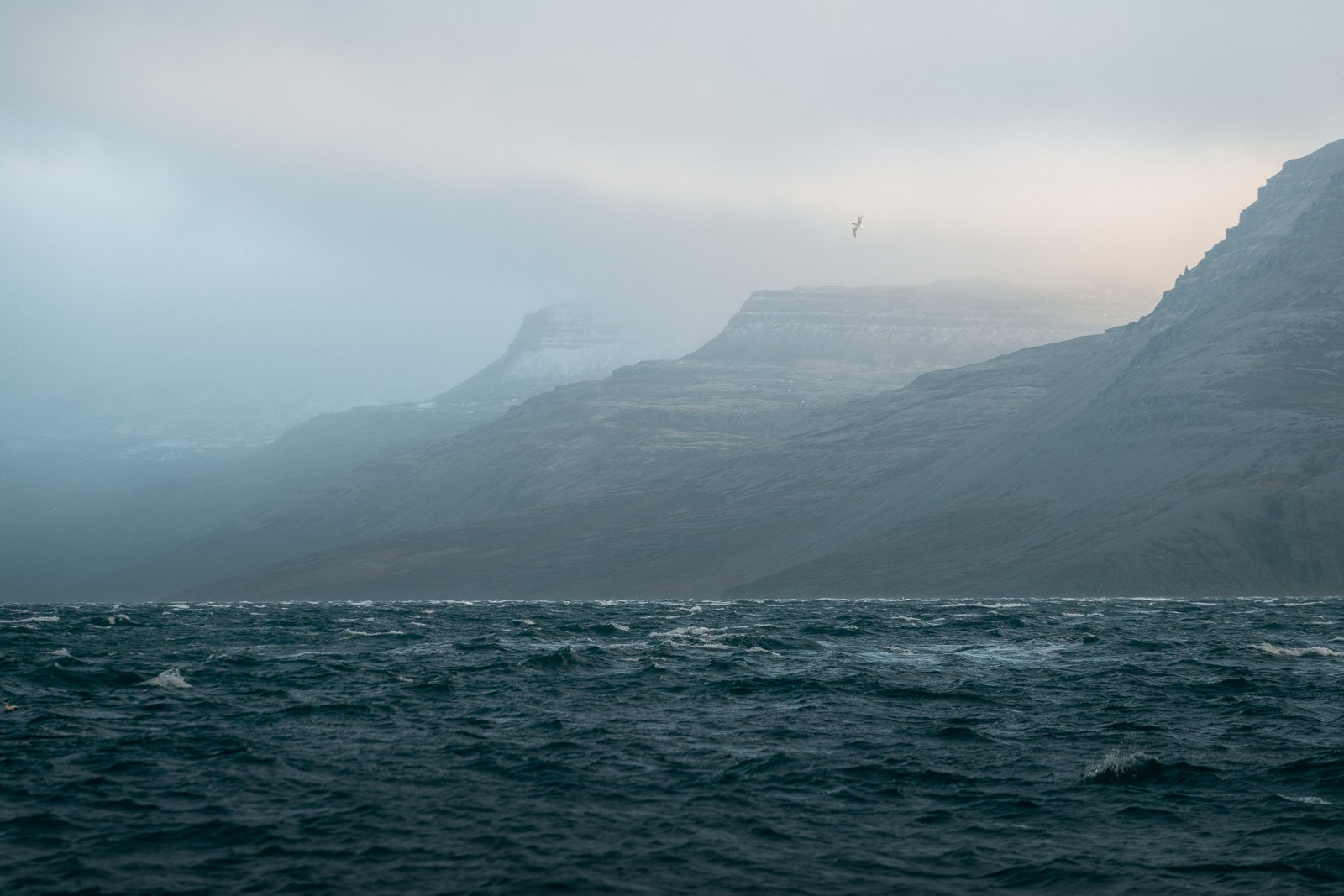
The ferry crossing to Hornstrandir
The ferry leaves Ísafjörður at 9AM, and you need to be at the port 30 minutes before departure. This boat is really not big since it holds around thirty passengers. It’s half full, and the ranger travels with us, along with supplies and food. As soon as the boat sets off, the fjords narrow before opening onto the ocean. The weather that morning is sunny, and we see whales in the distance (but very far, impossible to photograph).
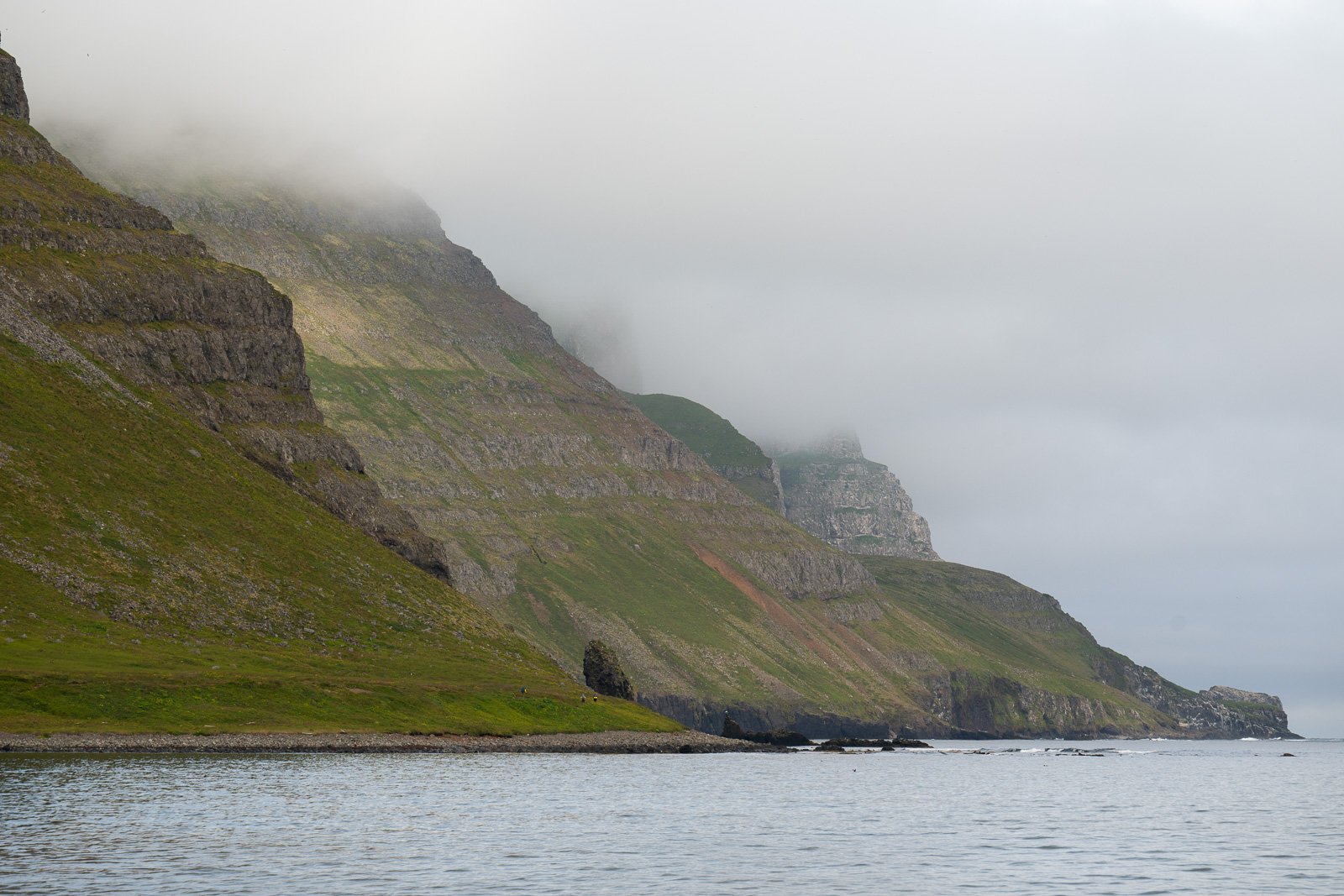
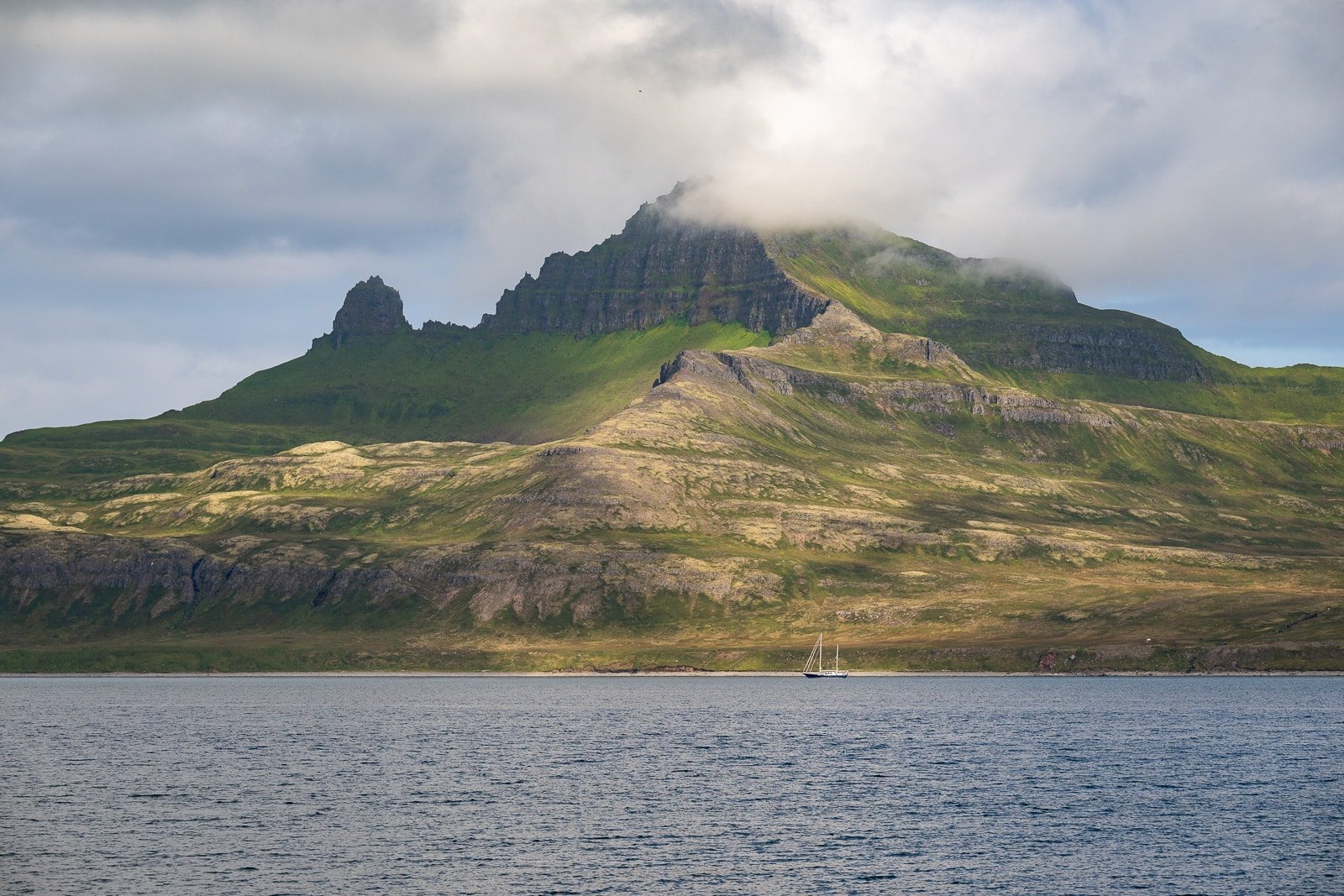
The crossing to Hornvík takes 3 hours. We follow the coast of Hornstrandir on our right, while the ocean stretches out endlessly on our left. As time goes by, you really feel you’re receding from civilization and cutting yourself off from the rest of Iceland. We lose phone signal completely once we reach the open sea. Then we also lose the nice weather, and the waves reach heights of several meters. Some people vomit from seasickness. I doze off until we arrive in Hornvík bay, where the boat drops a few hikers near a house before continuing to the campsite. The cliffs are huge, clouds wrap around the mountains, and you feel tiny next to them.
Arriving in Hornvík : first encounter with the Arctic foxes of Hornstrandir
Landing by zodiac in Hornvík
We arrive at noon and the landing in Hornvík immediately sets the tone. To reach the beach, we take a small zodiac packed to the brim. Everyone around me is clearly here either to hike or to photograph wildlife. Many have huge lenses, between 400 and 600mm, and on top of feeling intimidated, I start to panic. I “only” have a 70-200mm, and I’m afraid I’ll be too short to capture the foxes. I put those doubts aside for later, because who knows, I might not even see a single fox.
The bay is incredibly beautiful and quiet. It’s strange how quickly you realize how isolated it is from everything. The word “wild” takes on its full meaning, and I only realize it once I’m there. There’s no signal, but also no sound of cars or human interaction. Everyone is relatively quiet and speaks calmly, whether on the beach or at the campsite. I grab my bags and head to the campsite, which is just a few meters from the beach.
Hornvík campsite
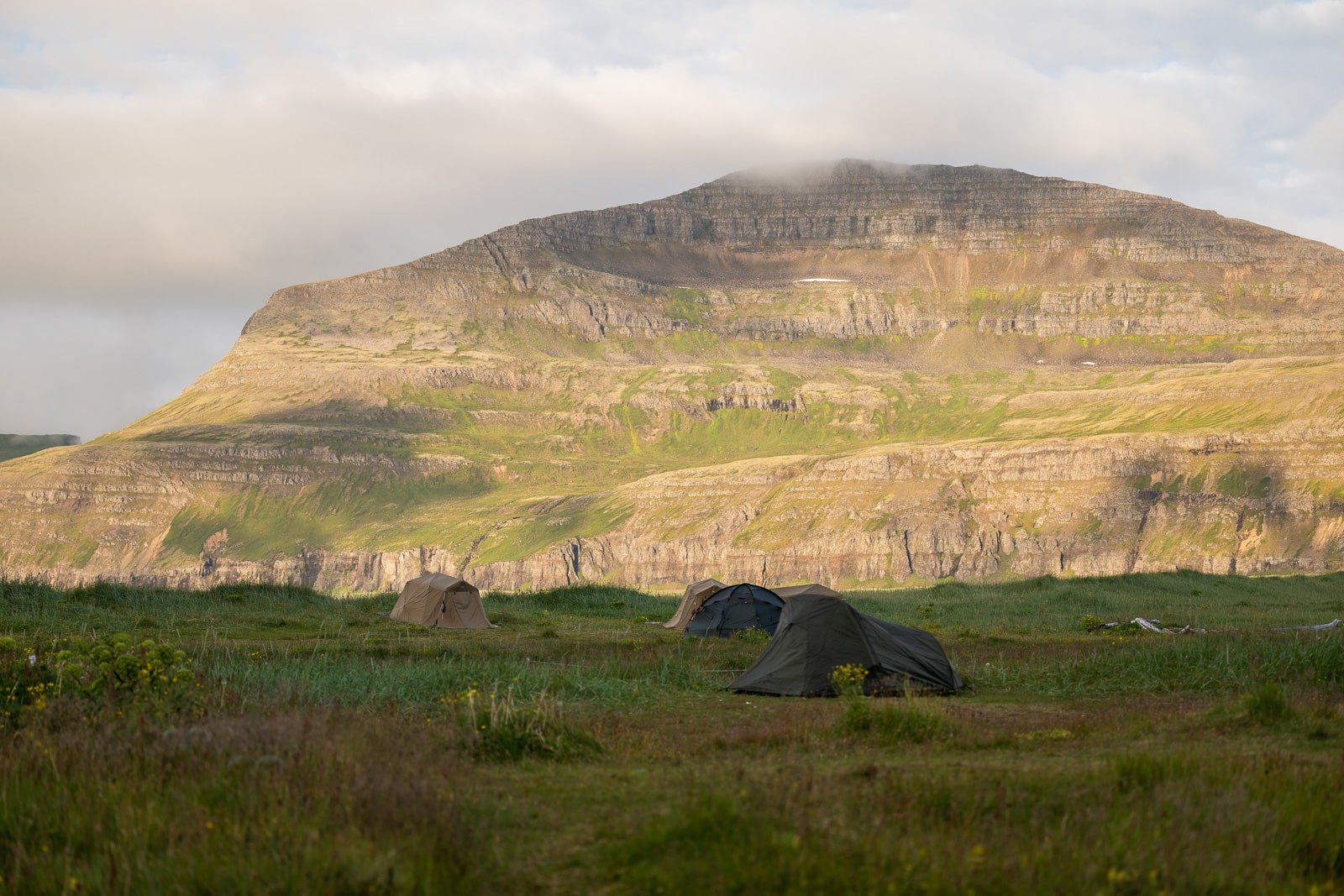
The campsite is incredibly beautiful, maybe the most beautiful one I’ve ever stayed at. I choose a fairly central spot, because the ones near the rocks, which are sheltered from the wind, are already taken. I checked the weather before leaving, so it should be nice for the next three days. For now, the clouds are still licking the summits.
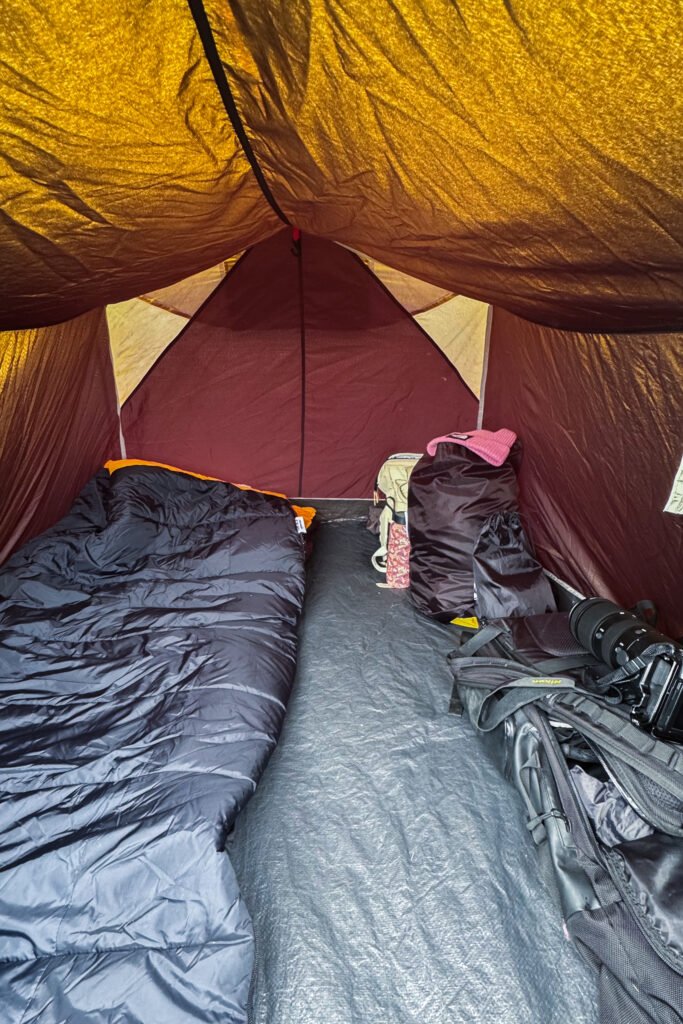
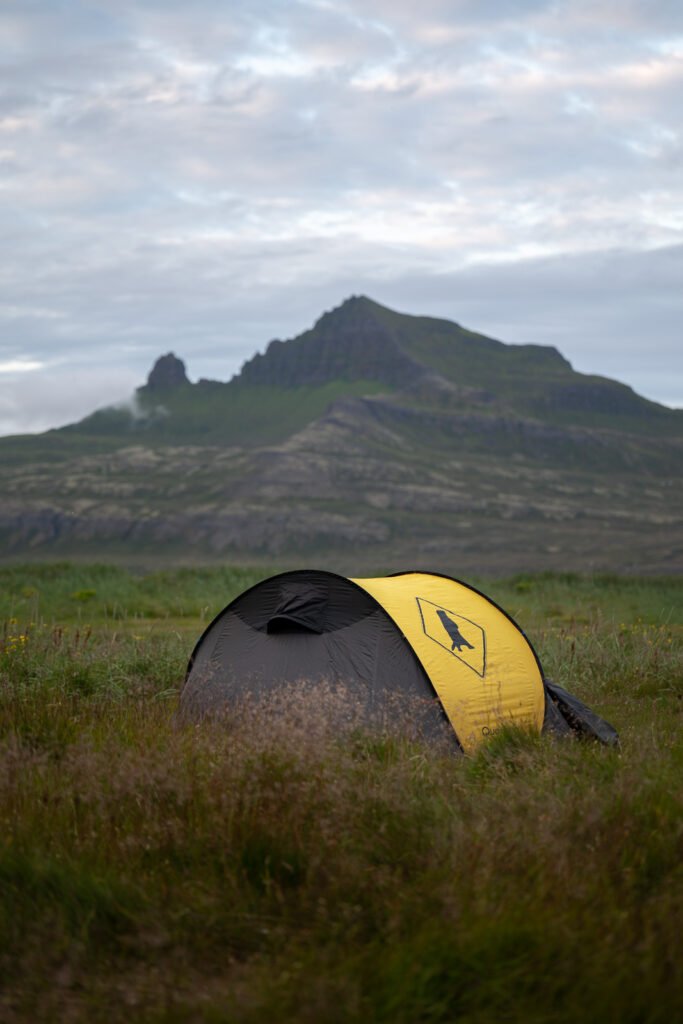
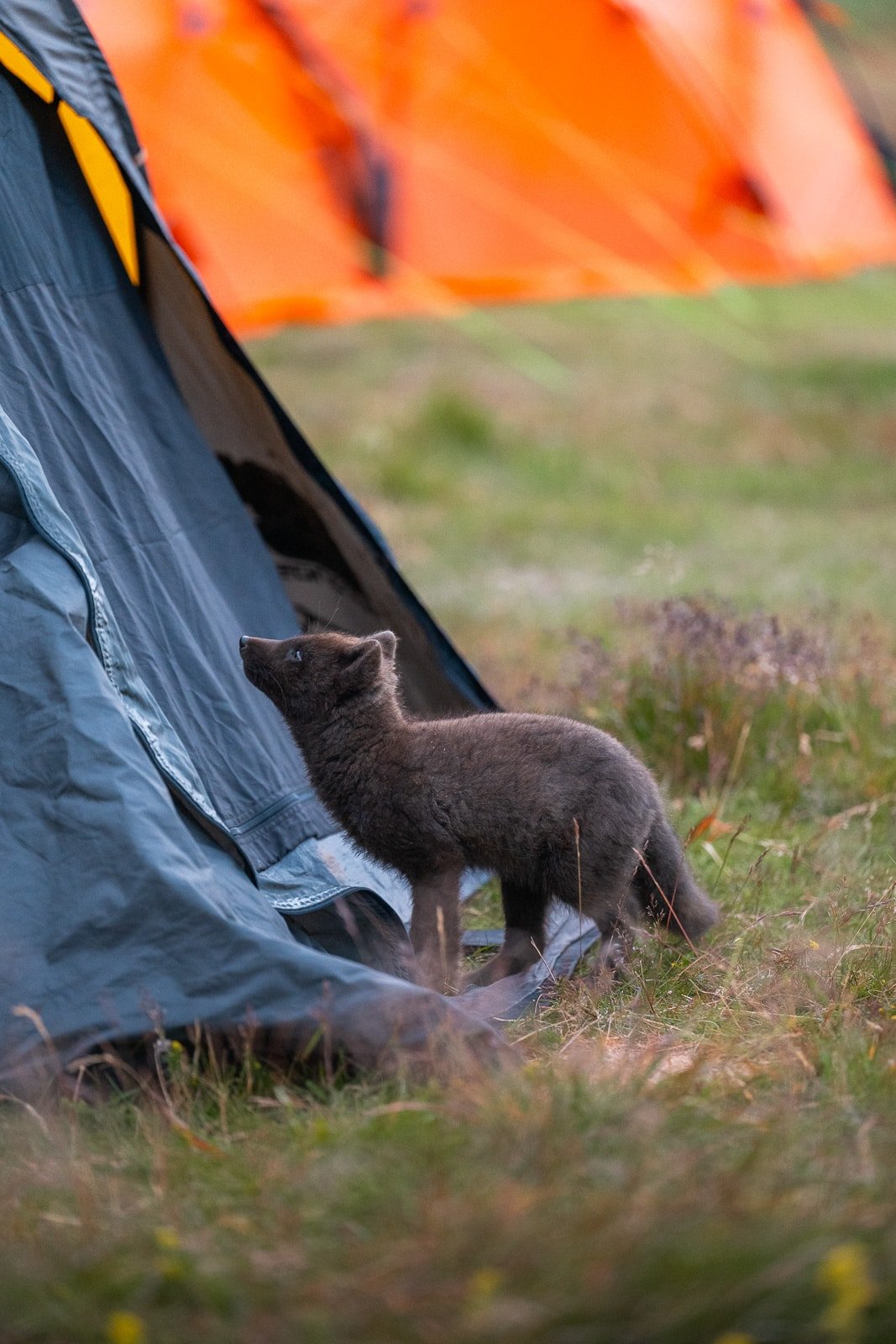
First, setting up the tent. It takes a few seconds, just like Quechua claims. I set up my mattress, my sleeping bag, my pillow and my bags, while the ranger makes the rounds of the new arrivals. She approaches me and explains that you absolutely must secure your food, because the Arctic foxes have unfortunately learned that human activity = easy food to steal. It’s incredibly sad to think that despite the bay’s isolation and the “low” number of visitors, the foxes have developed a taste for sandwiches and dehydrated pasta meals.
My first Arctic foxes in Hornstrandir, right at the campsite
Unfortunately, at that point I start to feel unwell, because it’s the first day of my period (of course it couldn’t have been before or after these three days). I lie down in my tent and silently endure the pain for several hours. It starts raining anyway, so I take the opportunity to rest. I wake up around 7PM, step out of my tent, turn my head to search for a table to have dinner, and there… my first fox 🥹
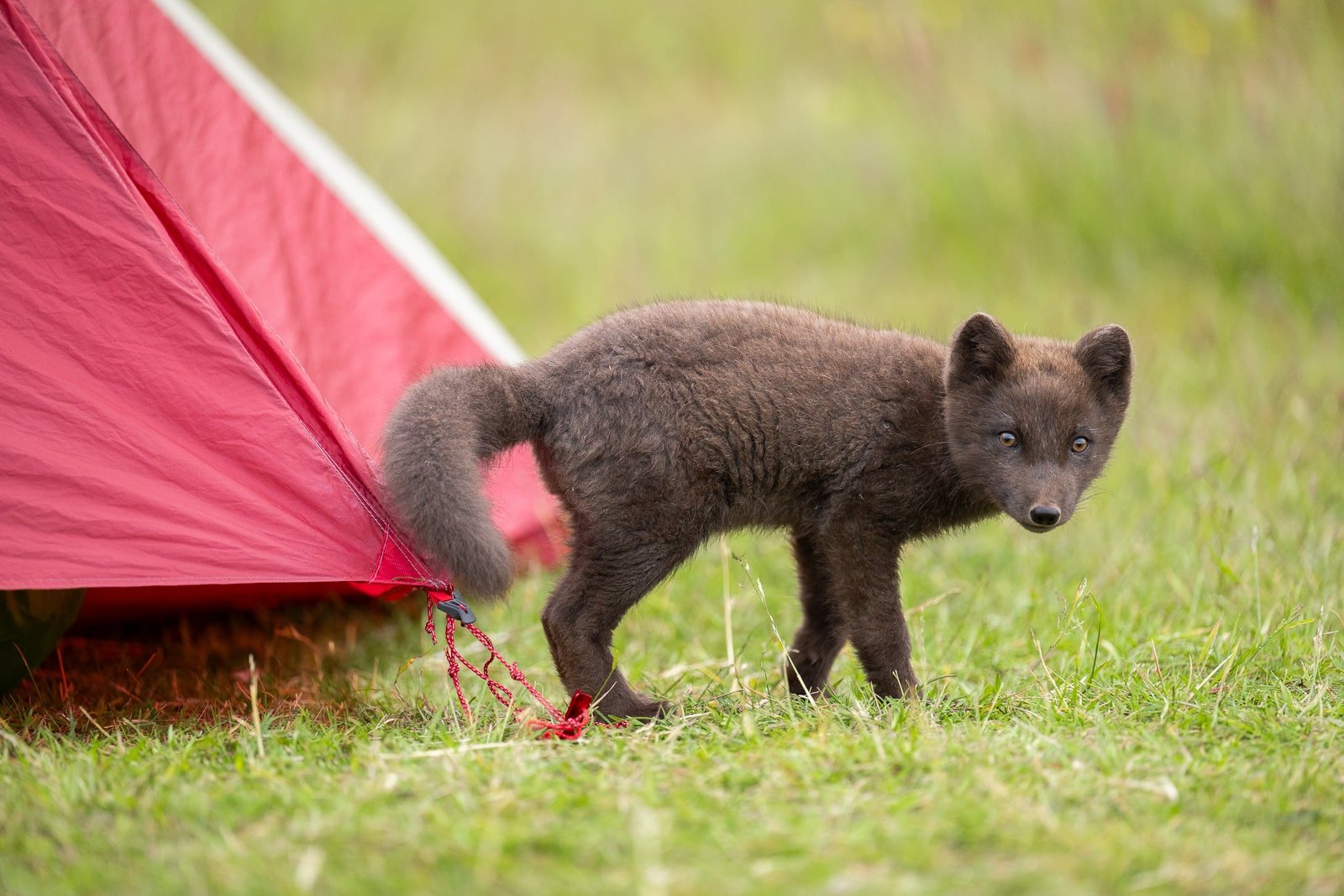
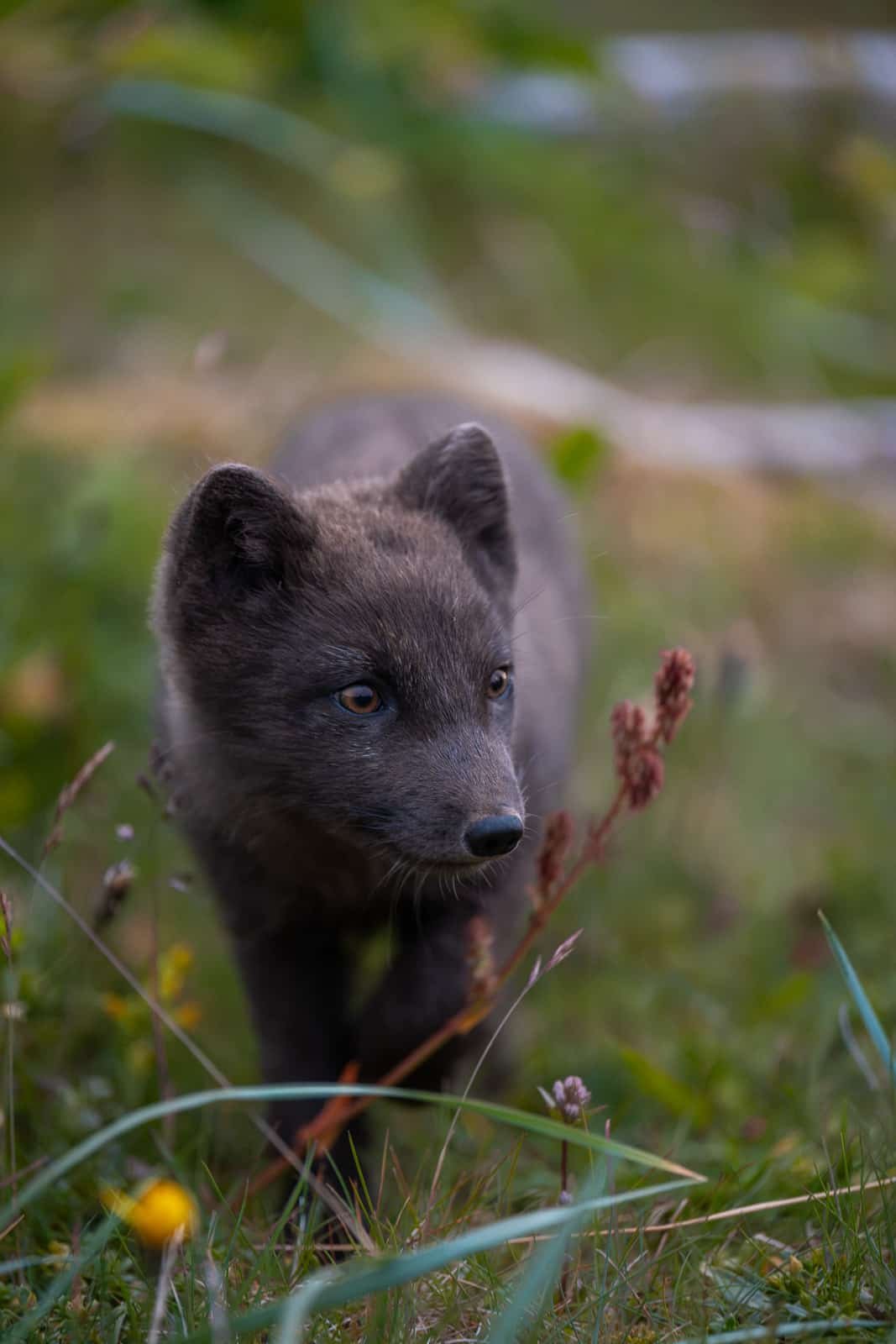
He hurries around the picnic table and slips under the tents looking for food scraps. What struck me in everything I had heard was that Arctic foxes come very, very close to the camp in Hornstrandir, but I didn’t think it would be THIS close. They clearly couldn’t care less that we’re here, and it’s wonderful to witness. The idea that they’re so unafraid and feel safe enough to come this close to humans is truly an incredible moment.
I try to eat, but the foxes run around the camp, around the tables, the tents, the toilets. Never leave your camera in your tent, you’ll regret it ! Of course, I switch to silent mode on my camera and shoot them nonstop, because I really want to immortalize the moment.
The the sky clouds over again and the light drops so much that it becomes impossible to keep taking photos. I go back to my tent, where I write these few lines in my notes app so I don’t forget anything. These few hours have already been magical and I can’t wait for tomorrow.
Day 2 : meeting the Arctic foxes of Hornstrandir
The day starts early, but with an overcast sky. I would have liked to do the Hornbjarg hike, but if I’m going to walk for several hours, I’d rather not do it in the fog. I head to the beach and run into Julia and Tim, a German couple of photographers and videographers shooting a wildlife documentary for Sony Germany. They’ve been here for five days and are leaving today.
Julia and Tim’s tips for spotting Arctic foxes in Hornstrandir
They give me a thousand tips for photographing Arctic foxes in Hornstrandir :
- Low tide is the best time to see them on the beach, because the foxes hunt birds and fish there.
- The kits often play and eat near the emergency shelter, in the rocks.
- If I see a carcass on the beach, all I have to do is position myself meters away and wait.
- Foxes have been spotted near the lake on the Hornvík horn (so, on the hike).
- The kits often play in the pieces of driftwood in the middle of the campsite.
I know it well : patience is the key in wildlife photography. Anyway, I have nothing else to do today but wait. Julia tells me that apparently there’s a seal that leaves fish carcasses (mostly heads) on the beach, so my priority is to look for carcasses.
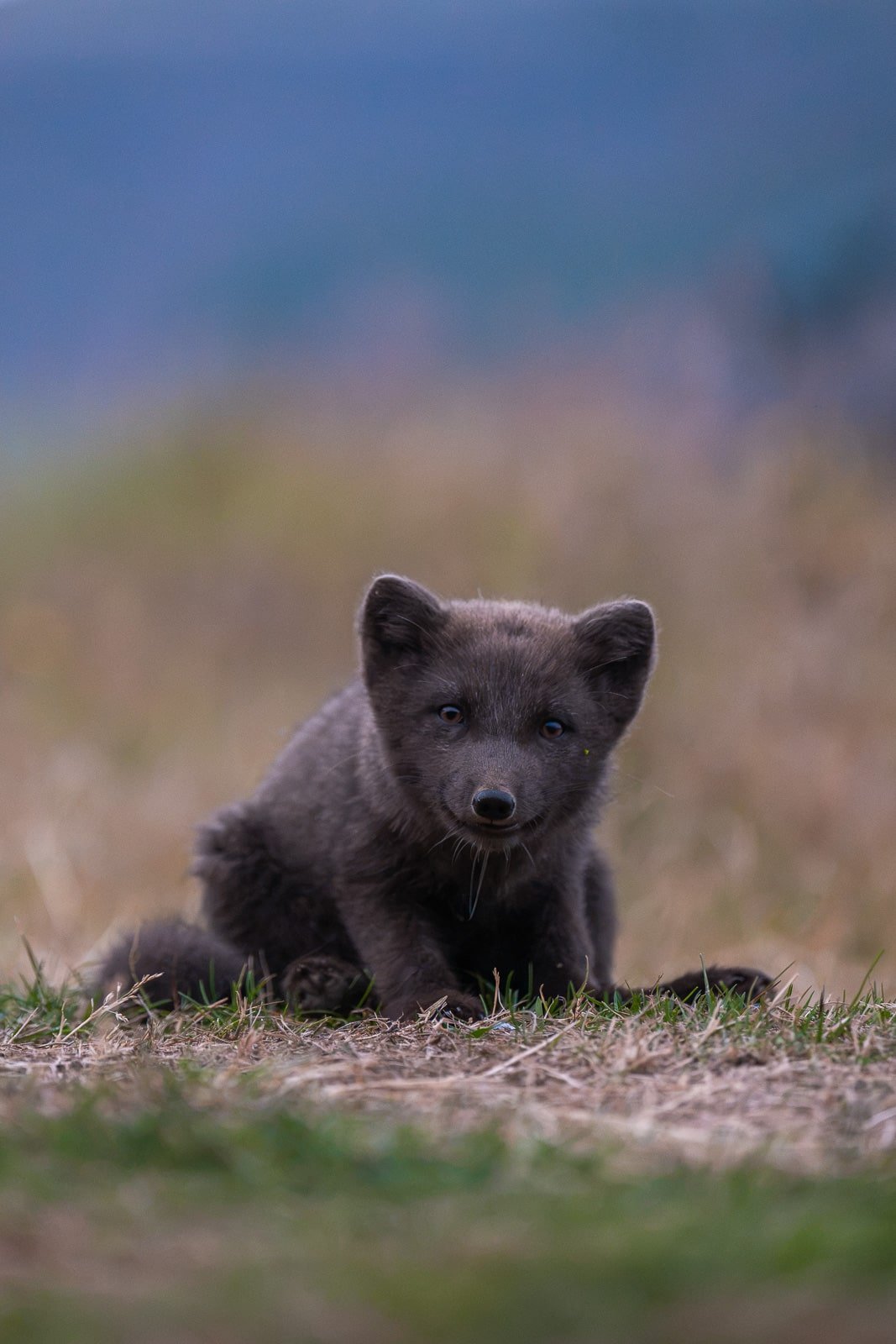
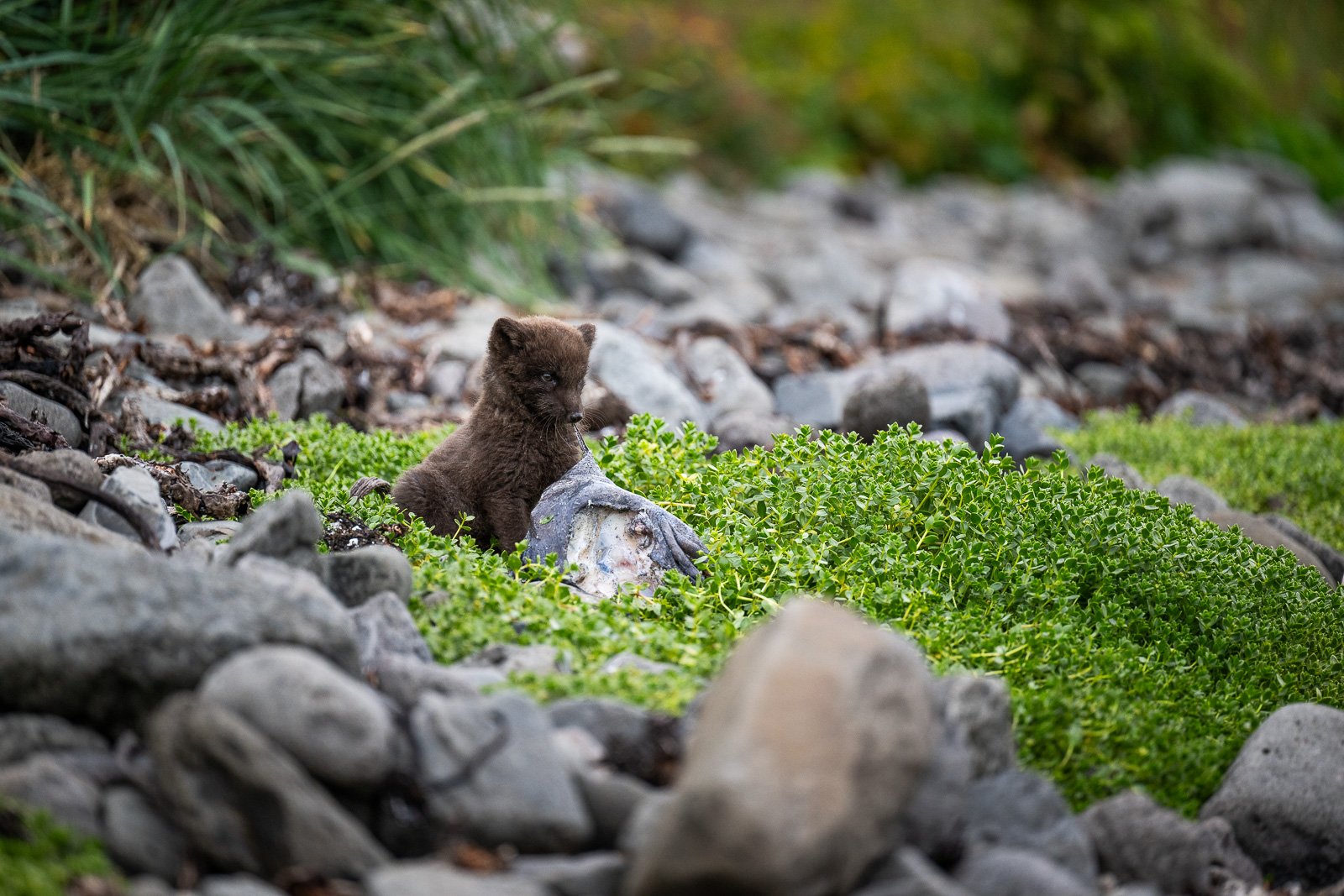
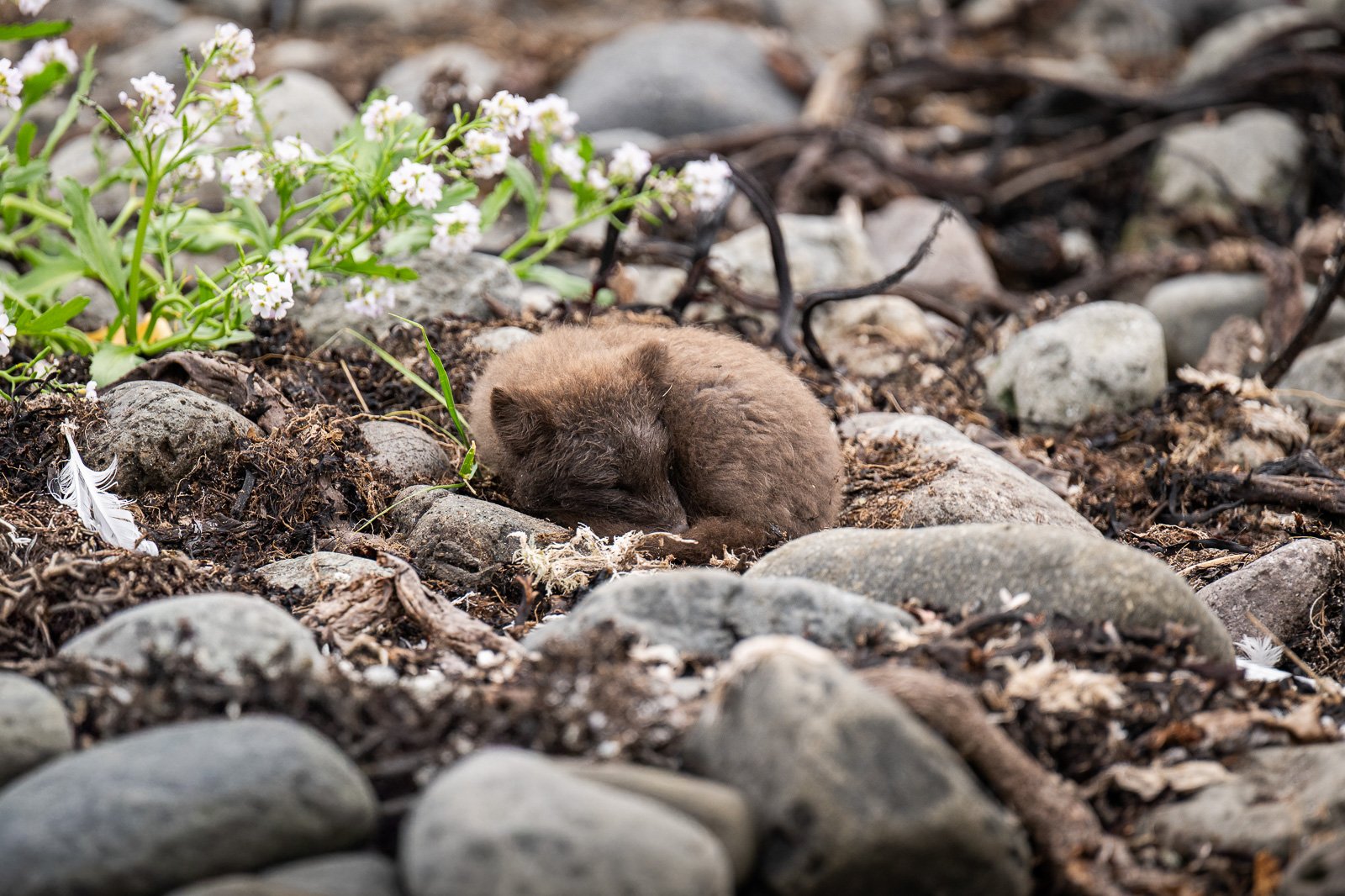
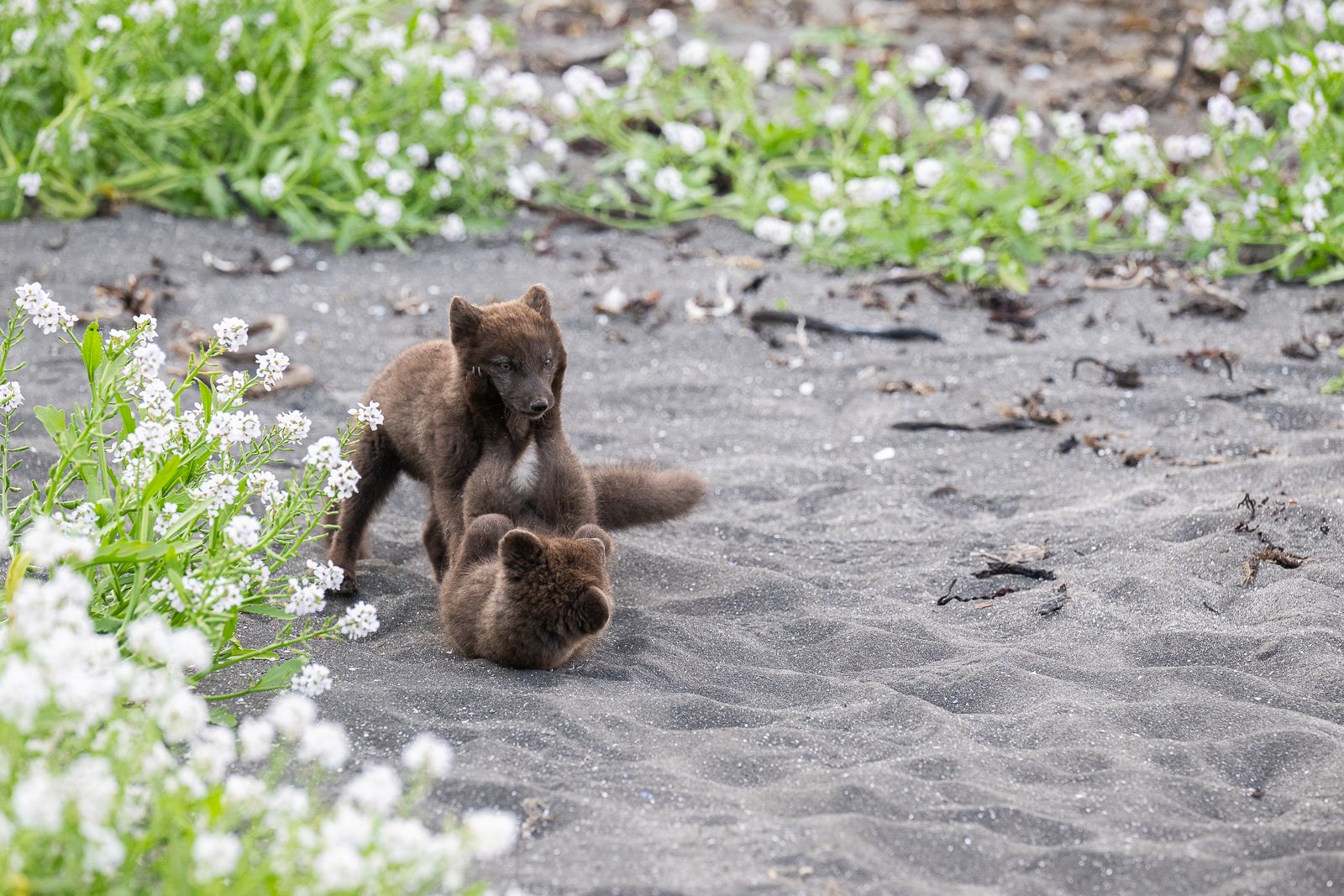
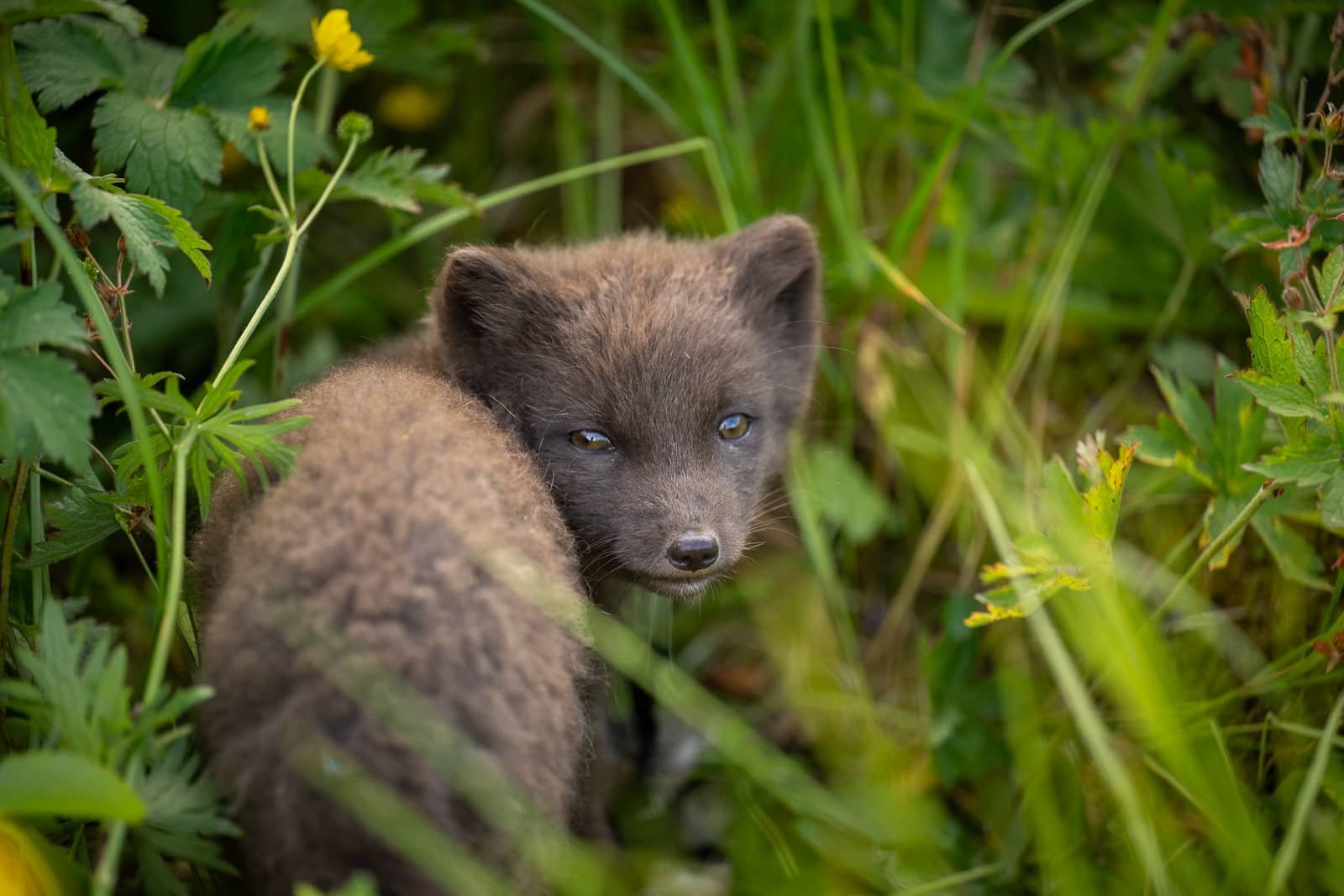
In the end, we part ways on the beach, and I don’t have to wait long. The kits start to emerge from the rocks on the beach and eat prey gathered over previous days by their mother. After a few minutes, I count three kits, playing, eating and sleeping in the rocks. I’m alone with them, and it’s a magical moment I’m still struggling to get over.
The hike toward Hornbjarg in the fog
My stomach starts to growl just as the sun comes out. I decide to go on the hike, because I hear it’s stunning. You have to cross the river (which is actually an arm of the sea flowing into a river, or the other way around), and its level varies with the tides. Low tide is around 12.30PM, so I set about doing the first section to cross at the lowest point. In the end, the water comes up to my knees. I can’t remember where I put my flip-flops (today I know, they were actually in my bag…), so I cross barefoot in the sand. The weather is nice, so it’s not unpleasant.
The trail follows the coast before climbing steeply into the mountain. This is where the weather turns and I can’t see anything anymore. The fog is total, so I decide to head back down and return to camp. Needless to say I’m disappointed.
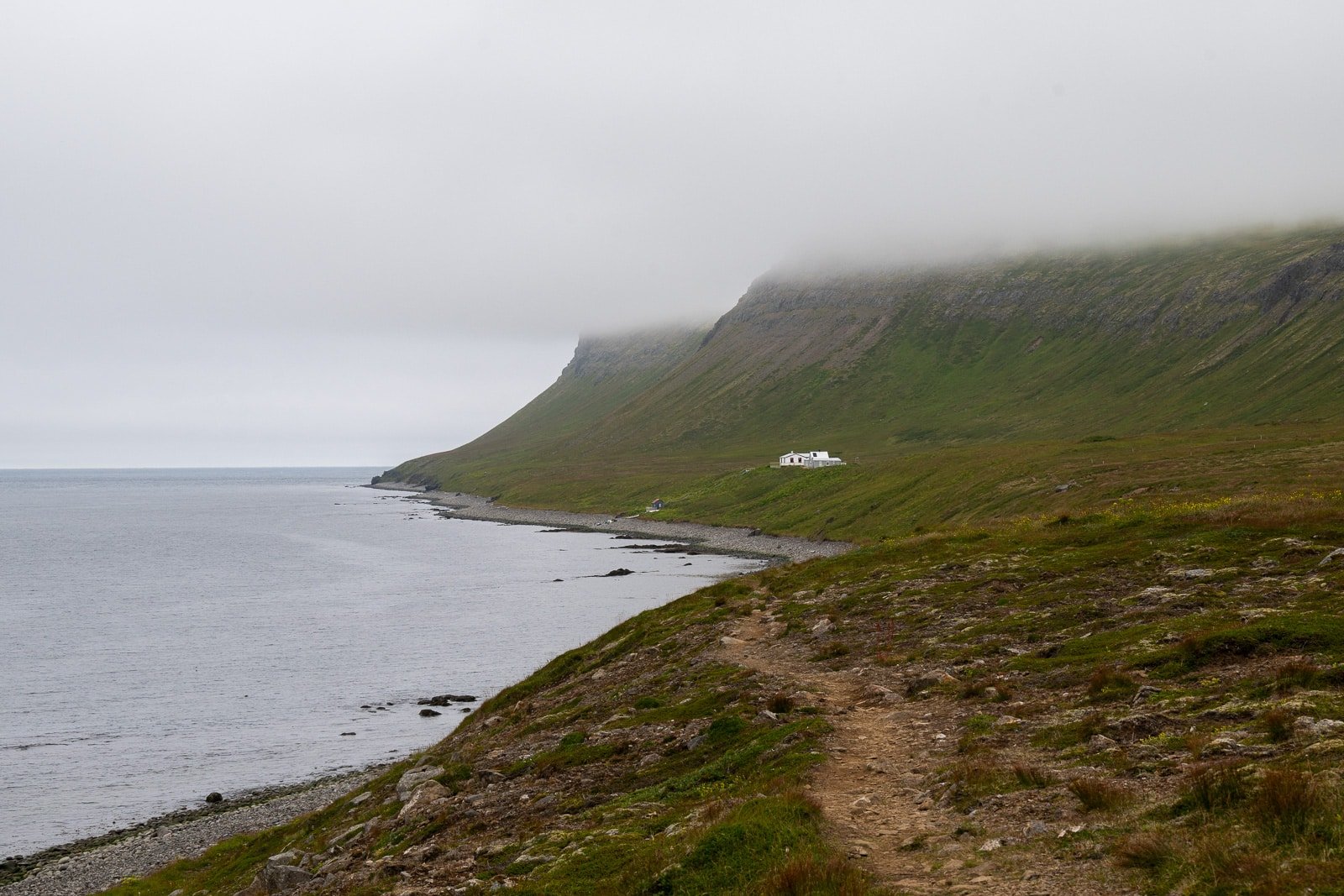
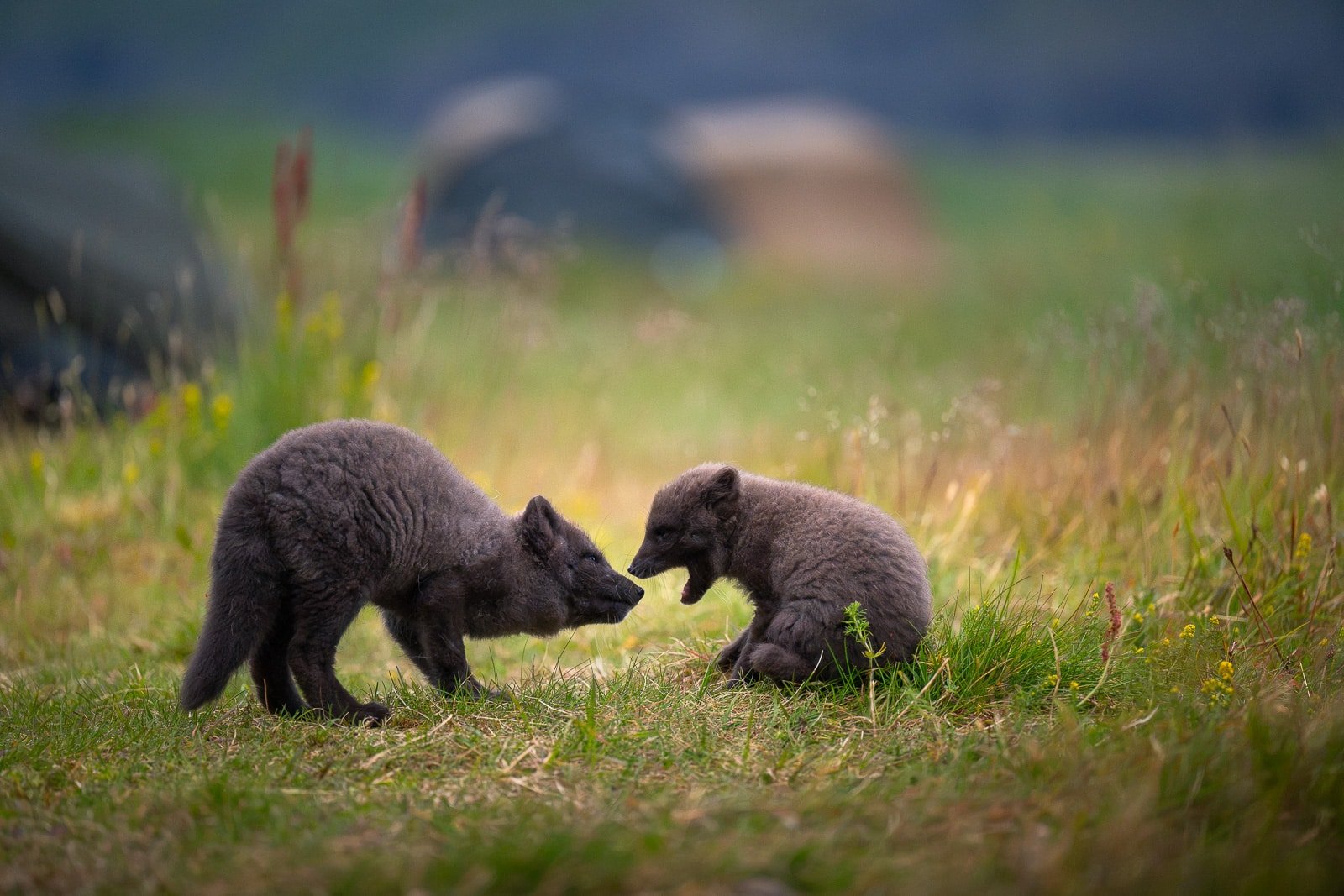
In the end, I did almost 6.5 km, so half the hike, but it’s more reasonable to go back to the campsite. If the weather isn’t on my side, I might as well go back to see the Arctic foxes and come back another time in Hornstrandir to do the trail. In the end, once I’m back on the beach, I turn toward the mountain and see that the weather has improved considerably. I’m gutted, but that’s part of the game. As if to confort me, I pass through the tall grass that separates the beach from the camp and come across the kits playing.
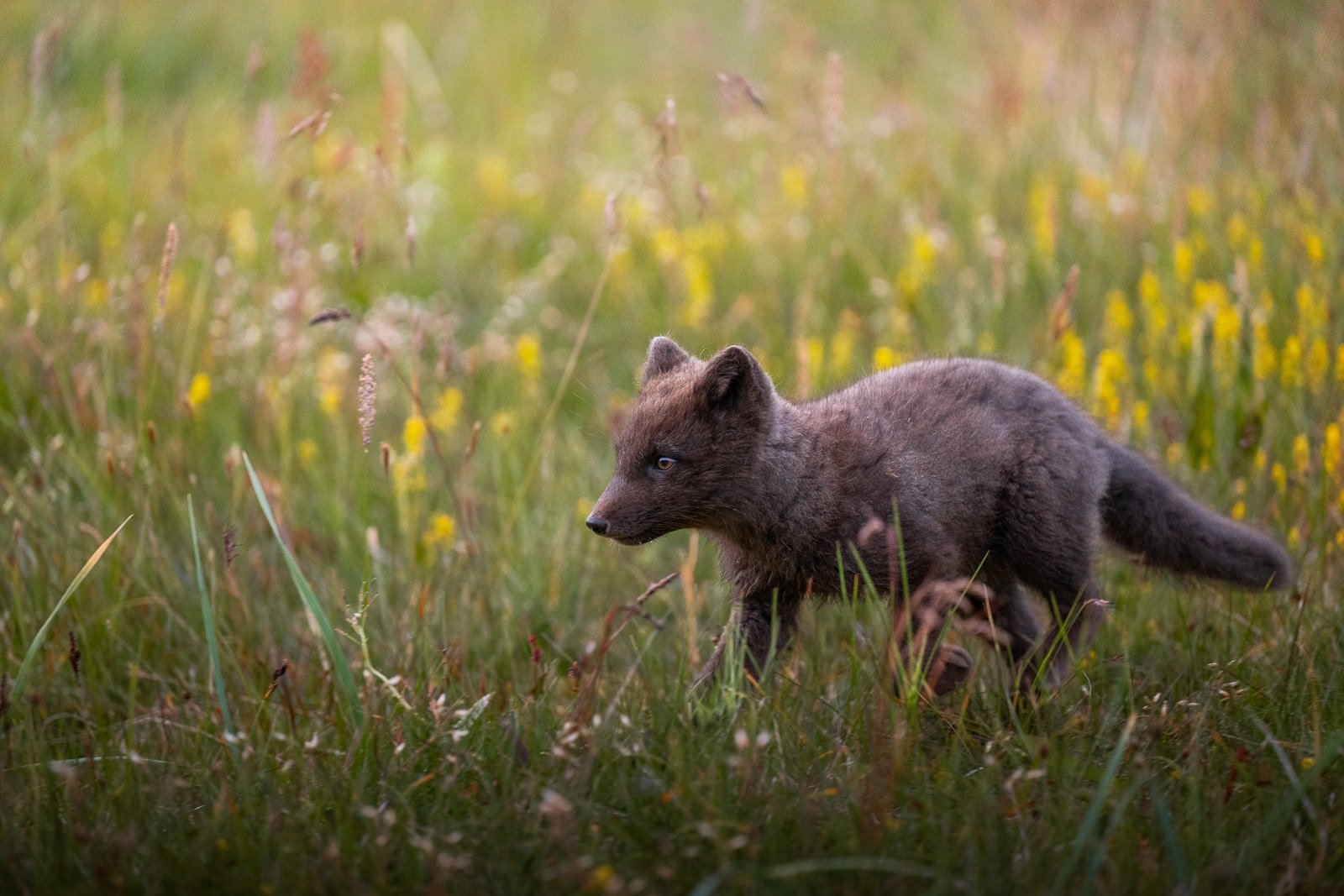
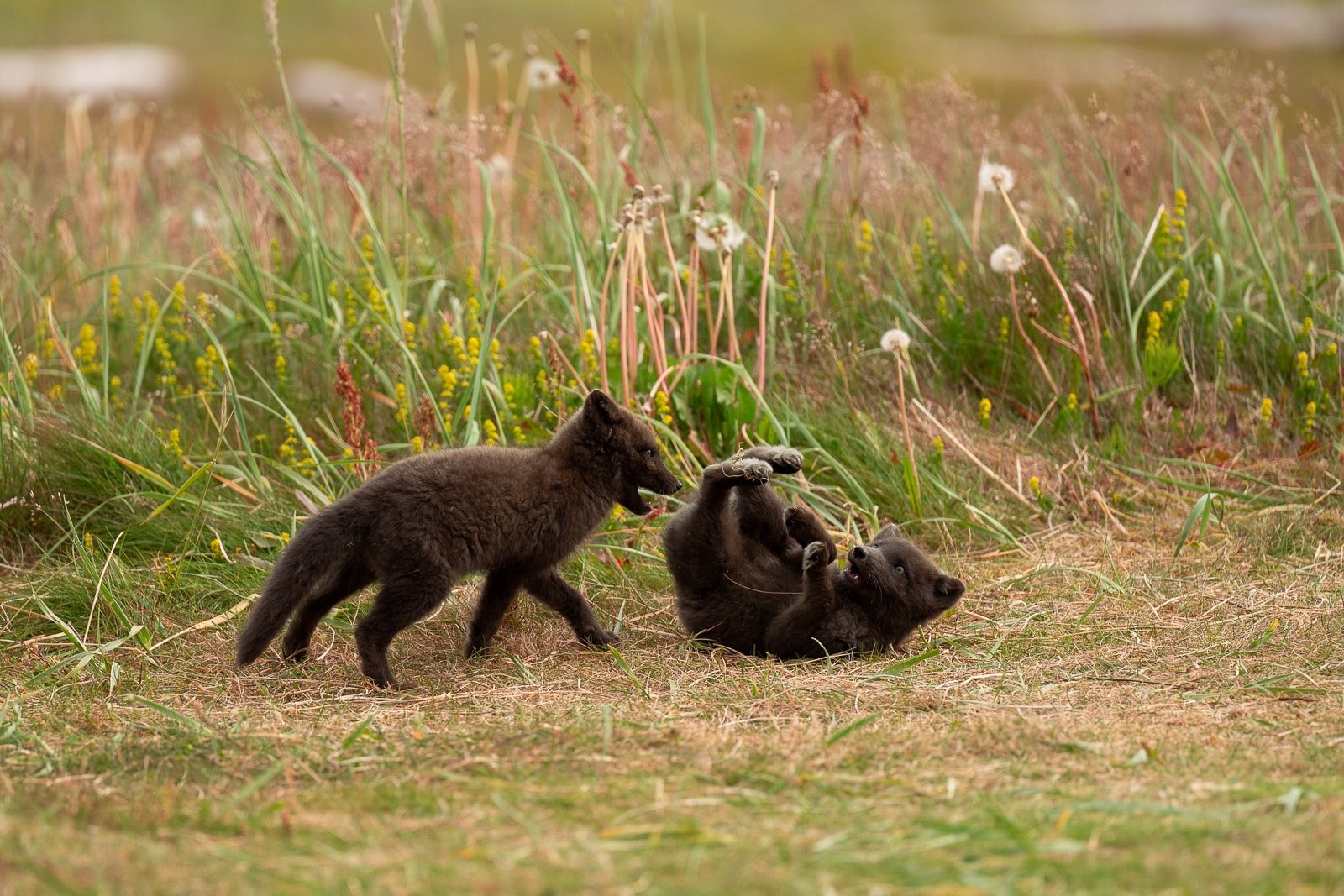
A dinner interrupted by the mother fox
The Jetboil heats up my dehydrated pasta in a few seconds. Another queen’s meal, but in one of the most beautiful places I’ve ever been. Not much comfort, but the atmosphere more than makes up for it. I’m joined at dinner by two Italians, Francesca and Dario, whose tent is next to mine. Suddenly I see them raise their cameras : the vixen has just shown up in the camp, right behind me. We abandon our meals to photograph her, and she’s magnificent. One of the kits leaves with her toward the house in Hornvík. I go back to my tent and look at my photos from the morning. I melt over and over at the kits playing together, and I can hardly believe I really lived this.
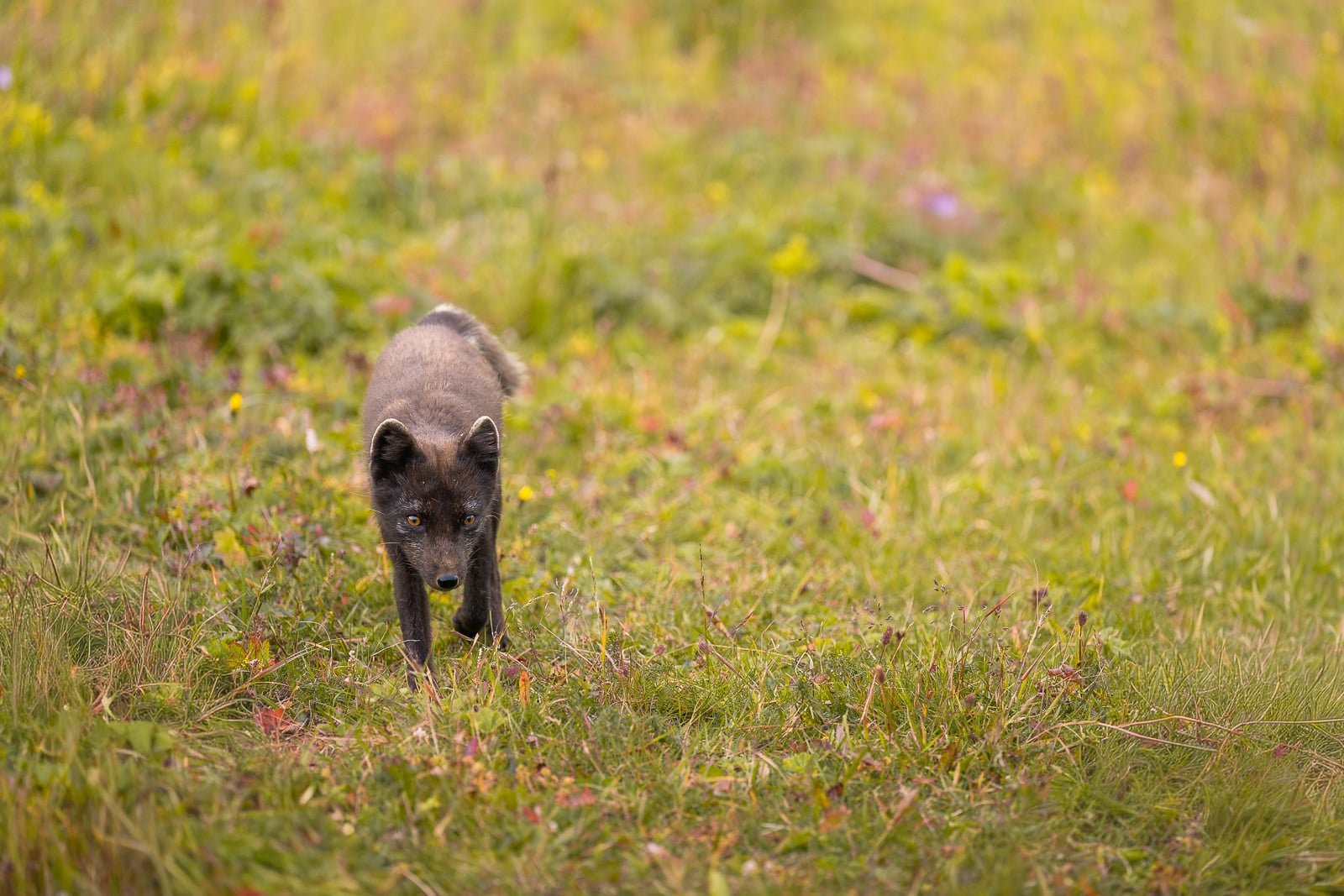
Day 3 : hunting scenes of the Arctic foxes in Hornstrandir
A fox kit’s feast at dawn
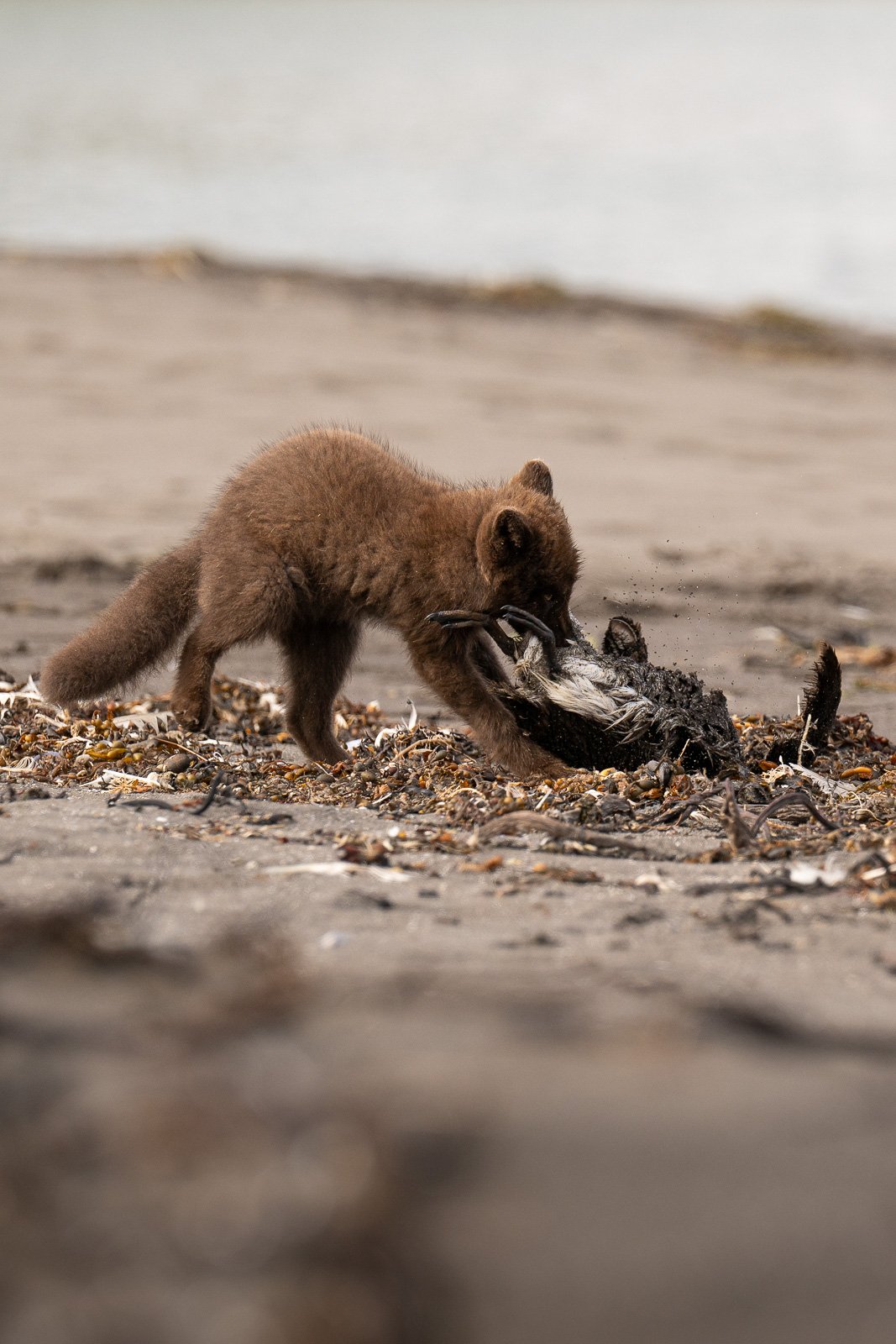
It’s already the day of leaving this place. The ferry is scheduled for 4PM, so I still have a bit of time to enjoy Hornstrandir. I got up at dawn to try to catch sight of the foxes hunting on the beach at low tide. At first, I come up empty hands for several hours, pacing the beach, looking for carcasses, but nothing happens. Just as I’m heading back to camp for breakfast, I hear the grass rustling next to me. Oh my god, there’s a kit right here, perched on a log, devouring a bird half its size. I crouch down and capture what I consider two of my best photos of 2026.
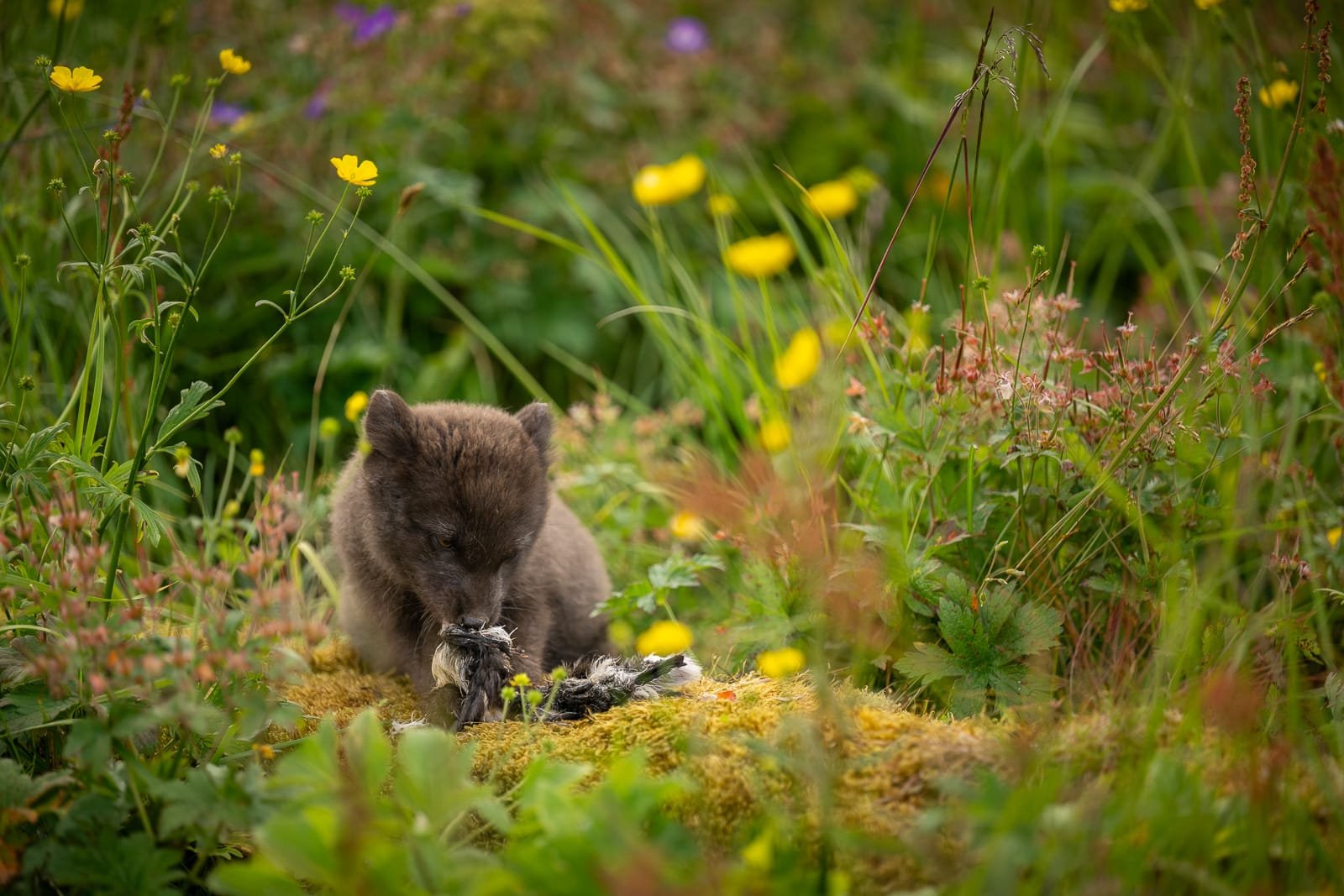
Then the Italian joins me and asks how the morning “hunt” went. We decide to walk the beach together, maybe there’s a better chance with several of us ?
Hunting scenes on the beach at low tide
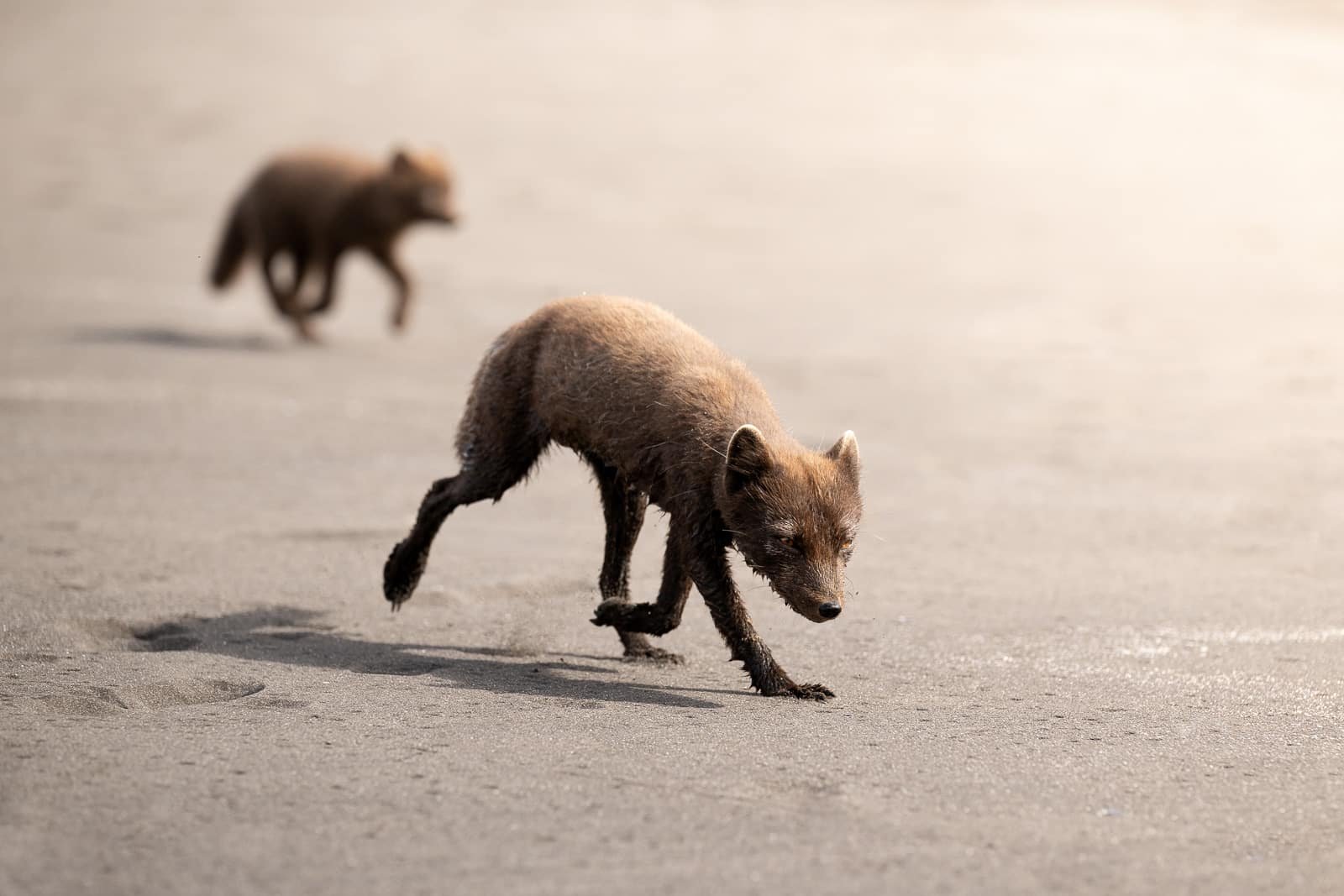
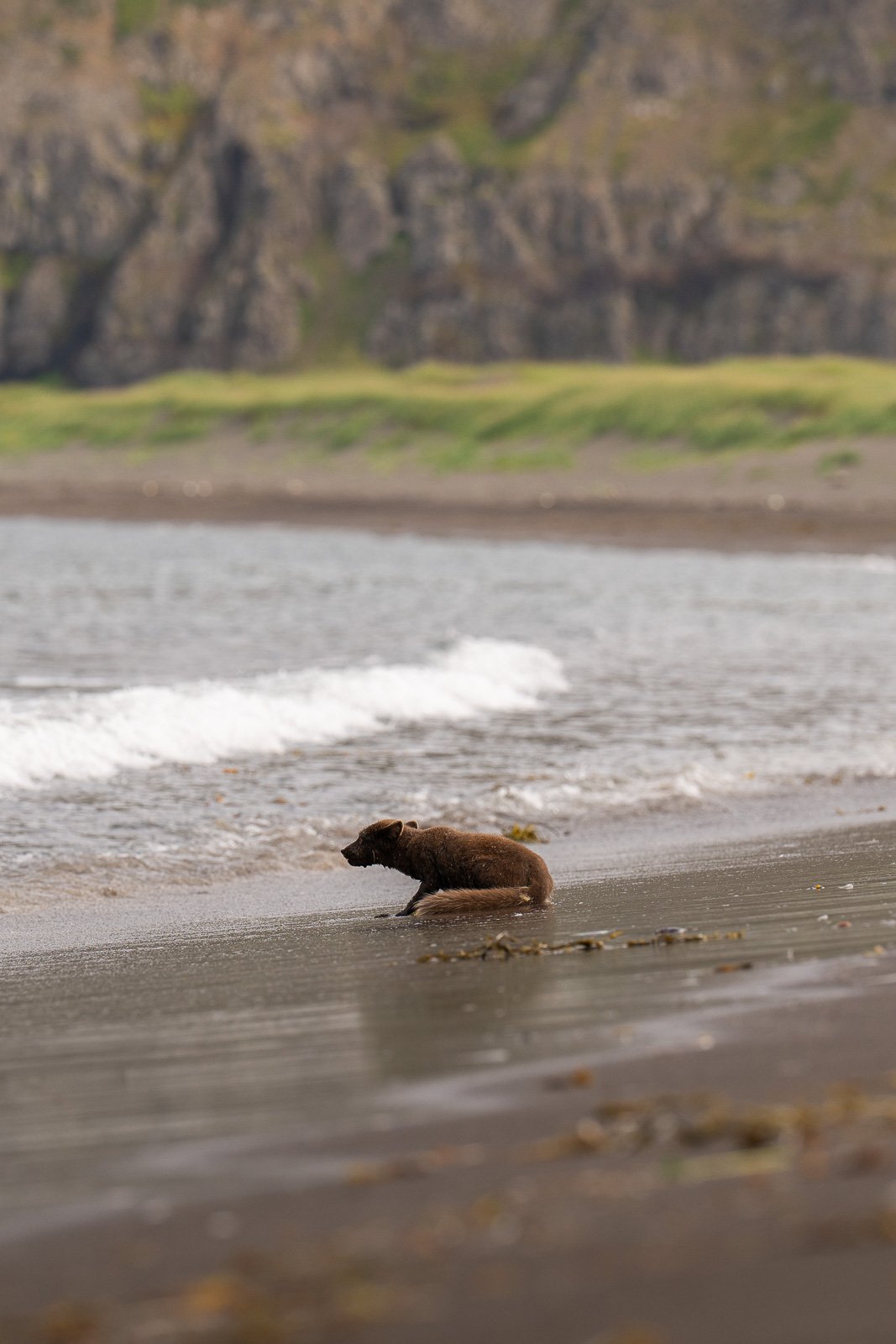
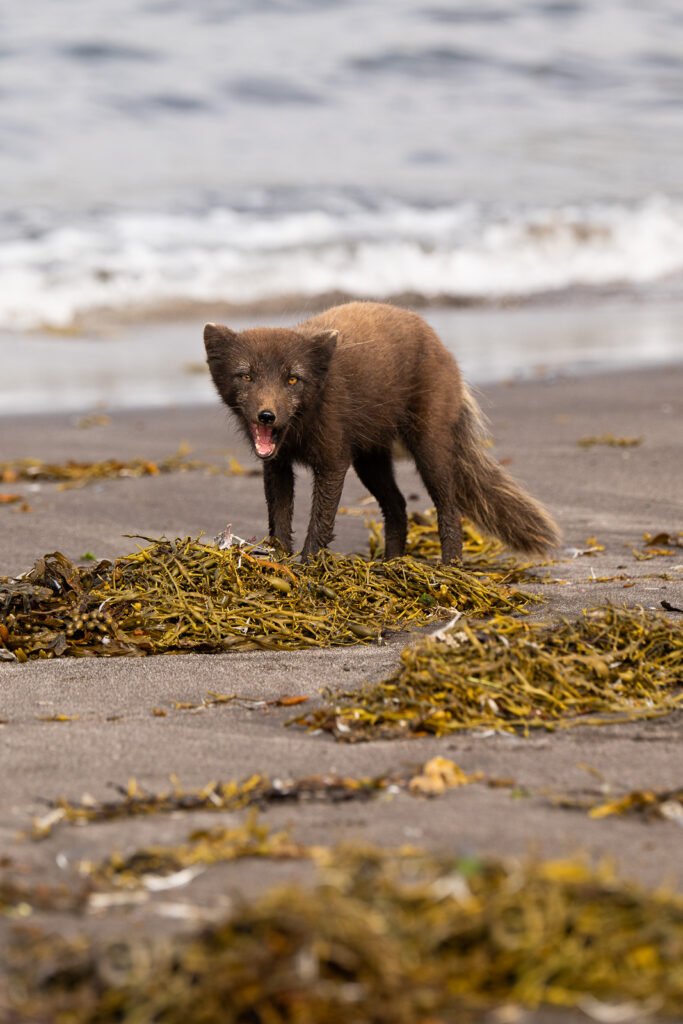
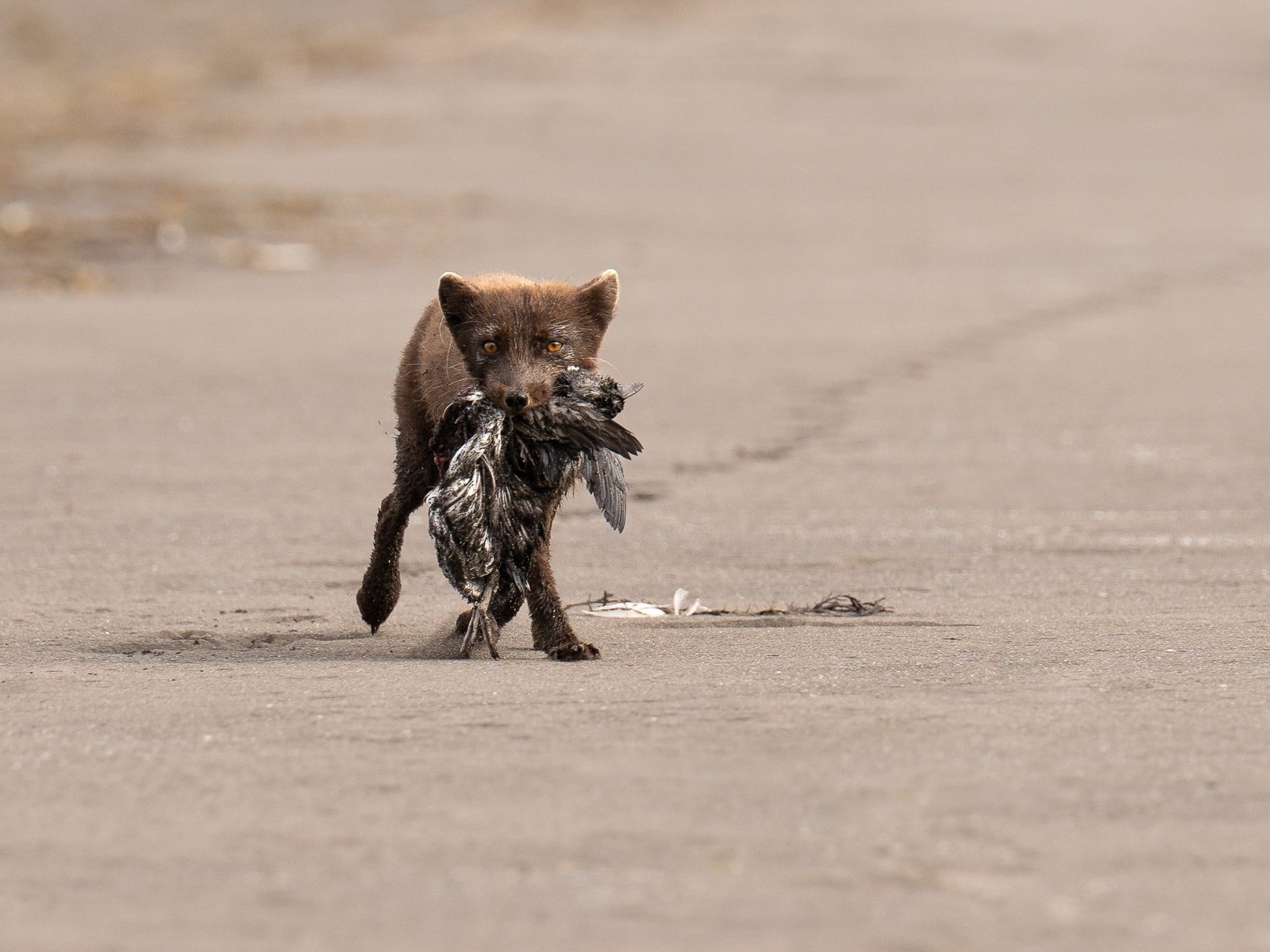
It pays off a good hour later, when the vixen arrives on the beach with a bird in her mouth. We’re positioned near a very sandy bird carcass, but she seems more interested in a live chick. She pounces on it and apparently drowns it. After long minutes spent watching the water, she leaves without her prey, but retrieves her carcass. Then a kit comes to join her. At the same time, on the other side of the beach, the father of the family appears. He’s just as beautiful as the mother and has also come to hunt. We spend several hours on the beach watching hunting scenes I wouldn’t even have dared to dream of, until we see the ferry in the distance.
Leaving the Arctic foxes of Hornstrandir
It’s time to leave, and it’s with a heavy heart and a full SD card that I go. I don’t want to at all (even though I’m starting to miss showering), but I have to, because the food is gone and the rest of my trip is waiting for me. Getting back on the boat after these three days isolated from the world is a very particular feeling. I watch Hornvík bay fade into the distance, thinking that the Arctic foxes have probably already gone back to their peaceful lives in Hornstrandir.
The return trip goes better than the outbound one. The swell is slightly less powerful, but that doesn’t stop me from dozing the whole way. When the ferry finally arrives in Ísafjörður, I have only one thing on my mind : taking a shower and sleeping. I head to the Sudavík campsite, where I stayed before leaving. And that’s how these three days of expedition in Hornstrandir end, on a gentle note and with magical memories !
Conclusion : 3 days with the Arctic foxes of Hornstrandir
In the end Hornstrandir gave me a few photos I’m truly very proud of, especially since wildlife photography isn’t my core skills, but mostly incredible memories. If you really love adventure, you’ll feel right at home there. I hope this article made you want to go, and if so, and you’d like to plan your trip, I recommend reading my article on how to prepare your expedition to Hornstrandir.
Safe travels to Iceland,
Marie
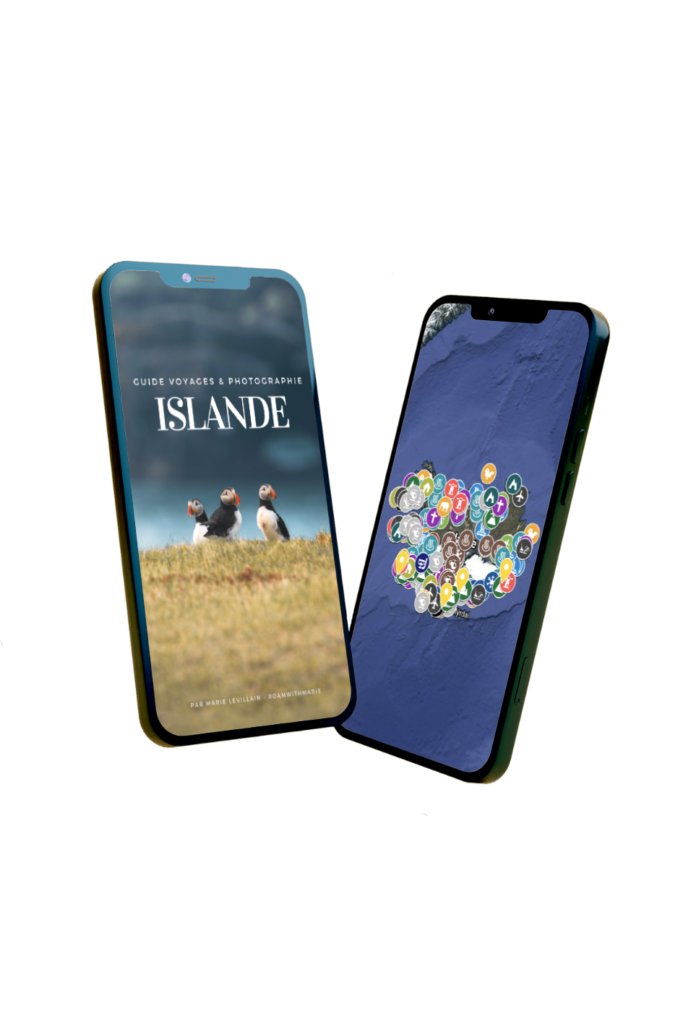
If you want to go even further, I created a 110-page Iceland Guide with absolutely everything you need to plan your trip :
- 5 ready-to-go itineraries, with budgets
- All the practical information about Iceland
- A detailed seasons guide
- A complete guide to driving in Iceland
- 3 exclusive photography guides with my tips and secrets
- Deals and discounts to save you hundreds of euros, so the guide and the map more than pay for themselves
And of course, my interactive map of more than 500 photo spots is included !
By combining the guide with the Iceland Map, you get the ultimate tool for exploring the country : easily visualize locations, optimize your routes, and enjoy Iceland well prepared.