Iceland is a magical destination that fascinates as much as it intimidates. When you start planning your trip, it’s easy to feel a bit lost between stories about unpredictable weather, the high cost of living, the countless car rental options, and the long distances that can seem overwhelming. I’ve been there too ! But after several trips in all seasons, experimenting with different ways of getting around and exploring every region of the island, I’ve gathered here everything you need to know before taking the plunge : when to go, how to get around, what budget to plan for and what to watch out for in order to travel with peace of mind.

Why traveling to Iceland ?
Silly question 😏 Iceland is attractive… and for good reason. It’s a unique country with many faces and an incredible concentration of spectacular landscapes. It’s impossible not to find something you love (unless you’re into palm trees) : glaciers, waterfalls, volcanoes, black sand beaches and lava deserts, often reachable after just a few minutes or a few hours of driving.
But above all, what defines Iceland for me is a clash of elements. Nature is raw, untouched, and incredibly powerful, perfect for landscape and nature photography. Light paints the fjords, the sea, and the canyons in every season : the midnight sun in summer, polar nights and northern lights in winter, storms and surreal colors at any time of year. These are ideal conditions for anyone who loves capturing the beauty of nature.

When to go in Iceland ?
The best time to travel to Iceland is a huge topic. One thing is sure : no matter which season you experience first, you will want to come back to discover the other season and their unique atmospheres. For your first trip, it all depends on what you want to see ! Each season has its advantages and its constraints
Traveling to Iceland in summer
Summer is an incredible season if you want to maximize your chances of good weather and have plenty of time to explore. It’s the perfect time to :
- Plan a van road-trip
- Visiter the Highlands (which are only accessible in summer)
- Hike and marvel at lupine fields and waterfalls
- Observe puffins almost everywhere on the island
- Enjoy the midnight sun, a time when the sun never truly sets
This is a season I completely fell in love with in July 2025, for all the reasons mentioned above. But it’s also the most touristy and most expensive period, so make sure to plan your budget and accommodations well in advance.


Traveling to Iceland in winter
Winter is magical ! I had the chance to go in October 2025 and in February 2026. It’s a more unpredictable season weather-wise, but with a bit of luck you’ll be able to enjoy incredible landscapes covered in a snowy blanket. In terms of activities, you can go :
- Northern lights hunting
- Exploring ice caves
- Snowmobiling in the fjords
However, you’ll also need to be very organized, especially when it comes to driving conditions and planning your itinerary. It’s a less busy season, mostly because weather is unpredictable. When you plan your trip, leave some space for flexibility and if you can, book your accommodations with a cancellation option, as they can be unreachable due to road closures.


Traveling to Iceland in shoulder seasons, spring and autumn
These are great shoulder seasons with compromises : the weather is very changeable and unpredictable, but the atmospheres are beautiful and the landscapes highly photogenic. However you need to consider :
- Spring (from March to June) : you can still see auroras at the beginning of spring, but no puffins. You can see puffins in late spring, but no northern lights. Weather is unpredictable.
- Autumn (from September to December) : you can see auroras from the end of August. The Highlands usually close mid-September. Weather is a gamble, it can be exceptional or very poor. Golden colors usually don’t last more than two weeks and as there aren’t so many forests in Iceland, chances to see them aren’t extremely high.
I spent May 2024 cursing the gods for throwing storm after storm at me, while September 2021 gifted me three weeks of incredible sunsets and sunrises. There are also fewer tourists and prices are more reasonable than in summer.
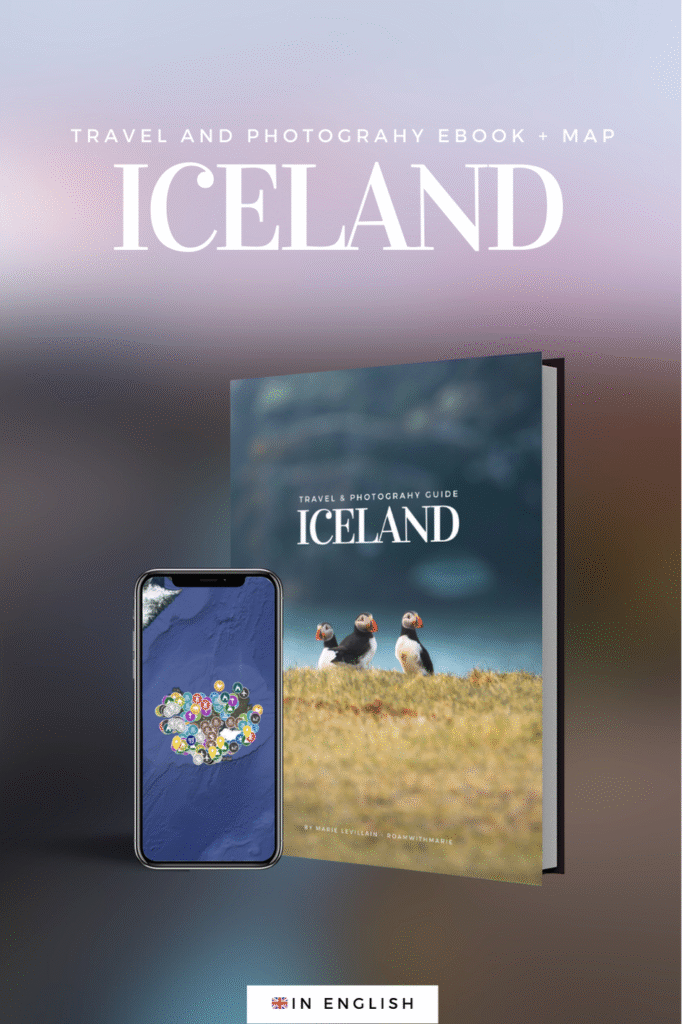
👉 To prepare your trip in more detail, I’ve created an interactive map of Iceland with over 400 photo spots, as well as a complete ebook to help you organize your trip stress-free.

How to travel around in Iceland ?
In my opinion, to explore Iceland freely, renting a vehicle is essential. Public transportation is quite limited outside of Reykjavík and unless you go through an agency that takes you to different places on a one-day or multi-day tour, you’ll need to rent a car (and tours are expensive !).
Iceland covers 103 000 km² but with an extremely low population density. Distances may look short on a map, but travel times are often longer than expected due to weather, road conditions and driving conditions. And you’ll stop constantly to take photos, trust me !
On that note, it’s forbidden to stop randomly on the roadside, as it’s dangerous for you and for other drivers. Always make sure to stop in designated parking areas or pull-offs for your safety.

Renting a car in Iceland
Car rental is the most flexible way to travel in Iceland, as it allows you to :
- adapt your itinerary based on the weather
- stop spontaneously to take photos
- access less touristy places
For most travelers, a standard 2WD car is enough to visit the south coast, the Golden Circle, the Snæfellsnes peninsula or the north of the island in spring, summer and autumn. If you’re driving the full Ring Road (Road 1), there’s no need for a 4×4.
However, if you want to explore the Highlands, a 4WD is mandatory. These regions are only accessible for a few weeks per year (in summer), the roads are full of potholes and you can have to cross rivers.
If you’re traveling to Iceland in winter, I would also strongly recommend choosing a 4×4 with studded tires (these are usually provided automatically by rental companies, but always double-check). Roads can be snowy or icy and it’s important for your vehicle to have enough traction to drive safely in these conditions
Van, camping-car or car to travel around Iceland ?
Traveling by van or campervan is very popular in Iceland, especially in summer. It offers a lot of freedom, but keep in mind that :
- wild camping is strictly forbidden
- campsites gradually close outside the high season
- wind and cold can make some nights challenging
For a first trip, I would recommend a car + accommodation combo. It’s more comfortable and more flexible depending on weather conditions, unless you’re very comfortable traveling in a van. During my trips, I’ve tried vans, cars, and 4x4s, and honestly, they all make sense depending on what you want to visit. I wouldn’t rent a camper van for winter in Iceland where temperatures can reach -20° for example, and I’m very used to cold conditions and sleeping in a van.
Driving in Iceland : things you need to know
Driving in Iceland is generally straightforward, but there are a few important rules to know :
- paved roads are limited to 90 km/h, gravel roads to 80 km/h and speed limits in towns are 30 or 50 km/h
- a national driver’s license is valid in Iceland for all European Union citizens
- it is mandatory to drive with headlights on, all day and night
- off-road driving is strictly forbidden (driving outside marked roads or tracks)
Fines can be very expensive, so it’s best to respect speed limits and traffic laws. There are very few speed cameras in Iceland, but the ones that exist will not miss the target. In winter, driving requires extra attention and planning. I’ve written a full article dedicated to winter driving that will be published soon.
Planning your distances and itineraries properly
Underestimating distances is a classic mistake on a first trip to Iceland. Quite simply because the visual shock is so intense that you will want to stop every 10 meters, turning a two-hour drive into three. Between photo stops, secondary roads you’ll want to take and the weather, days can quickly become very full !
In winter, it is important to check the weather and road conditions several times a day so you can adapt your plans accordingly. Sudden road closures can make you alter your itinerary or lengthen it.
👉 That’s exactly why I created an interactive map with over 400 photo spots, including useful seasonal information, access details, ideal lighting conditions and my own photography tips, to help you plan the trip of a lifetime and bring back your best memories.

How much budget should you plan for a trip to iceland?
Iceland has a reputation for being one of the most expensive destinations in the world, and sorry to disappoint… it’s not a myth. BUT budgets vary hugely depending on the season, the type of trip, how far in advance you plan and how much comfort you’re willing to sacrifice. It’s absolutely possible to spend much less than what most people claim, as long as you’re well organized.
Accommodations
Accommodation usually represents a large part of the budget, especially during high season (mid-summer, from June to August)) :
- Hotels : comfortable but expensive
- Guesthouses : a good compromise, often with shared bathrooms and kitchens
- Airbnb : practical for cooking and reducing food costs
- Vans : the cheapest option in summer, but not very suitable in winter
This may sound obvious, but traveling as a couple or with friends helps reduce costs. Booking well in advance does too. To give you an idea, I usually plan my trips minimum six months ahead, which makes a real difference in the overall budget. I don’t stay in luxury hotels, I mainly choose guesthouses or Airbnbs with a kitchen so I can eat what I want, when I want, and keep food expenses under control.
💡 I always use Booking and Airbnb to book accommodations, as that’s where I find the best value for money. On average, you can expect to pay between 70€ and 200€ per night for two people, depending on the season, location, and comfort level.
👉 In my Iceland ebook, I share special discounts on selected accommodations that can save you several hundred euros over the course of a trip.


Food in Iceland
Eating out can be costly, especially in Reykjavik. On average :
- A main dish at a restaurant costs between 25€ and 40€
- Street food is more affordable, between 7€ and 15€
- Grocery shopping is the most budget-friendly option
The main supermarkets are Bónus and Krónan, which are the best options for grocery shopping. Imported products can quickly increase your bill (out-of-season fruits and vegetables, cheese, cured meats, etc.). The best compromise remains cooking for yourself.
💡 Keep in mind that in most gas stations, if you buy a filter coffee, you can usually get free refills. There’s no need to buy bottled water in Iceland : tap water is drinkable and among the purest in the world. Bring a reusable water bottle so you can refill it regularly.
Car rental cost
As mentioned earlier, I highly recommend renting a car to travel freely, but it’s also one of the most variable expenses :
- Small car in summer : moderate budget (around 400€ for 7 days)
- 4×4 or winter rental : higher budget (around 700€ for 7 days)
On average, plan for 60€ to 150€ per day, depending on the season and vehicle. Keep in mind that insurance is not mandatory BUT strongly recommended, once again because of the weather : storms, gravel, accidents… This is not something to overlook. While I sometimes skip insurance in other countries, I always take it in Iceland, as repair bills can be extremely high in case of a problem.
💸 A new kilometer-based tax has been introduced starting January 1st, 2026, so make sure to check with your rental company for any additional fees that may apply. Fuel prices are supposedly going to be reduced, but this measure hasn’t been officially confirmed yet.
⛽️ As for fuel consumption, it will obviously depend on your itinerary and the type of vehicle you choose. To give you a rough idea, if you drive the full Ring Road (Road 1), you should budget around 300€ to 400€ in fuel, again depending on the season, fuel prices, and the number of detours (spoiler : there are always detours). Gas stations are well distributed across the island, but they can be scarce in more remote regions such as the Westfjords or Eastfjords, and completely absent in the Highlands. Fill up whenever you can, you will have a stress-free drive if you do.
👉 I regularly use rentalcars.com to compare offers and find the best value for money. I book through this platform but only rent from well-known companies such as Hertz, Europcar, Geysir, Firefly and similar providers.

Activities in Iceland
Good news : nature is free. Bad news : parking is not. As of now (2026), if you visit most of Iceland’s iconic locations, you can expect to pay around 100-150€ in parking fees per vehicle over the course of your trip. Almost all parking areas can be paid via the Parka app.
Some experiences are also paid : ice caves, guided excursions, snowmobiling or whale-watching boat tours. These activities can significantly increase your budget if you do several of them.

So, how much does a trip to Iceland cost ?
For a well-organized trip planned in advance, without excess but still comfortable, you should expect a budget of 1000-1500€ per person for 7 days, excluding flights. This budget obviously depends on many factors (number of travelers, season, accommodation type, vehicle, activities), but it’s roughly what I’ve spent on my previous trips to Iceland.
👉 For a much more detailed estimate, with concrete examples and real budgets by season (10 days in spring, 15 days in summer, 21 days in autumn, and 15 days in winter – van and car), I’ve put everything together in my Iceland ebook.
What should you plan before traveling to Iceland ?
A trip to Iceland requires some preparation, especially if you’re traveling outside the summer season. Weather conditions, the remoteness of certain regions and the omnipresent nature mean that a bit of anticipation is needed to travel with peace of mind.

Travel insurance : optional or essential ?
If you’re a European citizen, you have the European Health Insurance Card (EHIC). You should never travel abroad without it, it should always be in your wallet.
It allows you to receive healthcare under the same conditions as residents of the country you’re visiting. However, you may still need to pay upfront and will be reimbursed based on your home country’s public healthcare rates, which can be far from enough given the cost of medical care in Iceland. That’s why, in my opinion, good travel insurance is essential when traveling to Iceland, especially in winter. Between :
- Unpredictable weather conditions
- Flight cancellations
- Guided activities (ice caves, excursions)
- Medical expenses that can quickly become very high
it’s best to be well covered in case something goes wrong.
💡 You get -5% on a Cap Assistance 24/7 insurance policy from Chapka via this link. It’s the one I use for Matthias and myself when we travel. It roughly costs us 90€ TOTAL for 15 days for 2 people, which is basically 3€/day/person. I explain everything in detail in a dedicated article.
Useful apps for your trip to Iceland
Some apps are almost essential for traveling safely in Iceland :
- Vedur.is : Iceland’s official weather forecast (the most reliable)
- Road.is : real-time road conditions
- SafeTravel : safety alerts and hazardous conditions
- Parka : parking payment
- Google Maps : GPS navigation + my Iceland map 😌
- My Aurora Forecast et Hello Aurora : for your aurora hunts in winter

Essential equipment
In Iceland, poor equipment can ruin your trip. Wind, rain, and cold are often harder to deal with than the temperatures themselves. A few essentials to pack in your suitcase, regardless of the season :
- Waterproof and windproof clothing
- Good hiking boots
- Multiple layers (use the layering system)
- Gear adapted to the conditions (crampons in winter, for example)
👉 I’ve written a detailed article listing everything you should pack for your next winter trip in Iceland, but honestly the same applies in summer. Bring a few t-shirts, maybe you’ll be lucky enough to use them 😅
Traveling safely in Iceland
Iceland is one of the safest countries in the world, with a very low crime rate. But nature there is raw and unpredictable. Most accidents involving tourists are related to weather conditions, driving, and human carelessness. Respecting local guidelines, checking the weather regularly and accepting that you may need to change your plans are all part of traveling in Iceland and will help you enjoy your trip with peace of mind.

Planning your trip to Iceland
Planning your itinerary in Iceland is probably the most important step of the trip. Distances, weather, road conditions, and the diversity of landscapes mean that an overly ambitious itinerary can quickly become frustrating or even dangerous. I’ve been there before ! The most common mistake I see is trying to see everything in too little time. On paper distances look reasonable, but between photo stops, unexpected detours, fatigue, and weather conditions, days go by very quickly. Here are my main tips to help you plan :
- Plan fewer kilometers but spend more time in each area to explore a region properly
- Adapt your itinerary to the season : 4 hours of daylight in winter vs 20 hours in summer won’t allow you to experience the same itinerary
- Stay flexible and accept changing your plans : it’s part of the game. Iceland isn’t going anywhere, and you can always come back to discover another region
That’s exactly why I created an interactive map of Iceland, with more than 400 locations, designed specifically for travelers and photographers.
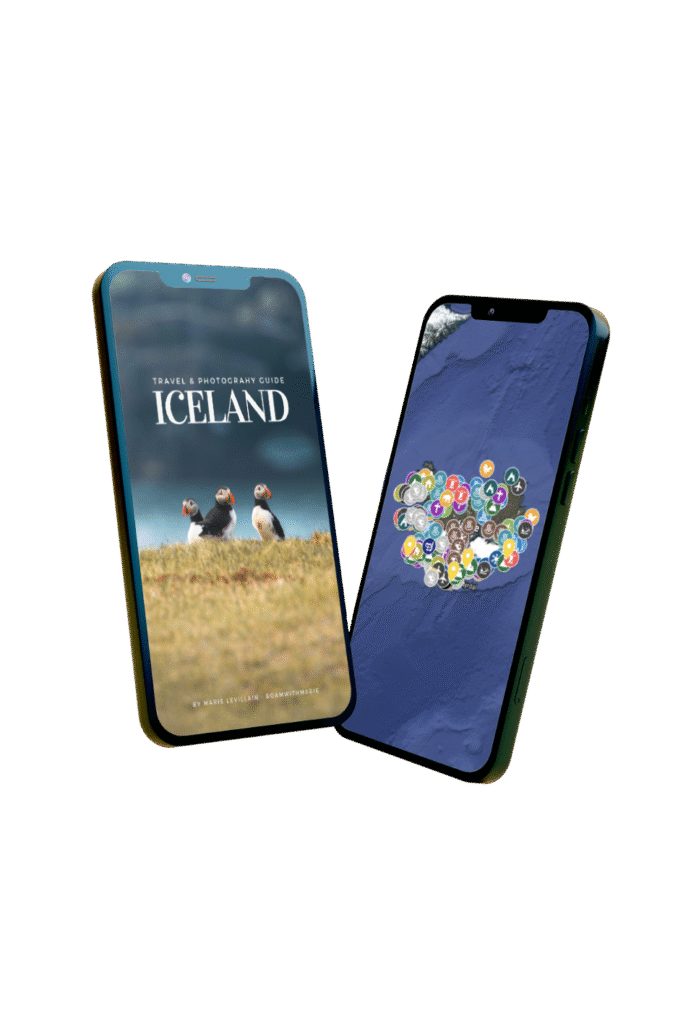
My interactive map includes over 400 photo spots spread across the entire island. In the description of each location, you’ll find :
- ccess information
- the best light conditions
- what gear to bring
- where to park and how much it costs
- the best season to visit
- useful links
Each spot also comes with my own photography tips and composition ideas.
The map helps you build a coherent itinerary without wasting hours cross-checking scattered and sometimes inaccurate information found online.
The map is updated for life, you don’t need to buy it again. Every time I update it, the map on our device is updated too ❤️
Conclusion : traveling to iceland requires preparation
Iceland is a demanding destination, but also an incredibly rewarding one. With a minimum of preparation, it becomes a deeply impactful journey, because of the power of its landscapes and the emotions it evokes. Before my first trip, someone told me, “You’ll see, Iceland will make you want to come back.” I remember nodding and thinking “yeah right… I’m going for three weeks, that’ll be more than enough, I don’t see why I would come back.” Fast forward to 2026, it will be my fifth and sixth time on the island 😂
So if you’re planning your first trip to Iceland (or want to experience it differently), I’ve gathered everything in my Iceland ebook :
- ready-made itineraries with budgets
- practical and concrete advice
- my accommodation recommendations
- essential rules (drones, safety, driving)
- exclusive discounts that can save you hundreds of euros
- and of course, full access to my interactive map
The ebook is updated for life, you don’t need to repurchase it. Whenever I update it, you will receive the new version directly in your inbox 💌
*This article contains affiliate links. When you click on them, the price doesn’t change for you, but I earn a small commission on your purchase. This is what allows me to keep offering free content on the blog, so feel free to use them