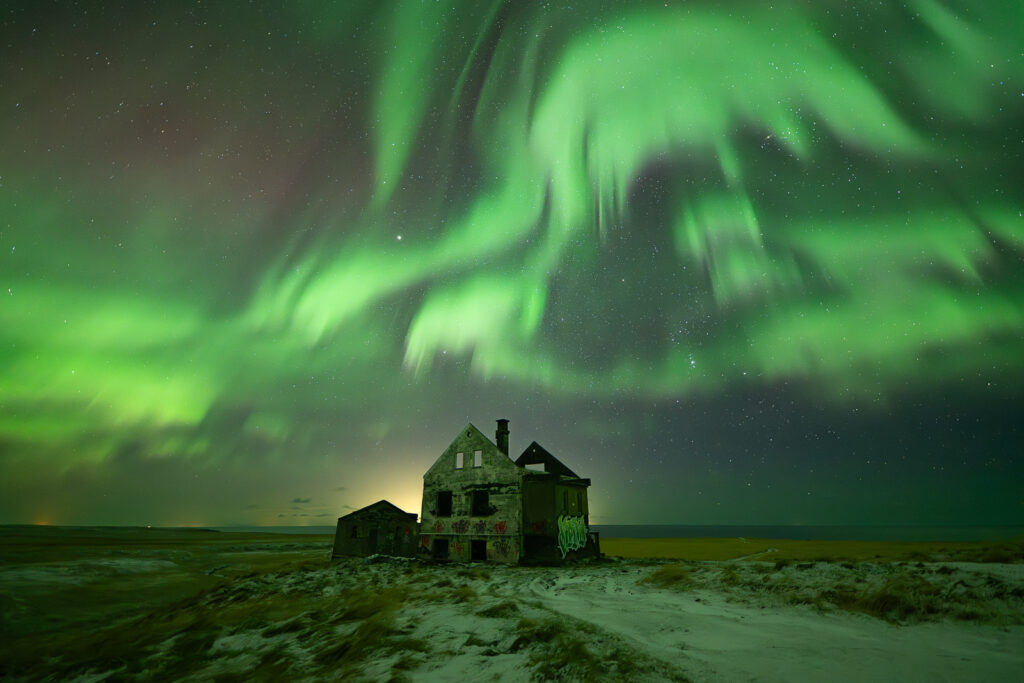
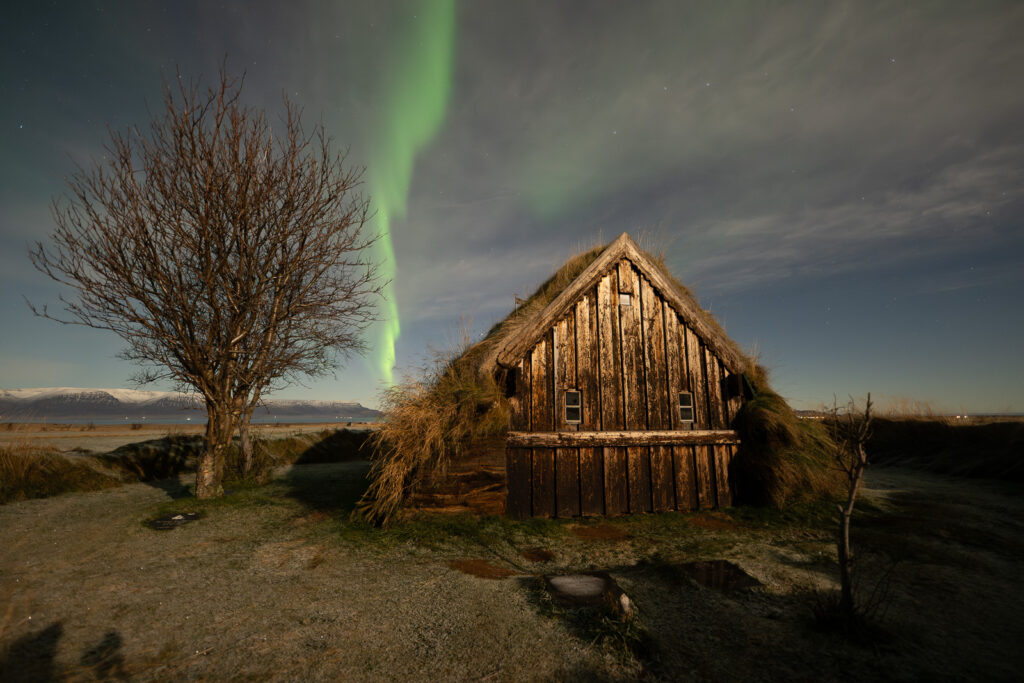
Seeing the northern lights in Iceland is one of the most memorable travel experiences you can have there, and it’s often the ultimate goal of winter trips ! Beautiful green, purple and pink lights dancing across the sky, transforming already stunning landscapes into truly spectacular scenes. My very first northern ights were in Iceland and I don’t think I’ll ever forget them 🥹 But contrary to what you often see on social media, spotting an aurora is not just a matter of luck : you need to be in the right place, at the right time, and above all, know what to look for.
In this article, I will explain when, how, and where to see the northern lights in Iceland, based on my field experience after several trips there and on concrete criteria : seasons, timing, ideal conditions and favorable locations. I share 5 of them at the end of the article ☺️ If your goal is not only to see them but also photograph them, I invite you to read my dedicated article where I explain camera settings, gear, and techniques to successfully capture them.
When to see northern ights in Iceland
Aurora season
In Iceland, the northern lights season runs from late August to early April. The longer the nights, the higher your chances of seeing auroras :
- September to March are the most favorable months
- October, November, February, and March offer the best balance between long nights and relatively stable weather
- In December and January, nights are very long (around 18–19 hours), but the weather is more unpredictable
However, it is impossible to see auroras in summer (May to July) simply because the sun barely sets and the sky is never dark enough. But you do get the midnight sun, so that compensate 😉 I recommend checking out my practical guide to read before going to Iceland, where I explain the seasons in more detail.
👉My travel feedback : I went to Iceland in October 2025 for 10 days and had exceptional weather, with 8 nights of seeing auroras out of 10, no wind, very few clouds… Weather isn’t always like this in October, so be careful when booking. In February 2026, I got 3 (exceptional) aurora nights out of 15, with difficult conditions : negative temperatures, wind… Traveling to Iceland in winter is a gamble on the weather, which can be incredibly rewarding or disappointing.
👉 Pro tip to try spotting them from the plane :
- If you’re flying from Europe, choose a seat on the right side
- If you’re coming from North America, choose a seat on the left side
Of course, you need to arrive in Iceland or fly over the ocean at night to see them. Don’t forget to open the window from time to time !
Best times to see the northern lights
Auroras can appear from nightfall until sunrise, but some time windows are statistically more favorable :
- Peak activity usually occurs between 10PM and 2AM
- It’s absolutely possible to see them earlier in the evening (around 6PM) or late at night/early morning, especially during strong solar activity
Contrary to popular belief, you don’t have to wait until 8PM or midnight. I’ve seen stunning auroras starting as early as 6PM ! What matters most is a dark sky, low light pollution and decent solar activity.
👉 My advice : monitor forecasts, stay flexible, and accept that waiting can take hours. Download aurora apps like My Aurora Forecast and Hello Aurora, which notify you in real time when solar activity is good and when people nearby report aurora observation.
How to maximize your chances of seeing northern lights
Solar activity : what really matters
Seeing Northern Lights in Iceland isn’t just about luck. Several factors come into play, and by combining them wisely, you can significantly increase your chances.
First, it is essential to monitor solar activity. Auroras are linked to solar flares and solar wind : the stronger the activity, the higher the chances of seeing them with the naked eye. Indicators such as the KP index, solar wind density, and Bz value are useful references. I explain them in simple terms in my article dedicated to aurora photography.
Icelandic weather: the number one factor
Local weather is crucial. A clear sky is essential : even strong solar activity will be invisible under thick clouds. In Iceland, weather can change very quickly and sometimes driving just a few kilometers can take you from an overcast sky to a clear one. You can check vedur.is, the official Icelandic weather website, which is extremely reliable for viewing cloud coverage hour by hour. Not all clouds have the same impact on aurora viewing :
- Low clouds : your worst enemy. They completely block the sky. If an area is covered in low clouds, it’s pointless to wait, no matter how high the KP index is, you won’t see anything.
- Middle clouds : they may let some light through but significantly reduce visibility, making auroras faint or invisible.
- High clouds : the least problematic. They’re often thin and partially transparent and can still allow auroras to be visible, especially strong ones. It’s quite common to see auroras through high clouds.
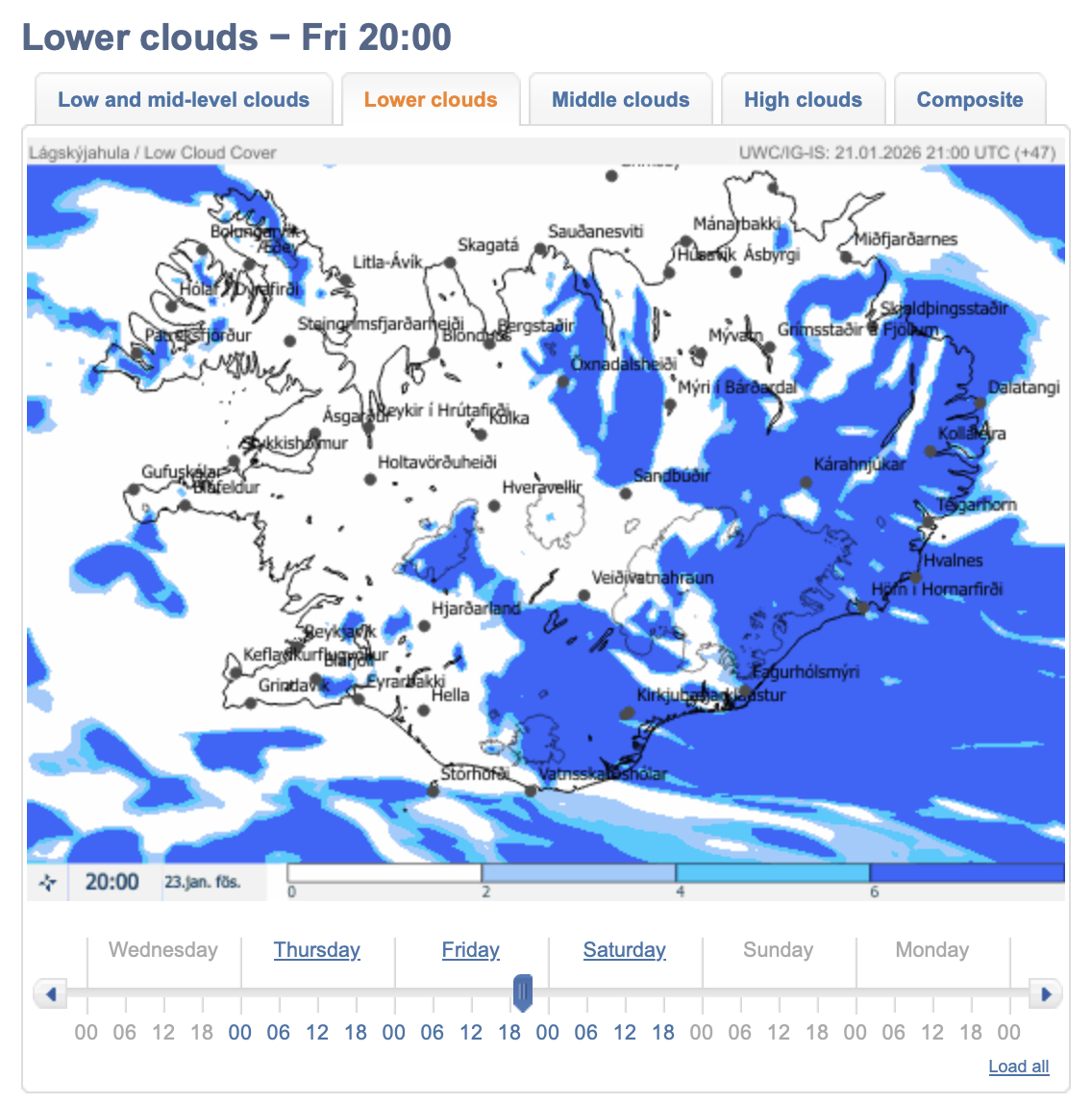
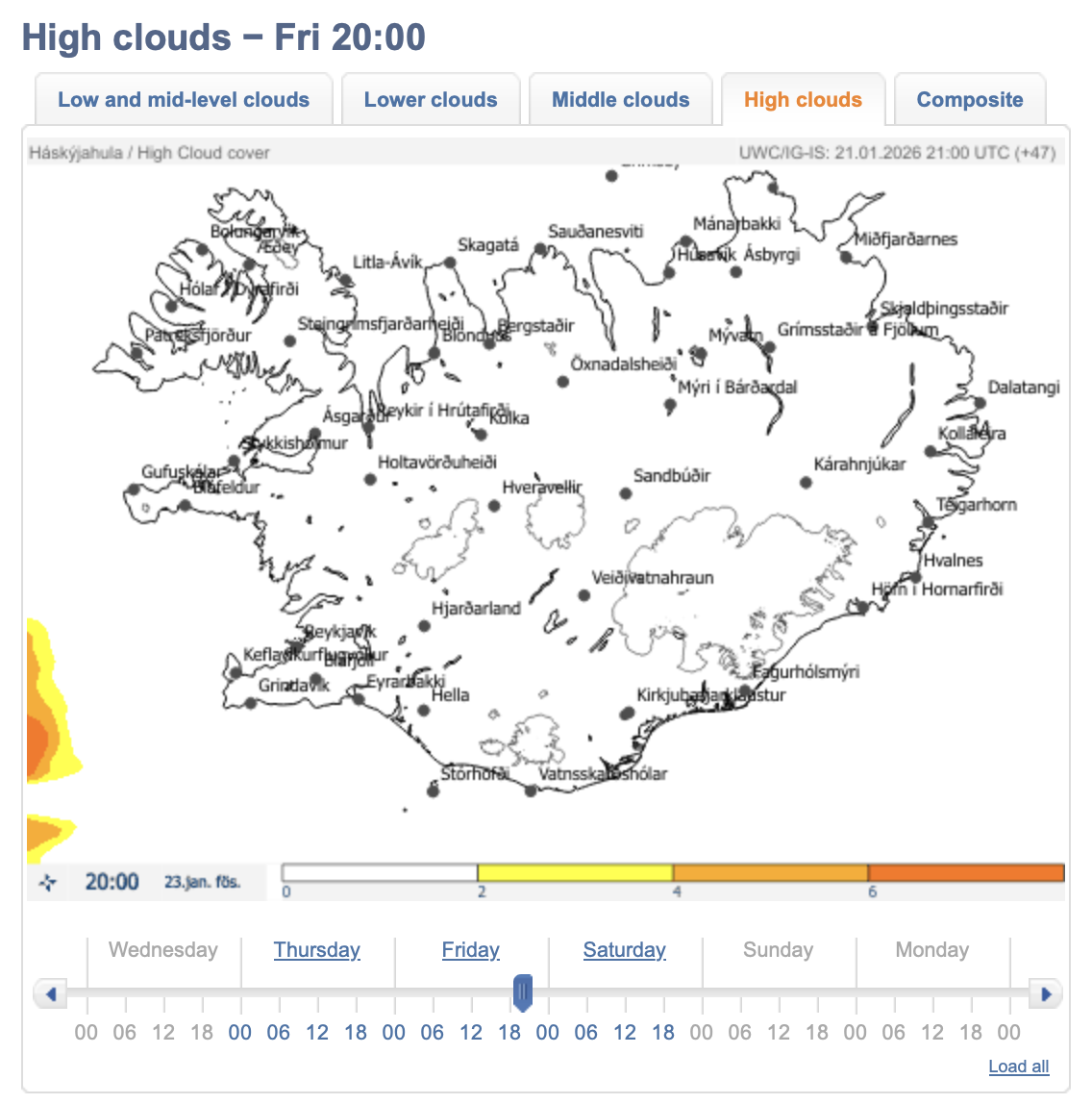
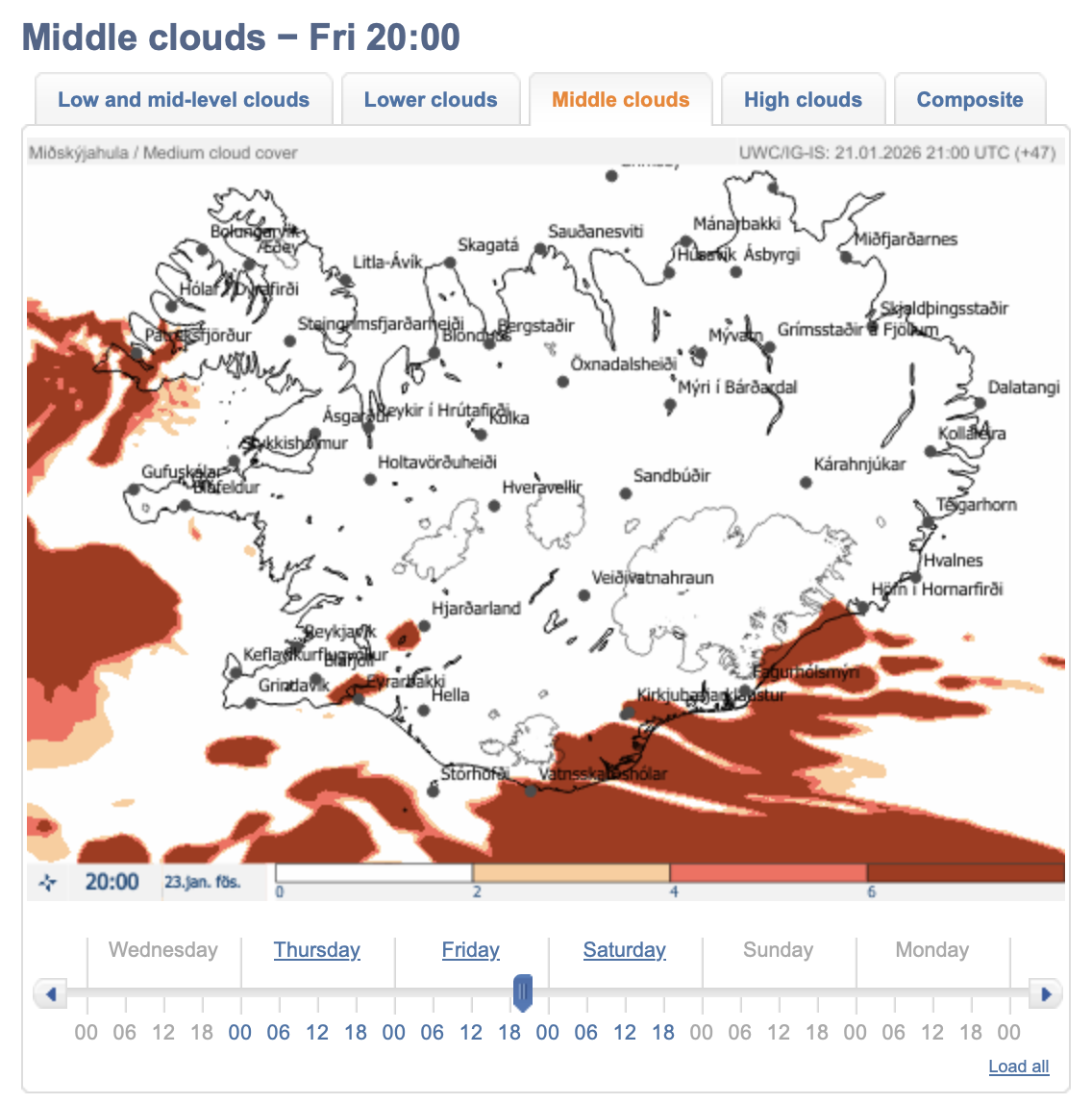
Of course, a perfectly clear sky is ideal, but with the unpredictable Icelandic weather, accepting a few clouds can still lead to a magical night.
👉 My advice: don’t rely only on a simple “cloudy/clear” icon in your phone weather app. Use Vedur properly and take the time to analyze cloud types, altitude, and movement. Driving just a few kilometers can make the difference between a failed evening and an unforgettable night 😉
Light pollution
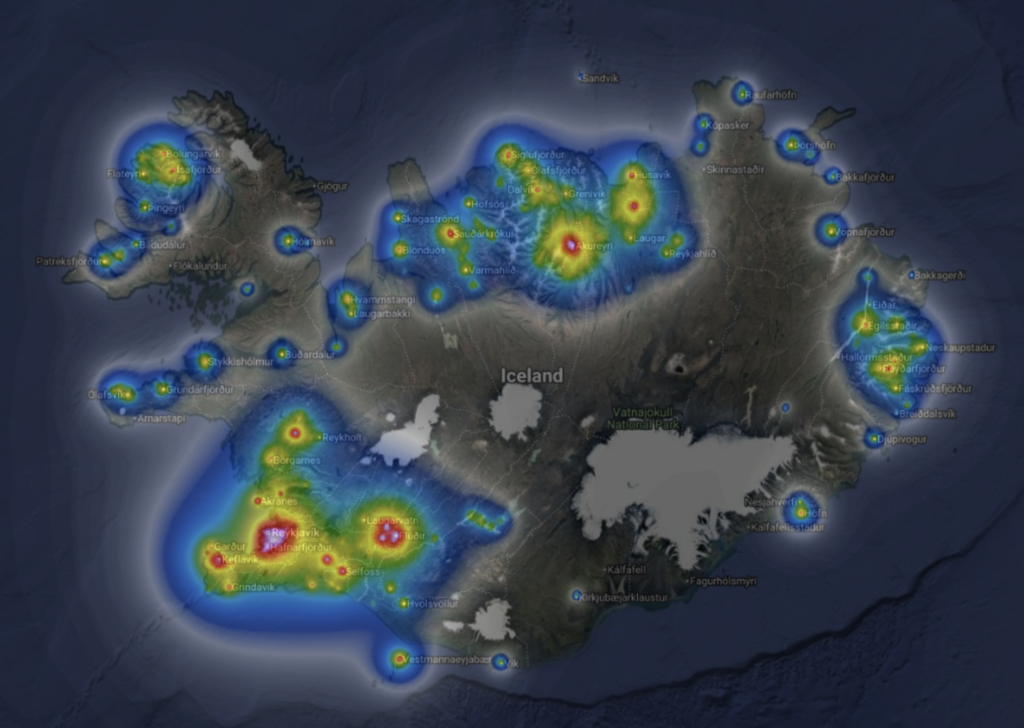
Finally, get as far away from urban areas as possible. Light pollution really reduces aurora visibility, especially when activity is weak. Even a small town can ruin the show. The good news in Iceland is that there are no real large cities (except Reykjavík and Akureyri). And during very strong solar storms, you can even see auroras right in the capital center ! If you want to check light pollution levels in Iceland (or anywhere in the world), Light Pollution Map is a great resource.
👉 Many churches in Iceland remain lit at night. If you’re taking photos and a bright light is blowing out your shot, you can cover it with a jacket or scarf ☺️
Practical tips before heading out to hunt auroras
Watching Northern Lights requires some preparation, especially in Iceland where winter conditions can be harsh. Sometimes you can just step outside your hotel and sometimes you’ll need to drive a bit to find them.
First of all, dress very warmly. Waiting can take a long time, often standing still at night, and in the wind. A good down jacket, thermal layers, warm gloves, and proper shoes make all the difference.
👉 If you’re planning a winter trip to Iceland, I’ve written a full article on the subject coming out mid-February : how to dress and gear up for winter in Iceland.
Also bring :
- a headlamp (ideally with a red light to preserve night vision)
- a power bank, as cold drains phone batteries very quickly
- a car or some way to stay mobile, to follow clear skies and shelter if you get too cold
- a hot drink in a thermos and some snacks to stay warm while waiting
Finally, arm yourself with patience and flexibility. Auroras follow no schedule and can appear and disappear within minutes. The most beautiful nights are often those where you wait, try, think you’ll go back empty-handed and then suddenly they appear in the sky !
👉 Don’t plan your entire trip on auroras. Think of them as a magical bonus, not a guarantee. It’ll help avoid disappointment (or at least limit it).
Where to see northern lights in Iceland
Iceland is full of spectacular places to observe and photograph the northern lights. Ideally, you want to get far from cities while choosing locations that offer a strong foreground for photography. Here are five iconic spots that I love and where auroras become even more magical ⤵️
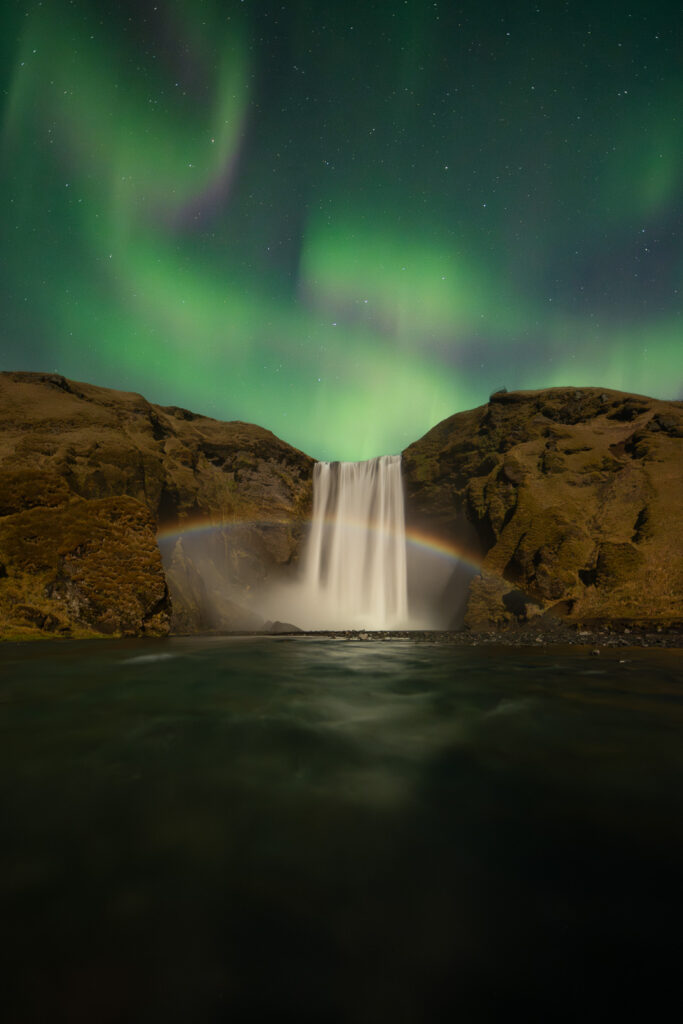
Skógafoss
Skógafoss is one of the most impressive spots to see auroras in Iceland (and also without auroras by the way). The power of the waterfall combined with dancing lights in the sky creates an absolutely unreal scene. The waterfall produces a light mist that can add a mystical atmosphere, but pay attention to it because it can also freeze on your lens if it’s very cold. There is no light pollution and it’s a great spot when auroras are in the north (which is most of the time the case).
👉 Tips : bring a microfiber cloth and a blower to remove droplets from your lens. For gear, bring a wide-angle and a mid-range lens (14-70mm) and a sturdy tripod. If you want to create a composition like this, you’ll need waterproof to walk into the river.
Northern lights above Skógafoss on a full moon night : the moonlight reflects in the mist and creates a lunar rainbow.
Hellnakirkja
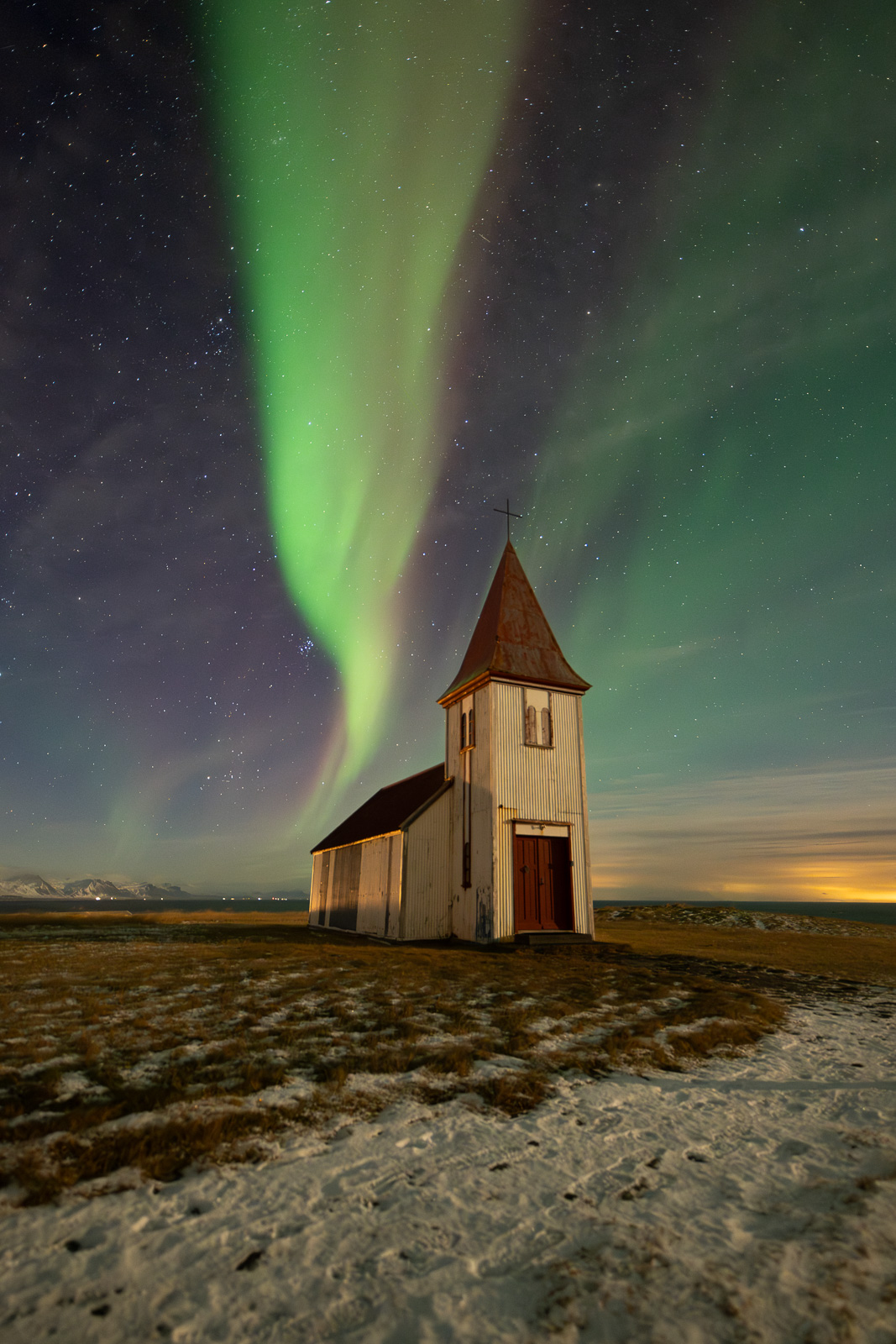
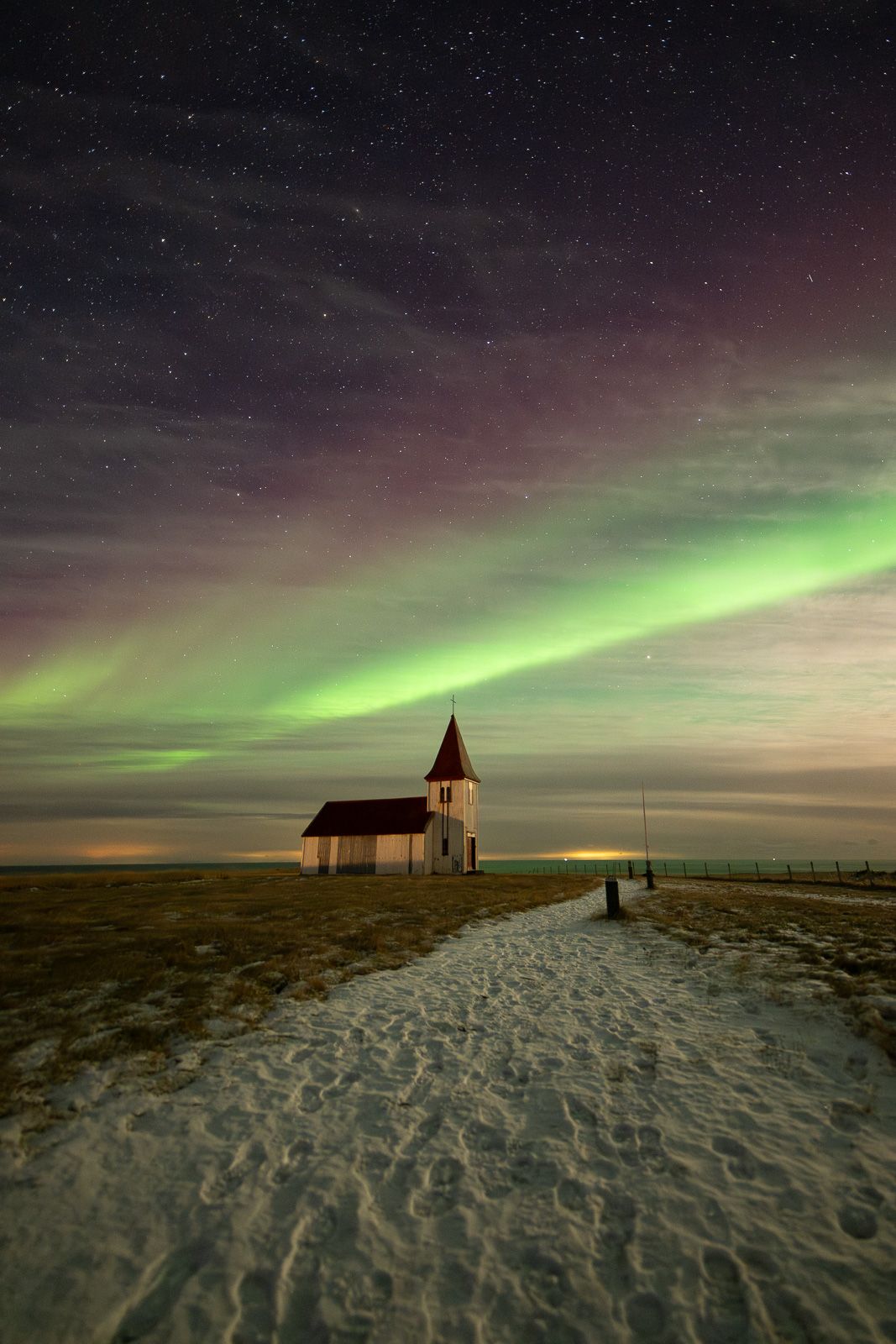
Located on the Snæfellsnes Peninsula, Hellnakirkja is a small isolated church facing the ocean. It’s a very interesting spot for auroras because you can move 360° around the church and create multiple compositions. If you get an auroral arch, you can even shoot a panorama because the arch would be positioned from east to west.
👉 Tips : there’s a bit of light pollution but nothing too disturbing. The spot isn’t very well known, so chances are you’ll be alone. However, if the moon is full, it may cast shadows from the fence around the church and it’s a bit “meh” for photography.

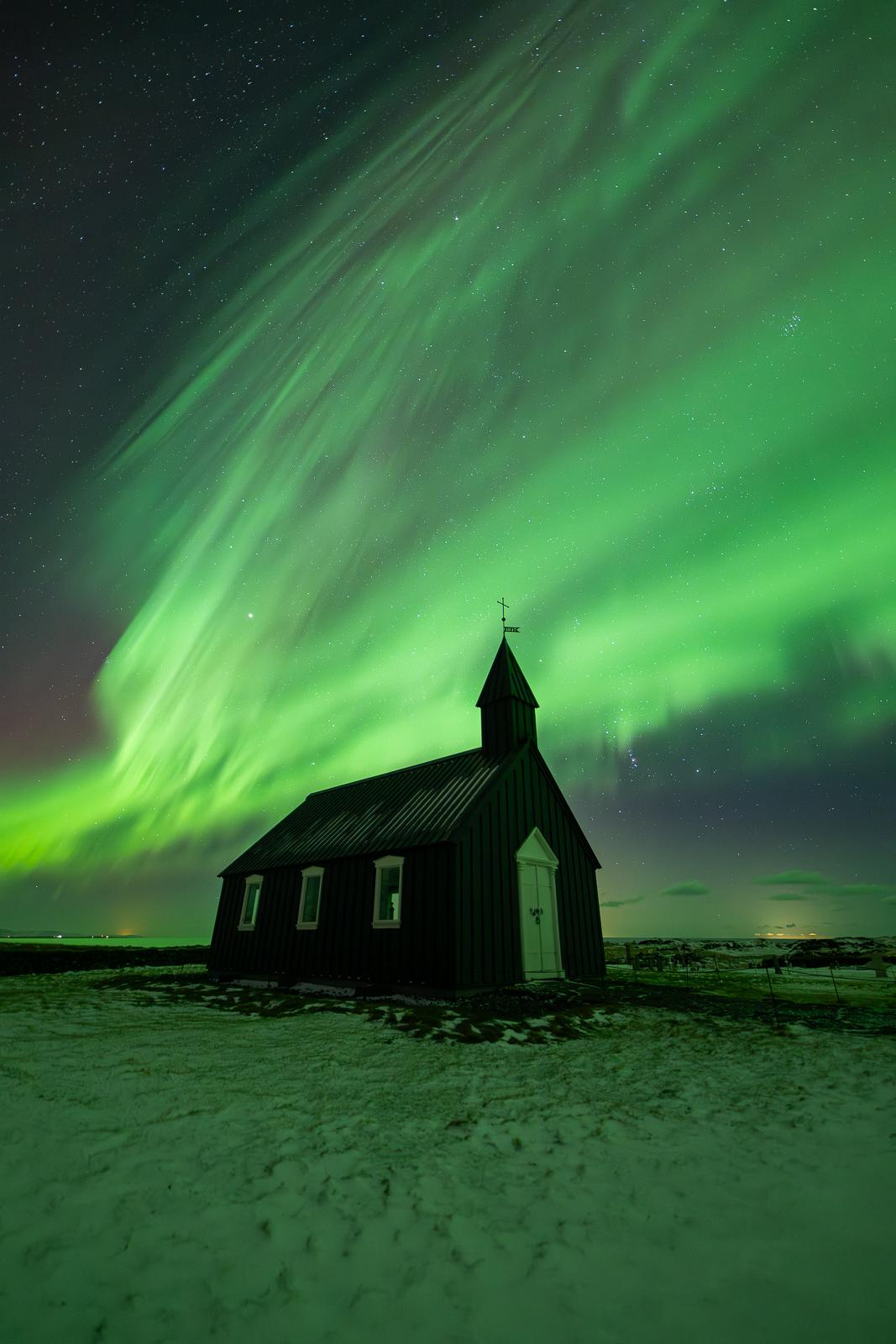
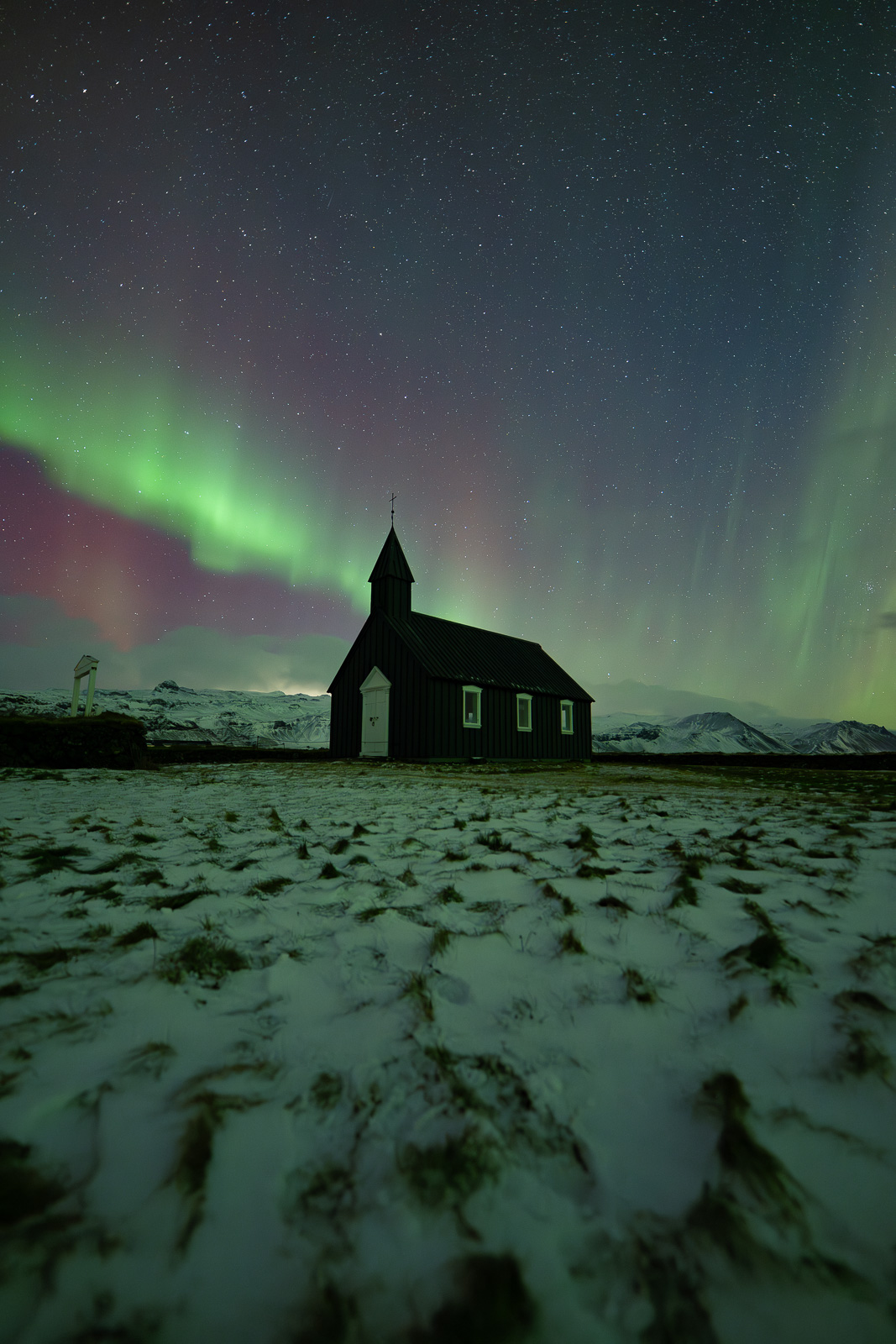
Budakirkja
The famous black church of Búðir is one of Iceland’s most iconic photography spots (you’ve definitely seen it on Instagram) and it becomes even more magical under the auroras. The contrast between the green sky, the dark church, the mountains in the background and snow (if you’re there in winter) is simply stunning !
👉 Tips : this spot is perfect for multiple compositions, but a wide-angle lens is almost essential, as the stone fence around the church limits how far you can step back. You can walk all the way around the church to explore different angles. Since it’s easy to access and well known, you might not be alone. There’s also a spotlight illuminating the church, but you can cover it with a jacket while taking photos 😌
Kirkjufell
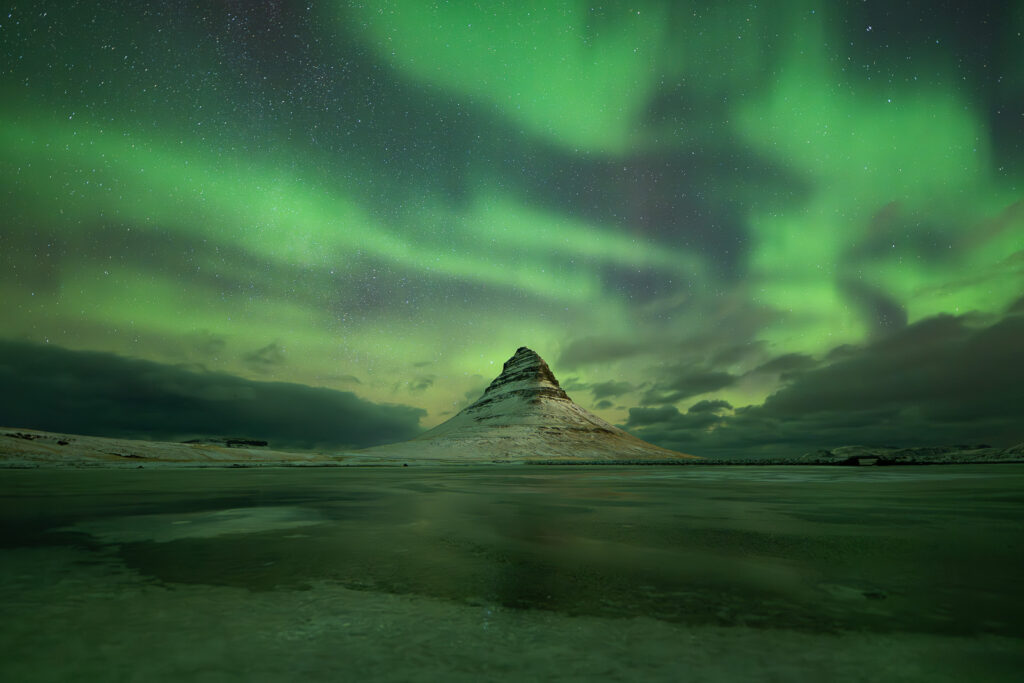
Kirkjufell is probably one of the most photographed aurora spot in Iceland, and that’s okay ! Tourist spots are popular for a reason. The hat shape of the mountain, combined with the small Kirkjufellsfoss waterfalls in the foreground creates a perfect composition when conditions align.
When I visited in October 2025, the waterfall area was under construction (they’re building an observation deck), so I chose to shoot from the lake side instead.
👉 Tips : at night and with snow, the ground can be very slippery, so be careful. A wide-angle lens is your best ally to capture both auroras and foreground. Some cars pass by at night (even late) causing brief light pollution, but it should be manageable.
Stokksnes
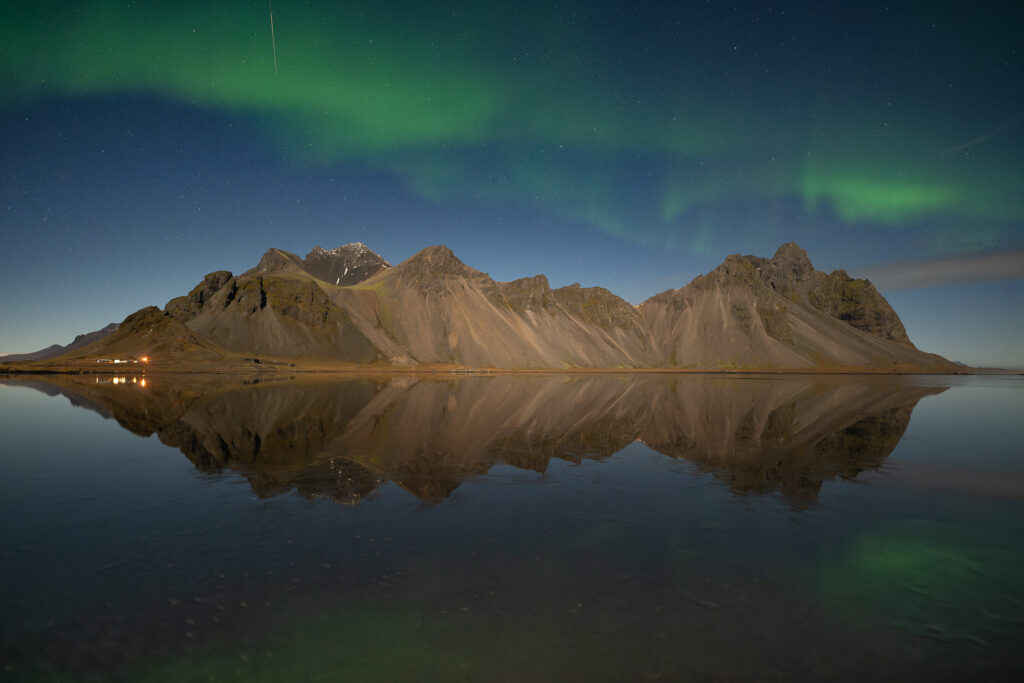
Stokksnes, at the foot of Vestrahorn Mountain, is a bucketlist spot for landscape lovers, and aurora viewers. Black sand dunes, frozen grasses and reflections in the lagoon offer countless unique compositions, especially when the sky is active 😌
👉 Tips : check the tide at Stokksnes to know if the reflection will be present. The tide needs to be high for the lagoon to form. If it’s low, you can still focus on dune compositions. A wide-angle lens is essential, and panoramas work beautifully here to capture the full mountain.
Interactive map : all my northern lights spots in Iceland
Seeing Northern Lights in Iceland isn’t just about luck, it’s about preparation, flexibility, and being in the right places at the right time. The locations I have shared are must-sees, but they’re only a tiny fraction of the incredible places where auroras can be seen across the island.
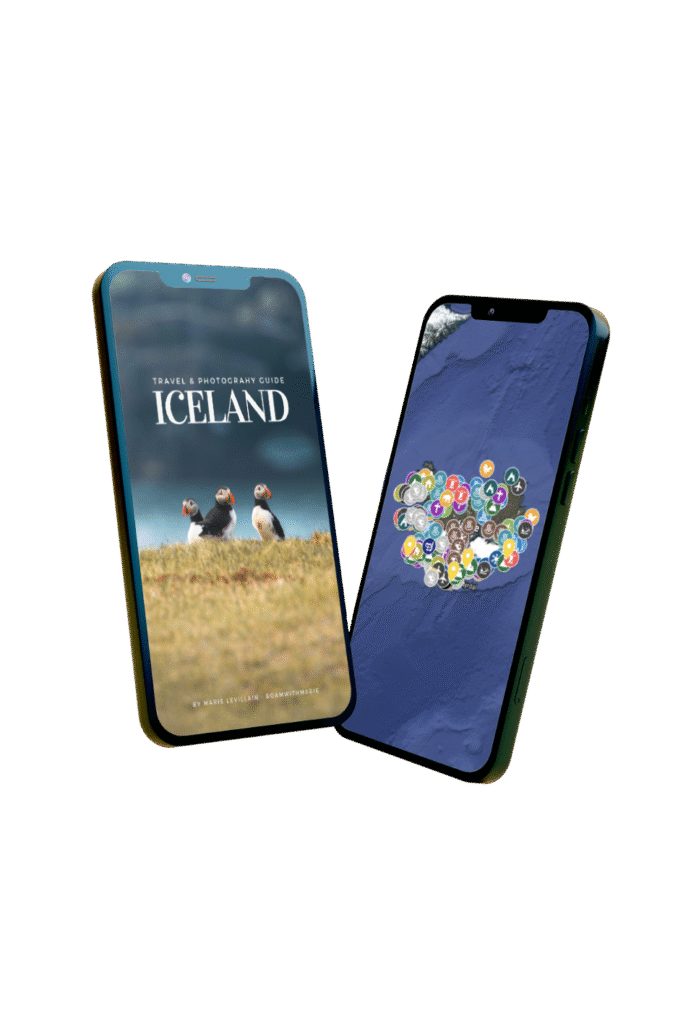
My interactive map includes over 400 photo spots spread across the entire island, and 40+ auroras locations ! In the description of each spot, you’ll find :
- access information
- the best light conditions
- what gear to bring
- where to park and how much it costs
- the best season to visit
- useful links
Each spot also comes with my own photography tips and composition ideas.
The map helps you build a coherent itinerary without wasting hours cross-checking scattered and sometimes inaccurate information found online.
The map is updated for life, you don’t need to buy it again. Every time I update it, the map on our device is updated too ❤️
👉 If you want to maximize your chances of seeing (and photographing) auroras while avoiding crowds and overshared locations, this map is the tool I wish I had on my first trips to Iceland. I even use it personally when I travel there as it makes my life so much easier.
Seeing northern lights in Iceland is a once-in-a-lifetime experience, an almost unreal one, and one that often leaves a lasting mark. But this magical moment doesn’t just happen by chance : it requires preparation, observation and sometimes a bit of effort. With the right advice, patience, and tools, you give yourself the best possible chance to live this unique moment, far from artificial lights and as close as possible to Iceland’s raw nature.