“Iceland in winter? Nah thanks, it’s too cold !”, “I’m going to freeze in Iceland in February, I only have one down jacket and it’s not even that warm (and it’s ugly)” are real sentences my friends told me when I suggested we should go to Iceland next winter. Although I agree styling is nice, dressing in winter is mostly about comfort and safety.
Between snowstorms, strong winds, hours waiting under the northern lights, or simply walking around a frozen waterfall, your body is constantly challenged. But surprisingly, cold temperatures are not the main issue ! Most people can handle -5 to -10°C in Iceland. What’s much difficult to deal with is wind, humidity and poorly adapted clothing, which can turn every time outside into a struggle.
I’ve seen (and experienced 🫣) these very classic situations : “warm” jackets that become useless as soon as it rains, jeans soaked within ten minutes, hands so frozen you can’t even adjust your camera settings…
The goal of this article is not to give you a shopping list you must blindly follow (you can if you want tho), but rather to debunk Iceland’s winter climate and explain how to dress smartly, based on real conditions on the field and common mistakes to avoid, so you can actually enjoy your trip even with Icelandic weather.
Understanding Iceland’s winter climate
Before talking about clothing, we need to talk about the climate. Because winter in Iceland is not just “cold”. Contrary to popular belief, winter temperatures there are often fairly moderate : between -5°C and +5°C in most inhabited areas. On paper, that’s not THAT extreme. In reality, the felt temperature can be much harsher, because temperature is only one part of the equation.
The Icelandic wind
What you really need to fear is the wind : it’s your number one enemy (not just for drones, but for you too). Wind is almost constant, and it’s often not a gentle breeze but powerful gusts capable of ripping car doors off. Yes, it happens often enough that car rental companies remind you to park facing the wind. Wind is what drops your body temperature, chills you even when you’re well dressed and exhausts you over time.
👉 A good winter gear in Iceland must be windproof. Without wind protection, even the warmest jacket in the world won’t do much.
Humidity in Iceland
Another major factor is humidity. Between rain, snow, sea mist near the coast (sometimes all at once), it’s very easy to get wet. Non-waterproof clothing quickly absorbs moisture, the cold settles in faster and drying clothes while traveling is not always easy (trust me on that last point.
Some winters are drier than others : February 2026 was mostly dry, but I still had several rain showers during the trip and had to dry my clothes multiple times. During a glacier hike, our guide joked and told us that the rain we had just got was “a perfect first step towards hypothermia”. And honestly by the end of the day we were soaked and dreaming of a lava-hot shower.
👉 Good winter gear in Iceland must be waterproof.
Why -5°C in Iceland feels different than -5°C elsewhere
If you’ve experienced dry winters in the mountains or northern Europe, you may have dealt with much lower temperatures. When I traveled to Finland in March 2025, temperatures often dropped to -20 to -25°C, and I felt warmer than in Iceland, because the climate was drier and less windy.
The wind + humidity + long exposure completely change how cold feels. Waiting for clear skies, walking slowly around a glacier or standing still under the northern lights requires a specific clothing strategy. That’s why dressing for winter in Iceland isn’t about piling on layers, but choosing the right layers for the right reasons.
The golden rule of the 3-layer system
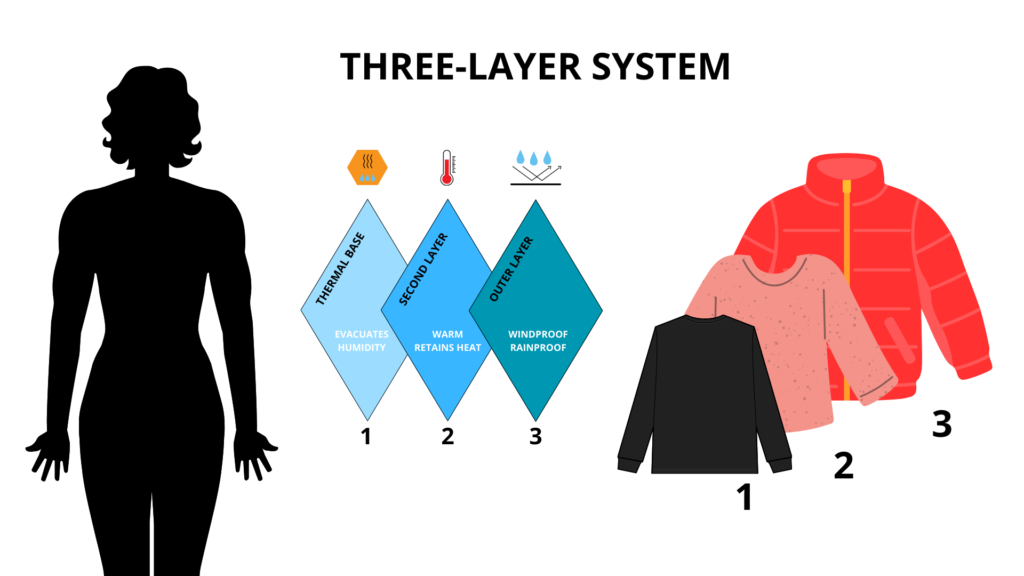
If there’s one thing to remember where you’ll start packing, it’s the three-layer system. It’s not marketing word or something for elite alpinists, it’s simply the most effective way to stay warm without sweating, block wind without suffocating, and adapt to changing weather throughout the day. You’ve heard of the “onion technique” ? That’s the same thing but pushed a little bit further. The principle is simple :
- One layer to manage humidity
- One layer to manage the cold and retain warmth
- One layer to protect you from elements (aka rain and wind)
And contrary to popular beliefs, the thickest layer doesn’t do all the work 😌
Dressing your upper body
Your upper body is where mistakes cost you the most in winter. A bad jacket can ruin your entire day, no matter what you wear underneath !
Layer 1 : staying dry
The base layer is the one in direct contact with your skin and must wick away moisture. Cotton is a big hard no, always. Thermal base layers made of merino wool or synthetic fabrics prevent that unpleasant moist feeling : you stay warm while moving, and when you stop, moisture doesn’t stay trapped in the fabric. This layer is not meant to keep you warm, it’s actually meant to keep you from getting cold.
👉 I own several very old technical base layers from Millet (so old I can’t link exact models I’m sorry), but their current technical base layer range is excellent. I also use some from Columbia, especially the Midweight Stretch range, which works really well.
Layer 2 : retain warmth
This is your insulation layer. Ideally a fleece, a lightweight down jacket or a thermal mid-layer : its job is to trap the heat your body produces.
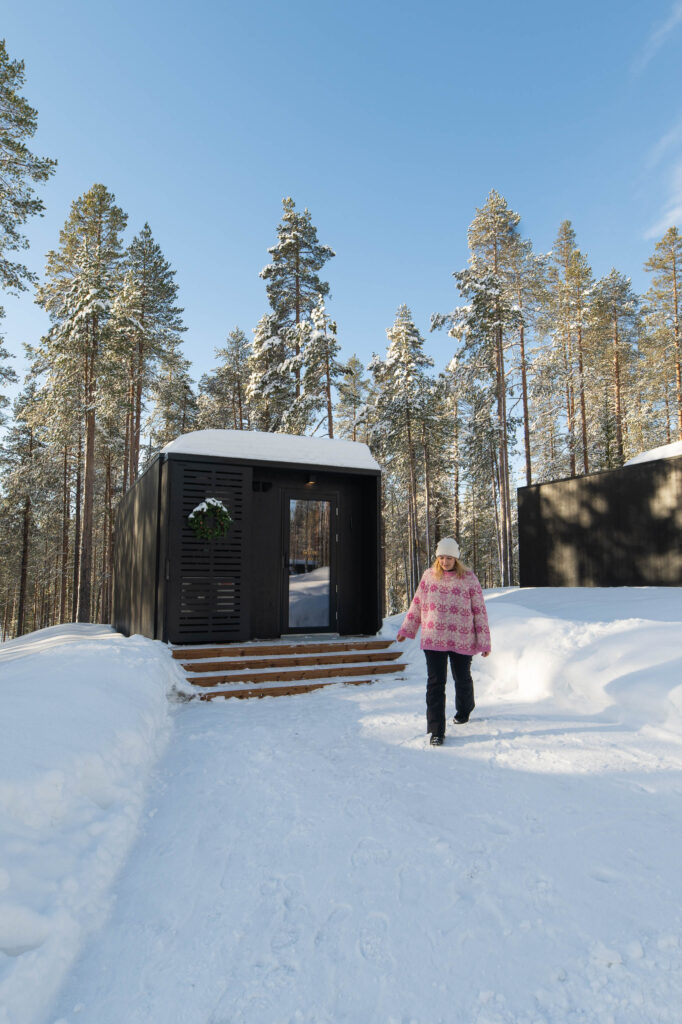
I use several fleeces from Millet, Columbia, and Eider, but I also love wool sweaters as a second layer, like this pink sweater from Skappel Oslo, a Norwegian brand.
Layer 3 : block wind and water
That’s the most important layer and also the most underestimated. A jacket that is truly waterproof and windproof makes all the difference. Without it, wind creeps in, moisture builds up and warmth disappears within minutes.
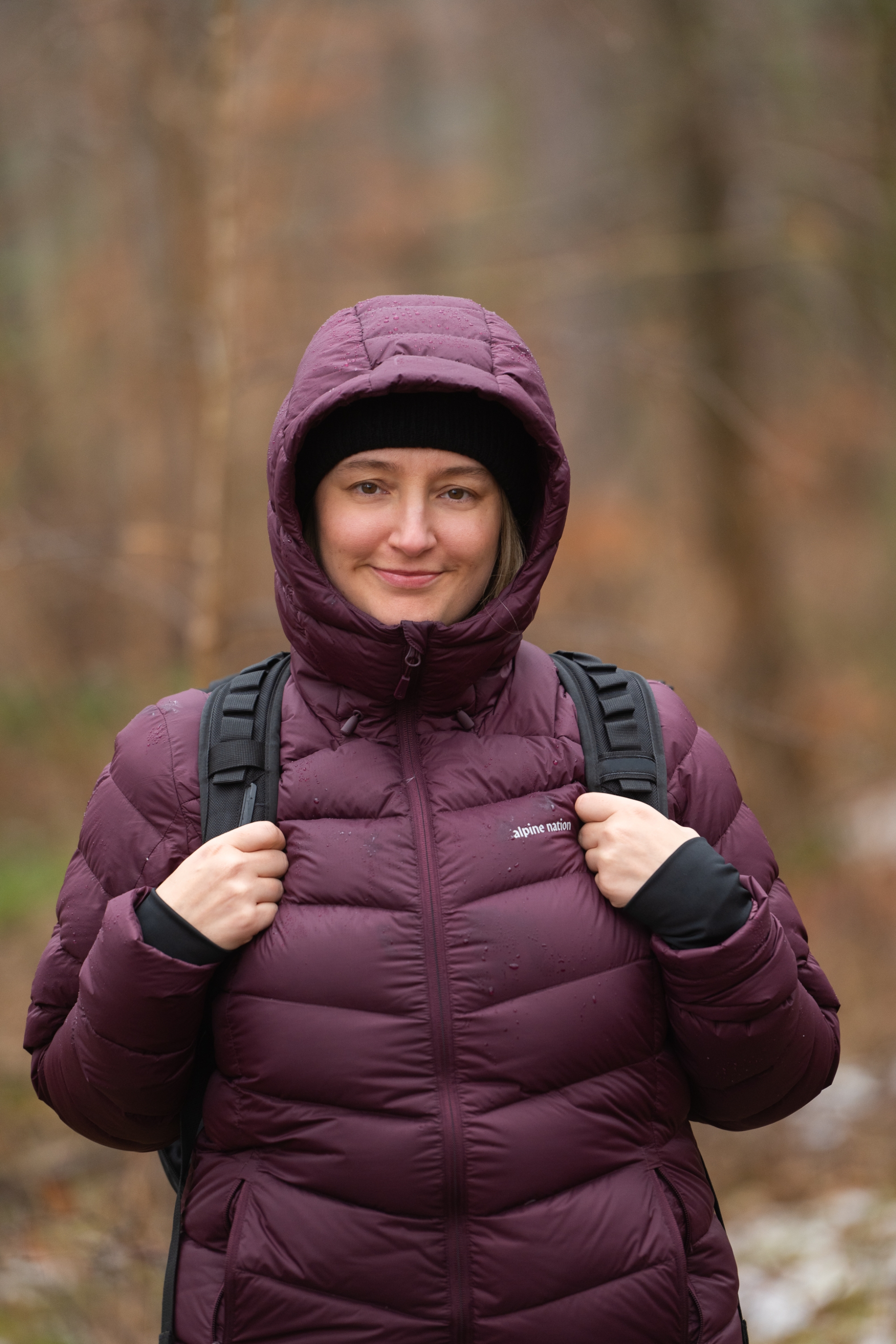
Personally, I use a compressible down jacket from Alpine Nation (the Nordwyn Down Jacket in Lingonberry). It’s warm without being excessive, easy to take on and off depending on effort and weather and blocks wind well. On days with a milder weather, I wear it directly over my base layer.
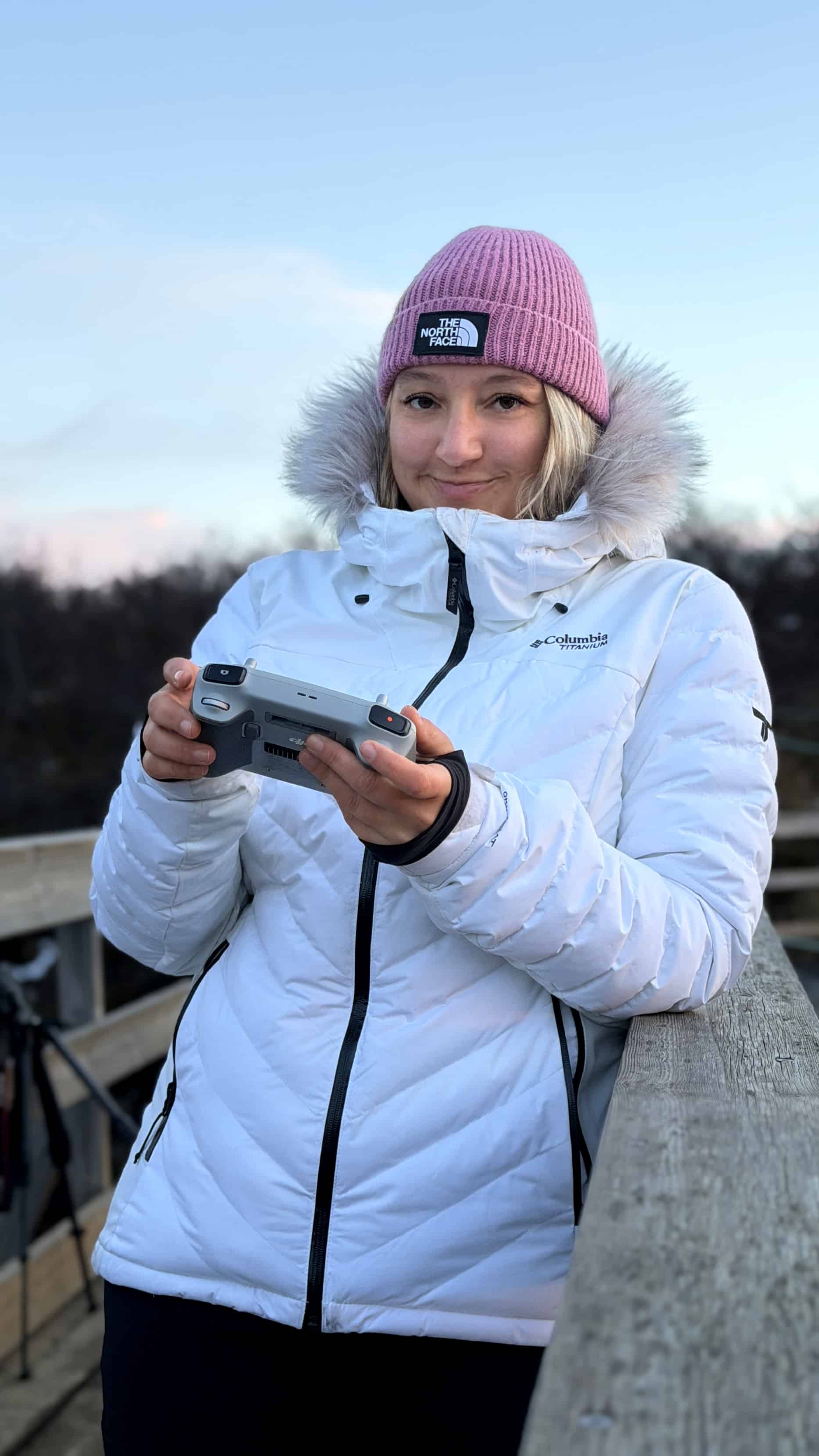
I also own a thicker down jacket from Columbia (from Omni-Heat range but the one I own doesn’t seem to exist anymore), which I mainly use during static phases, for example when waiting for the northern lights. Is it mandatory to bring two jackets in Iceland ? No. Is it comfortable when standing still in strong wind for an hour to have an additional down jacket ? Absolutely yes.
👉 A good outer layer doesn’t have to be bulky, but it must be waterproof, breathable and windproof. If your jacket checks all three boxes, jackpot ☺️
Dressing your lower body
The lower body is often neglected, until it’s too late. Walking in moist or poorly insulated pants in Iceland means being cold all day, especially when you stop moving. Same logic applies as for the upper body :
- One thermal base layer
- One insulating layer
- One layer for blocking wind and water
I’m not telling you to wear three pair of pants, but ski pants or waterproof insulated pants combined with thermal leggings are ideal. Avoid jeans in winter at all cost : they don’t insulate, they dry poorly, and once wet, they turn into a portable fridge.
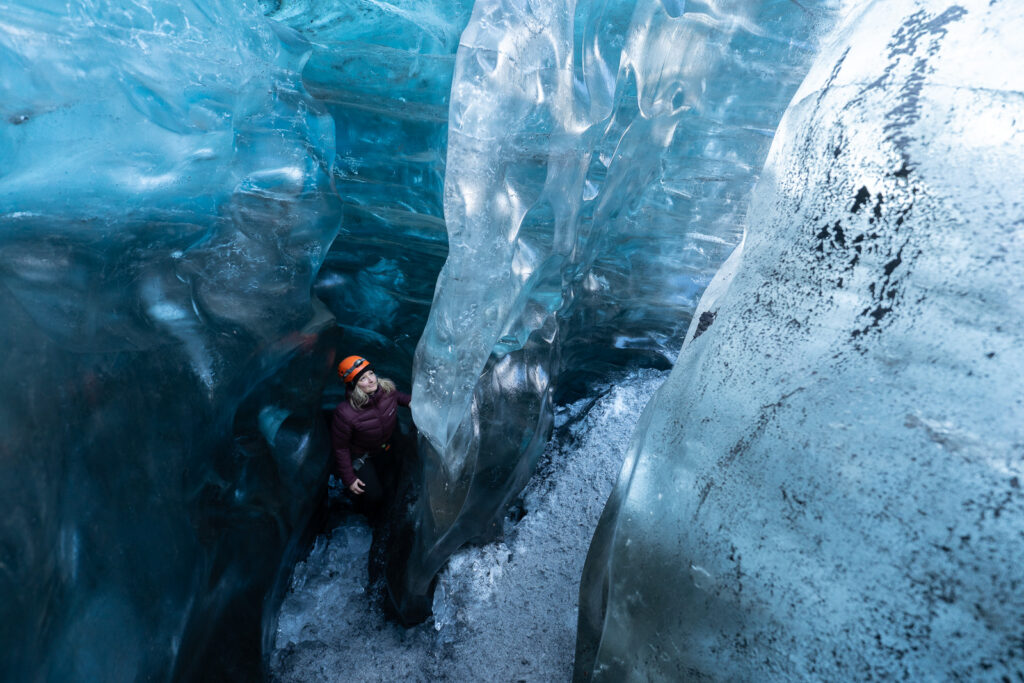
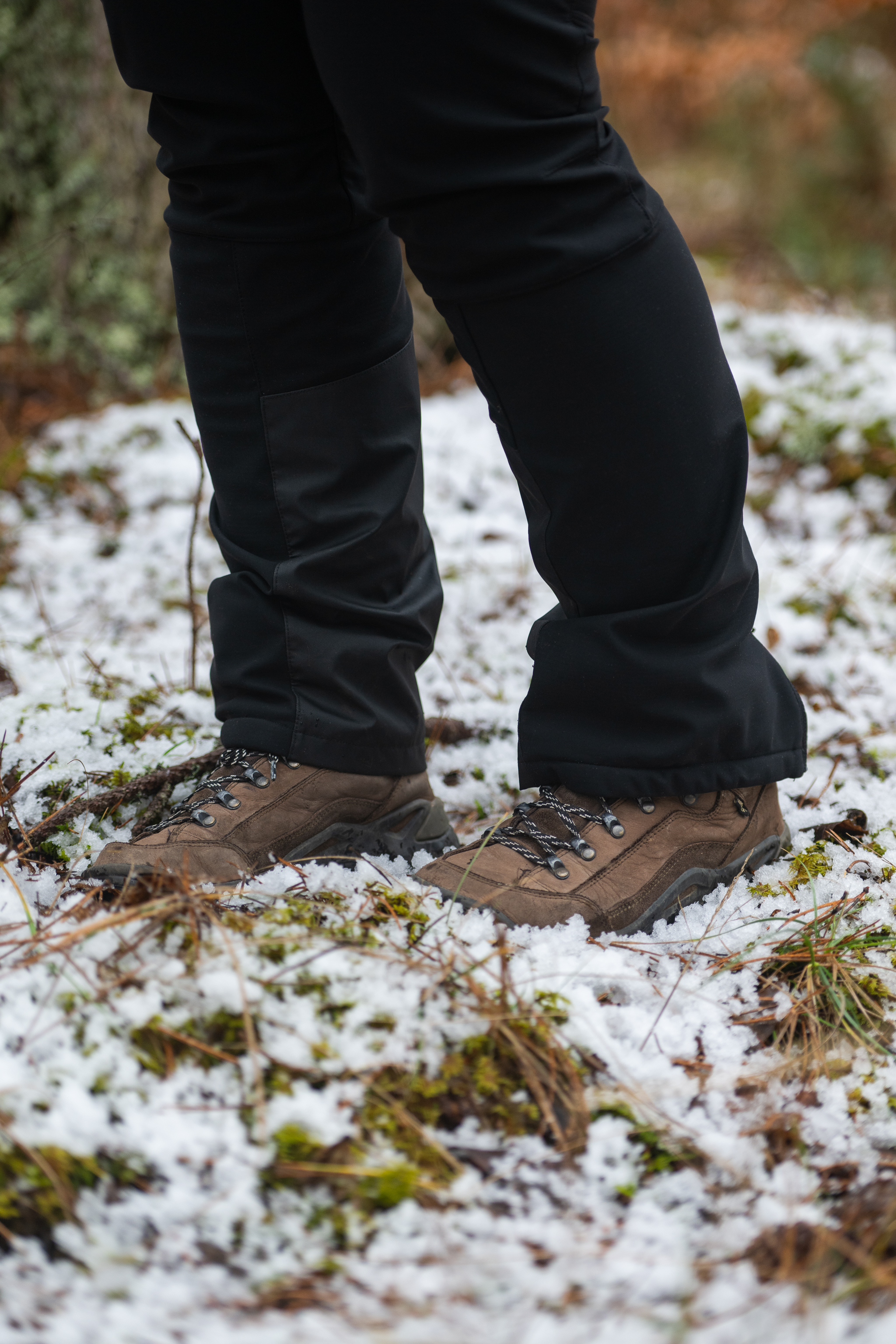
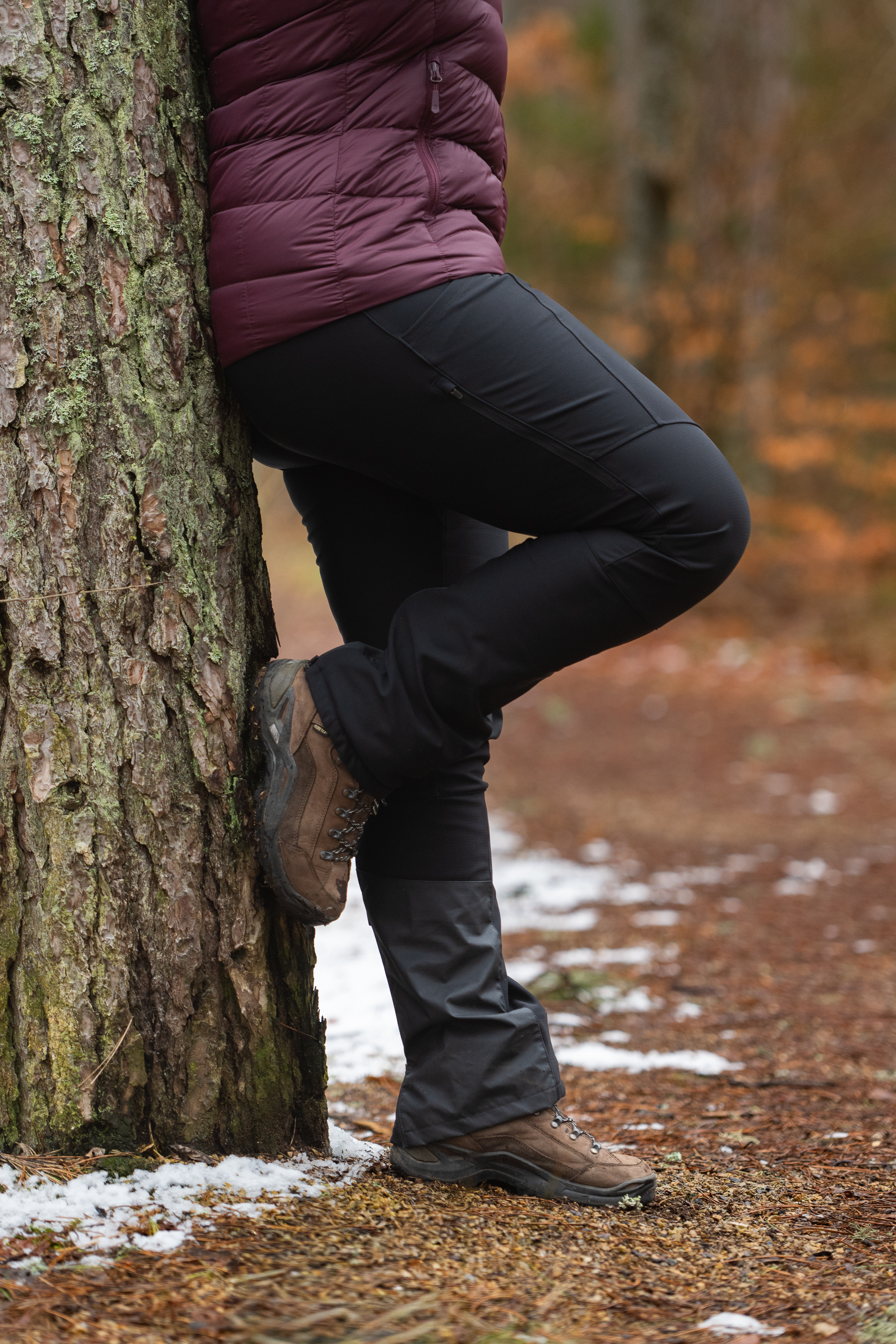
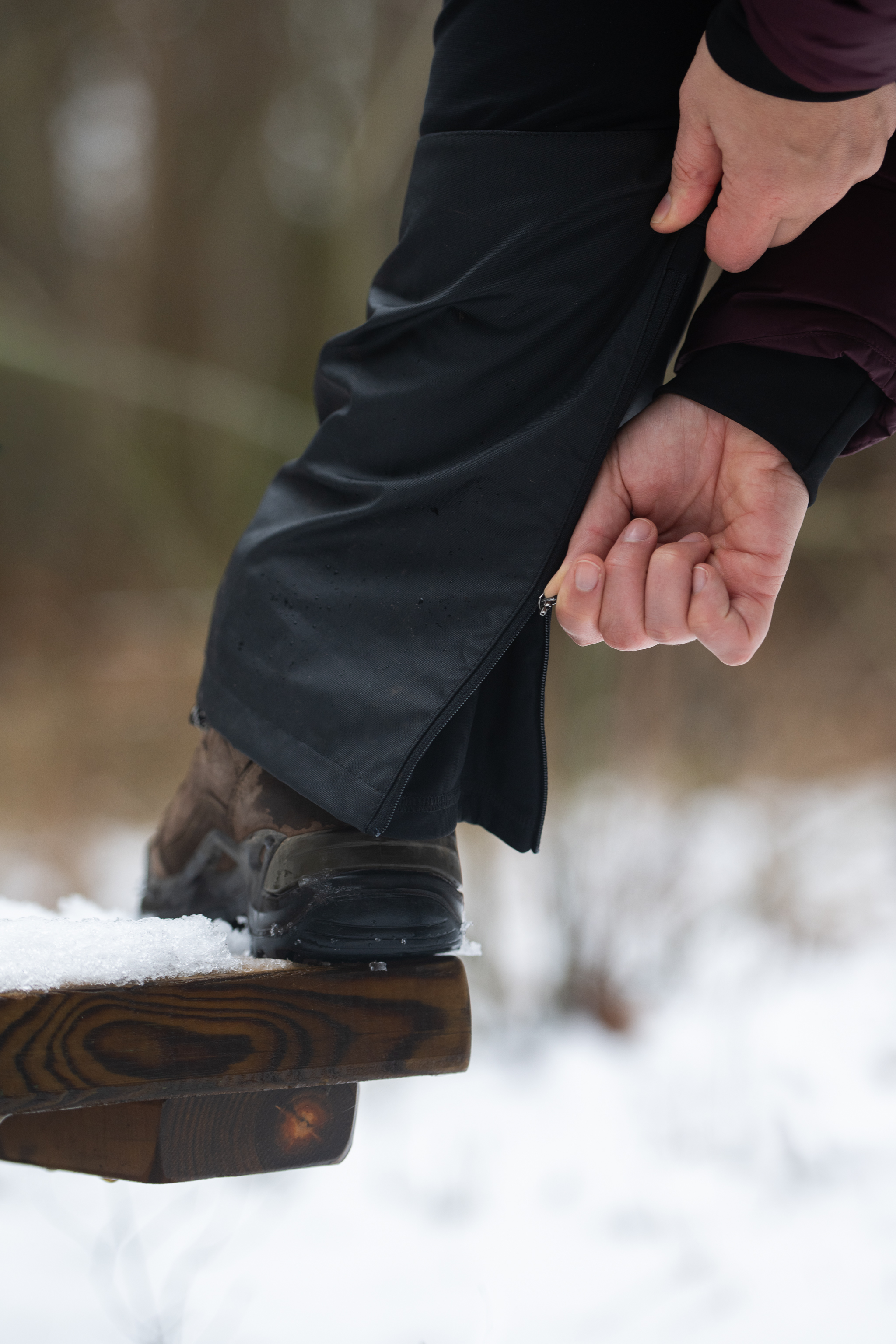
👉 I personally bring ski pants and the APEX Winter Pocket Leggings (Eclipse color) from Alpine Nation, sometimes combined with a thermal base layer. They’re lightweight, have pockets and have water-resistant reinforcements on calves and knees which is perfect for Iceland (and ice caves!). I wore these almost the entire trip without a base layer because I was bit lazy and I regretted not following my own advice on some mornings 😅
Don’t neglect your feet, hands, head
You can have the most perfect jacket and layering system, if your feet, hands or head are poorly protected, the cold will always win. These areas lose heat very quickly, especially when standing still : waiting for weather changes, watching frozen waterfalls or waiting for the auroras to appear. It’s said that the most sensible areas are the wrists and ankles, I think you can verify that very easily in winter 😅
Protect your feet
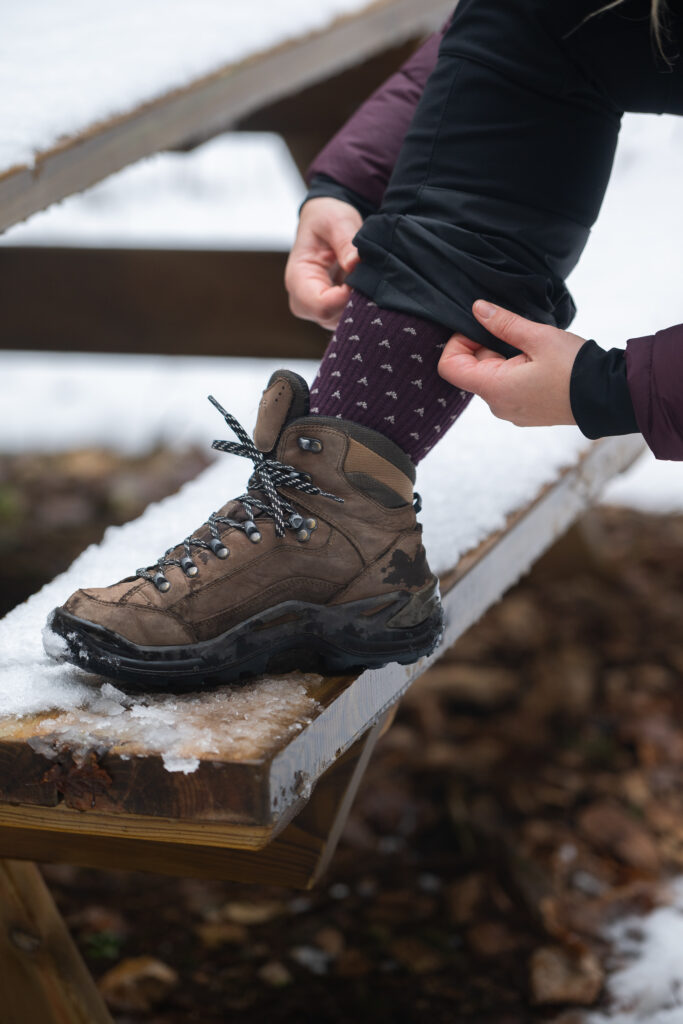
Your feet work hard in winter Iceland : walking and standing on wet, snowy or icy ground for hours. You need waterproof, insulated winter boots with a good grip. I use winter boots from Columbia designed for cold conditions, with enough insulation to stay outside without moving (they are fur-lined boots so they’re very warm).
Socks matter too ! Choose merino wool socks, they will keep your feet warm while driving away moisture. I use classic ski socks and a merino pair from Alpine Nation. In case you’re wondering, no, wearing two thin socks does not replace one good pair, it can actually restrict blood circulation !
🧦 I did an accidental crash test for the Alpine Nation socks at Diamond Beach : water completely flooded my boots (aquarium-style). They dried incredibly fast and I could still wear them the rest of the trip. They have also survived spelunking trips 😅
👉 Do you need crampons in winter in Iceland? It actually depends. If you plan to visit waterfalls, I highly recommend them, areas like Skógafoss and Seljalandsfoss can be very slippery. I have this pair and they are adjustable so you can wear them with different pair of shoes. In February 2026, winter was very dry so I didn’t need them but they were in my luggage. Better having them and not needing to use them, than needing them and not have the possibility to do what you want !
Protect your hands
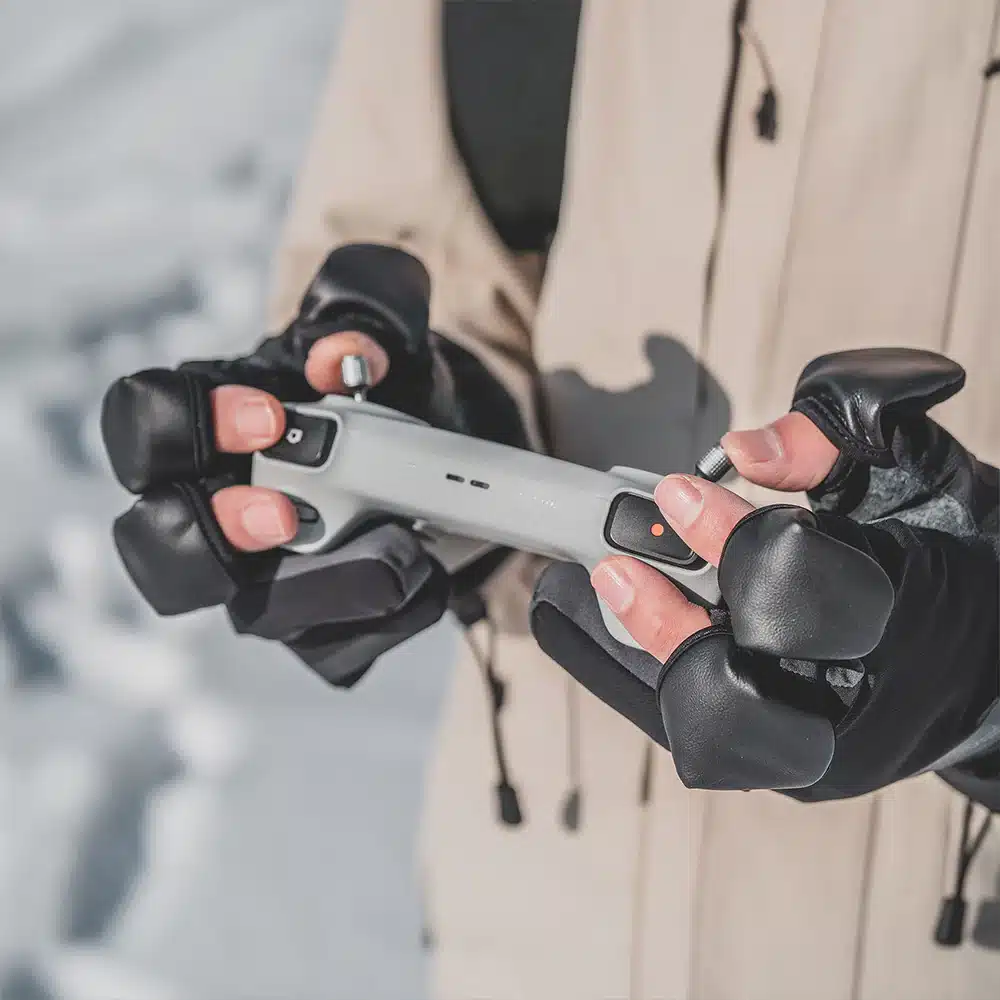
Hands are tricky, especially if you do photography or if you fly the drone, because you need warmth and dexterity. There’s no perfect solution, but I think I found a good compromise.
I use photography gloves from PGYtech, they are designed for photographers. The fingertips flip open and clip back, which allows you to use the touchscreen and click buttons. They’re great, but in strong wind with the fingertips open, cold eventually creeps in.
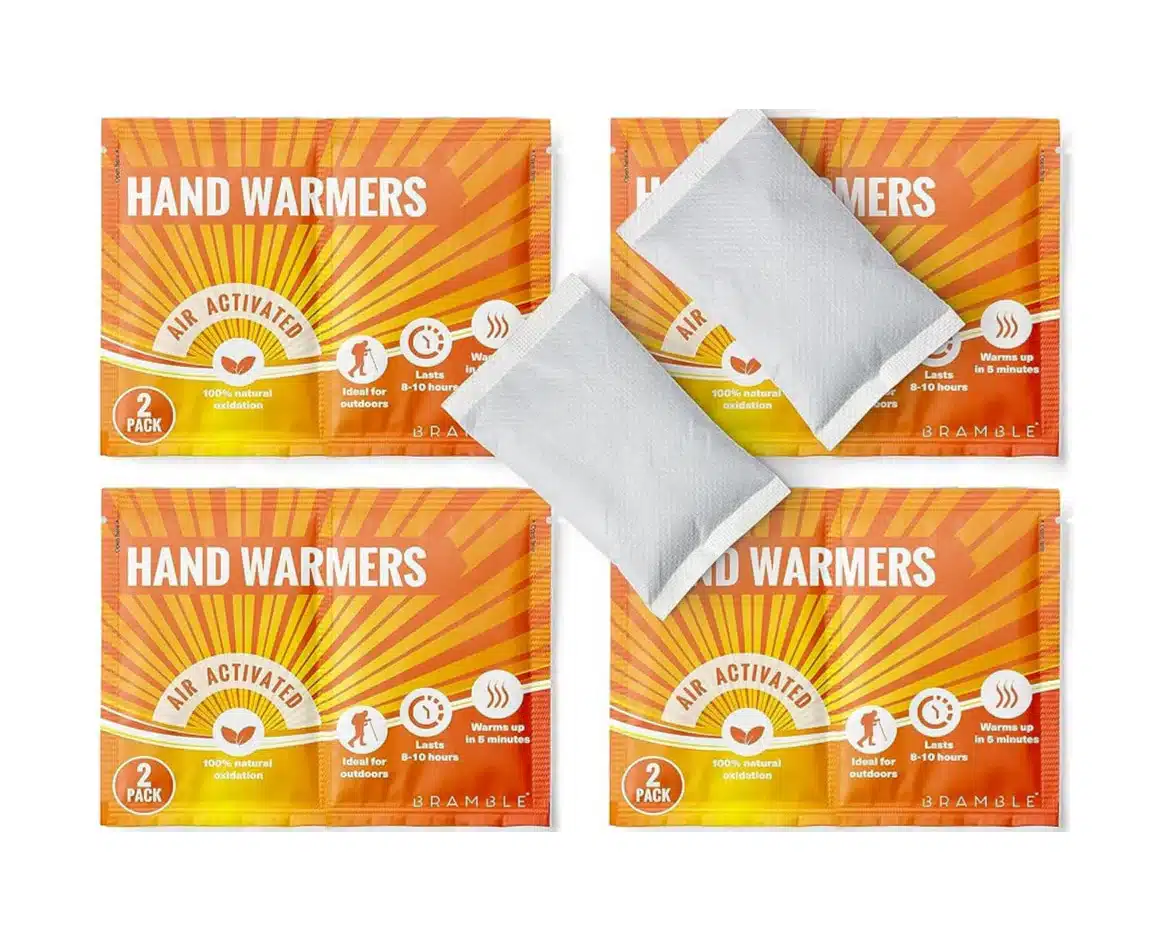
What you can do is bringing hand warmers. I use warmers from Bramble, which you can slip into gloves or pockets. They are very easy to use, just open them, shake them, and they heat up for almost 12 hours, which is a real game changer during long cold sessions.
Protect your head
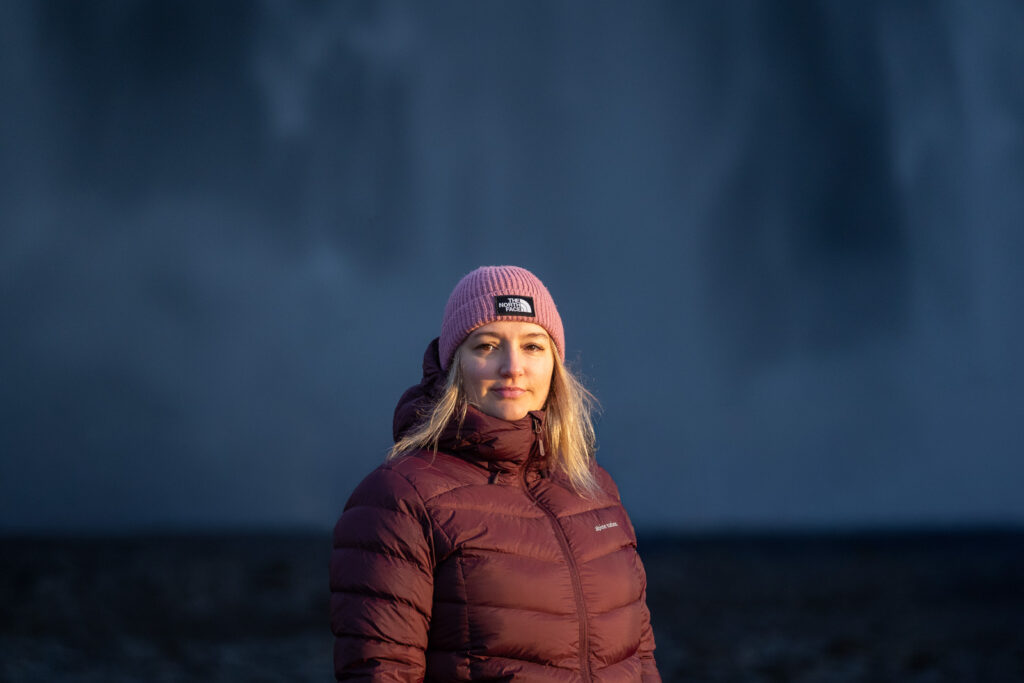
A lot of body heat escapes through your head. With the wind in Iceland, a beanie is clearly not a fashion accessory, it’s essential. I always bring two, in case one gets wet : one from The North Face (that I bought second-hand because they don’t do pink anymore – and because thrifting is cool) and the Cosy Cuffed Beanie from Alpine Nation (Eclipse color). Both are great, I would say the Alpine Nation beanie is bit more thick and therefore warmer. Both cover well ears and protect from the wind.
Pair your beanie with a merino neck gaiter or buff to protect your neck and ears without restricting movement. This small detail often makes the difference between “I’m a bit cold but I’m fine” and “I need to go home now because I’m dying”.
Iceland winter packing checklist (+ a discount code)
Upper body
- Thermal base layers (merino or synthetic)
- Insulating layer (fleece or lightweight down)
- Waterproof and windproof jacket
Lower body
- Thermal base layer
- Insulated and waterproof pants / ski pants
Essential accessories
- Waterproof winter boots
- Merino wool socks
- Warm gloves + hand warmers
- Beanie
- Merino neck gaiter / buff
- Crampons (optional)
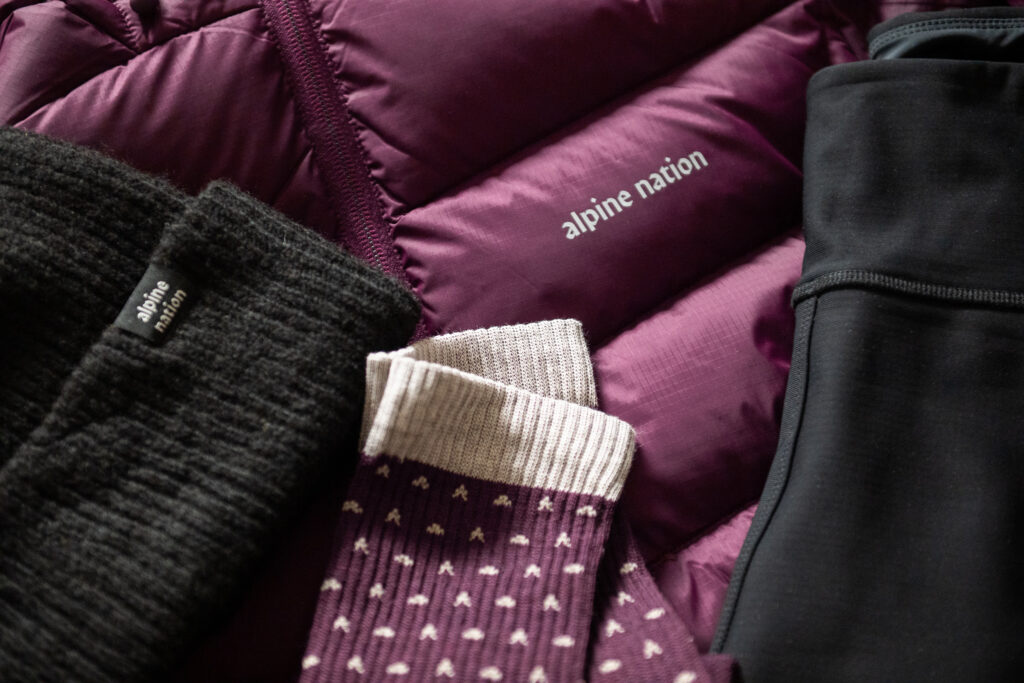
👉 If you’re looking for technical clothing tested in real conditions, check out Alpine Nation. It’s a women’s brand created by a woman, for women. With the code MARIE20, you get 20% off (excluding sale items). I don’t earn anything on this, but I’m just happy to share a discount for a brand I truly love and that I’ve tested in real conditions (and the colors are gorgeous).
Dressing for winter isn’t about looking like a polar explorer or a penguin, it’s about understanding that you’re traveling close to the Arctic Circle and dressing accordingly. Wind, humidity, snow, all of this can be anticipated. German people say “there is no bad weather, only bad clothes” and that’s kind of true ! With the wrong gear, the trip becomes miserable. With the right gear, Iceland in winter is incredible : frozen landscapes, unique light, fewer crowds and that rare feeling of being exactly where you’re supposed to be. And trust me, when you’re warm and dry, standing in front of a frozen waterfall or under the northern lights, winter is pure magic.
Have a safe trip to Iceland 🇮🇸
Marie