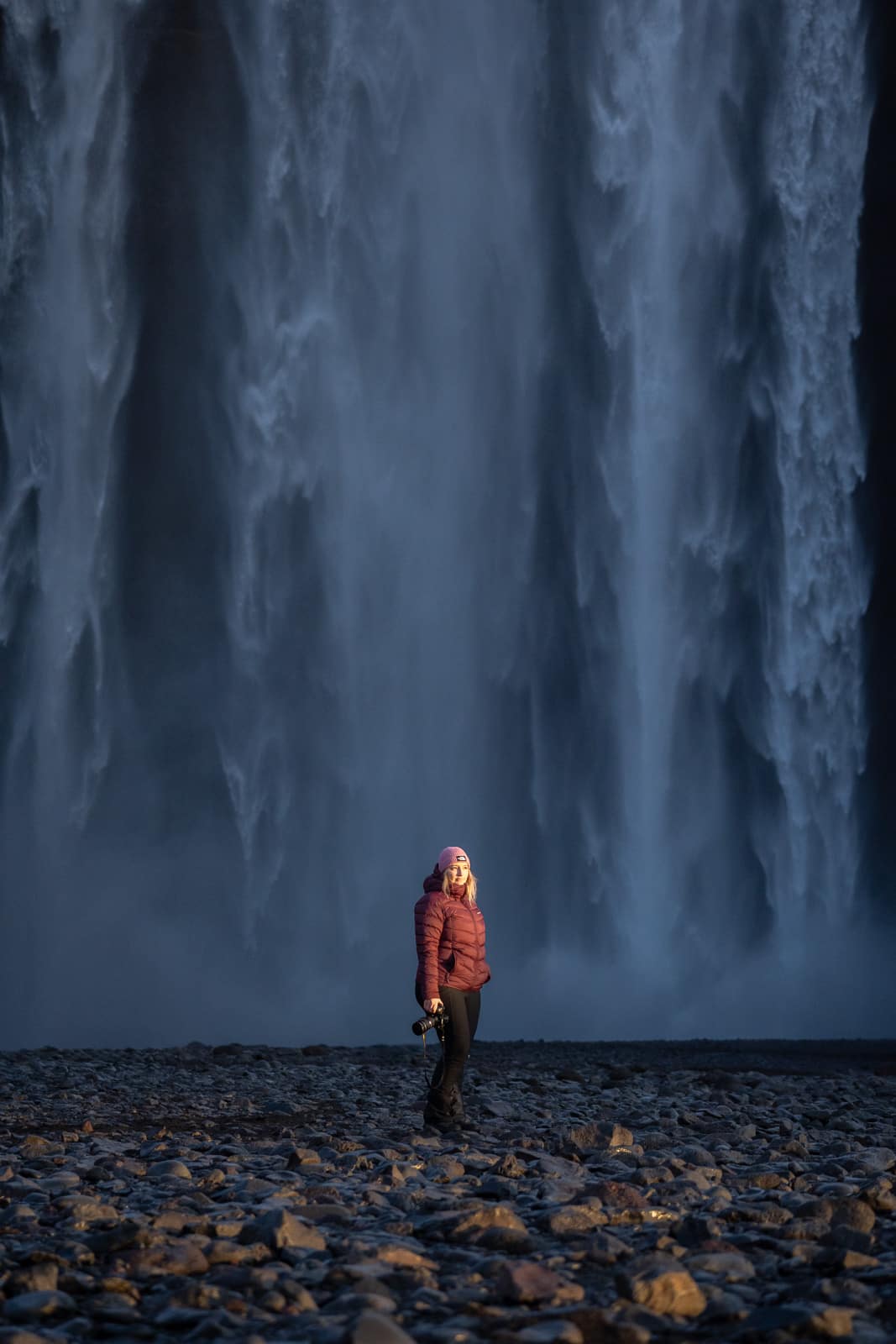
This article is a response to the many messages I regularly receive on social media (especially Instagram) when I post photos of Iceland’s braided rivers or other lesser-known spots. More and more photographers are choosing not to disclose the locations they capture or visit, for several reasons. I would like to share my perspective while opening a conversation on this topic. These are my personal opinions and if you want to discuss further, my DMs are always open 🙂

I spend a lot of time planning my photos
You see a beautiful photo on social media and think “wow, I want to go there too !”. The obvious first reaction is to try to figure out where and when it was taken. Well, no luck : no location mentioned, no information about lighting, season or access. I often find myself in the same situation when planning my photography trips, especially when I’m hunting for off-the-beaten-path locations.
Planning a photography trip takes far more time than most people imagine. It means hours and hours spent searching over satellite maps, cross-referencing information found on blogs buried deep in Google search results, Instagram, TikTok, Pinterest… On top of that, I calculate sunrise and sunset times with Photopills and Google Earth, analyze mountain heights to predict shadows, determine the best season… Every detail matters, and this is a colossal amount of work that can take me hours or even days, just to gather all the information I need.
Once I arrive on location, the work doesn’t stop. I often spend hours driving, returning to the same spot multiple times to find the perfect angle, foreground, or lighting. It’s demanding, sometimes frustrating, but it’s also what makes discovering a place and capturing it so deeply satisfying.
Over time, I’ve realized that “ready-made” spots, the ones easy to access and heavily shared, don’t have the same charm as the places I research endlessly online. Searching, doubting, experimenting, failing, trying again, succeeding : that research phase is an integral part of the creative process. It’s also why I don’t always want to freely share the fruits of my planning on social media or elsewhere. For example, if you want to explore all my secret Iceland locations, I’ve created a map with over 400 spots, many of which have never been shared online. I’ve been updating this map since 2024, adding new spots on each trip.
And let’s be realistic : those who truly want to find a location usually do. I don’t have superpowers, just time, patience, method and way too obsessive need to go far away from crowds. Choosing not to immediately give GPS coordinates acts as a natural filter : if you’re not motivated enough, you won’t bother looking for the location and the place remains a secret 🙃


Sharing a location is never a neutral act
Sharing the exact coordinates of a place can seem very harmless. After all, nature belongs to everyone, and the desire to share a spot you’ve liked is a natural. But when a hidden location is widely shared, especially with access info and GPS coordinates, the impact can be fast and sometimes irreversible.
A lesser-known place isn’t just a point on the map, it’s a fragile ecosystem, often without the necessary infrastructures to welcome the public, with preserved fauna and flora. In a few years of traveling, I’ve seen beautiful locations lose their wild spirit just months after gaining popularity.
I’m thinking right now of a specific spot but the list could be endless : when I began researching for my Utah/Arizona photography trip in 2023, this place below wasn’t listed at all on Google Maps. After quite som research, I managed to find the coordinates. I was extra excited. A few weeks later, scrolling on social media, I saw the location was shared by a several big travel accounts. Now it has a pin on Google Maps, and when I visited it, there were entire buses of people, some leaving tissues, snack papers, spitting on the ground and even touching the ground “to see if it crumbles” while laughing… Not to mention the countless footprints and tire tracks, even tough there is a single marked trail and vehicle access is prohibited. Truly disappointing when the “Leave no Trace” principles are quite easy to follow…

Choosing to not reveal a location is also preserving it ! I noticed this particularly in New Zealand, because there are still a lots of untouched places where people make the effort to go. For example, this orange hut is reachable only after a 5-hour hike/climb through a muddy forest with an unmarked path, with over 1100m elevation gain. I didn’t encounter many people up there, and considering the number of people who signed the “guest book”, this hut is not very frequented. That’s the kind of place where getting there is already part of the experience. These are exactly the kind of places whose quietness and beauty rely on not being “given away”.

haring a location is never a neutral gesture. Inspiring others, yes, but it also comes with responsibilities. I think that not disclosing GPS coordinates isn’t about elitism : it’s a conscious choice to protect certain places and consider the impact our sharing might leave on fragile ecosystems.
Not all locations require the same discretion
Not all places are equal when it comes to visitor impact. A viewpoint with infrastructure, marked trails, and parking is very different from a remote, fragile, or hard-to-access location. That’s why I don’t treat all spots the same :
- Touristic or well-managed locations (with a parking, toilets, marked trails) : I’ll happily name them
- Fragile, hard-to-find or infrastructure-free locations : I won’t name them
It’s a matter of context and responsability, not a matter of gatekeeping. And nowadays, as I said earlier, if you really want to find something, nothing is truly “hidden” on the internet.

Choosing not to share coordinates doesn’t mean sharing nothing. Instead, you can opt for :
- Providing a general region or area without a precise point
- Explaining how to scout a location (people can use satellite maps)
- Share ideal conditions (season, weather, orientation, time of the day)
- Show the results wihtout giving the exact “recipe”
I think this allows inspiration without overexposure and encourages a more active and respectful approach for those who want to discover these places.
Sharing photos transmits emotions, an atmosphere, and the desire to explore more. Sharing exact locations, however, has real-world consequences. By keeping some locations hidden, we can help minimize human impact on landscapes. I may not have hundreds of thousands of followers, but enough to get asked daily, via DMs or comments, for secret locations. Everyone shares responsibility for the impact of labeling a place as a“secret”.
From my side, I choose to continue inspiring people to explore more the outdoors (I hope) and showing the beauty of our planet while protecting certain places from over-tourism by not naming them. Everyone can find their own balance between sharing and conservation, ensuring the longevity of the incredible locations we all love to photograph and visit.